Wine has become such a universal interest that I'm no longer surprised when I hear of yet another country's first commercial vineyard or winery. In fact a common phenomenon in the world's more exotic locations for wine production is for someone to plant a few vines, build a cellar door (often without much of a cellar) and set up shop selling wine labelled as though it is a local product but which in fact depends heavily on wine imported in bulk from wherever is cheapest at the time (often Chile, sometimes Spain or Italy).
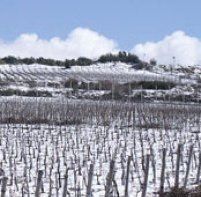
But there are one or two countries emerging as genuine wine producers that are still capable of inflicting shock. I must say I did a double take recently when I read that some Syrian wines were being launched in the UK. Is this really the right moment? I wonder what the correspondent who challenged my choice, on the 30th anniversary of the Falklands conflict, of an Argentine bargain, Viñalba Cabernet Sauvignon 2010 Mendoza, as my wine of the week would make of Domaine Bargylus in northern Syria (pictured in winter)?
It was in an attempt to recreate the vineyards established in the hinterland of the port of Littakia in the Greco-Roman era that the Beirut-based Saadé brothers, Sandro and Karim, began to plant 50 hectares of international vine varieties back in 2003. They could hardly have predicted that Syria would now be hogging the headlines in such an undesirable way. Asked by Decanter.com about the impact of current events, Johnny Modawar, the Saadés' head of communications, maintained bravely, 'day to day operations are not affected by the situation. It is not risky, as all the conflict is taking place close to Damascus and Homs (100 kilometres south), although he did admit that their technical team, based at the Saadés' Lebanese vineyard in the Bekaa Valley, is unable to cross in to Syria and is having to make wine by conference call.
I tasted their current offerings and was particularly impressed by the 2007 Bargylus red, a well-judged blend of Syrah with Cabernet Sauvignon and Merlot with real savour and depth of flavour. Stéphane Derenoncourt of Bordeaux is consultant. The price is ambitious but not ridiculous.
Islam and oenology may not be soulmates but, as the best Lebanese and, increasingly, Israeli wines demonstrate, the Middle East is capable of producing very good reds – especially at higher elevations where temperatures fall at night. I was amazed last year to be introduced to the wines of Zumot in Jordan whose best products, I thought, were white, made in the image of Alsace's best. At 15.5% alcohol, Zumot, Saint George Gewurztraminer 2010 was a heavyweight, but it was quite recognisably made from this headily scented grape variety, even if I would be inclined to drink it within a year of release. Bulos Zumot started out as a vintner as long ago as 1954, with, reportedly, 'a dream to give Jordan its niche on the map of world-class, quality wine'.
I have already written at length here about the exciting progress in winemaking in Turkey. Greece has been making world-class modern wine for several decades. I am assured that Cyprus is at last making table wines to be proud of, although I am yet to taste the evidence.
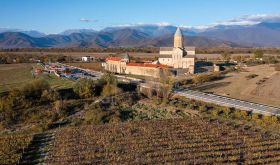
Further east, Georgia has one of the longest continuous and most glorious viticultural traditions of all and has been making tentative attempts at exporting to the west for many years – ever more necessary since 2006 when it lost its most important export market, Russia. But it is only now that fine wine is emerging westwards from Armenia. Zorah is a project financed by a Milan-based member of the Armenian diaspora who originally planned yet another winery in Tuscany but realised that the country of his forefathers has its own highly distinctive grape variety, Areni, and that the time had come for amphora-aged wine. Italian Alberto Antonini is the consultant on this particular project.
Vineyards behind what was the Iron Curtain are particularly fertile ground for the seeds of oenological wisdom sown by western wine consultants. The developing Russian vignoble, some of it badly damaged by the severity of the winter just past, has called on foreign expertise, and many of the new wine projects mushrooming throughout eastern Europe have some input from a western European country, often Germany.
The relatively conservative Wine Society in the UK has just taken on a pair of particularly respectable Romanian wines, determinedly made from local grape varieties, from the Prince Stirbey estate revived by Baroness Ileana Kripp-Costinescu, German granddaughter of Princess Maria Stirbey. The wines have improved considerably over the past few years and are several cuts above any Romanian wine I have come across in mainstream distribution, with the fragrant dry white being particularly distinctive.
But Romania has a long tradition of wine production, nurtured by its longstanding links with France. Much more exotic in a sense was the collection of surprisingly convincing Dutch wines I was shown the summer before last by some visitors from the Netherlands. Holland is not so nether as far as the vine is concerned, it would seem, in the age of global warming. Since then I have tasted the competent, if not exactly thrilling, Danish wine served at the famous Noma restaurant in Copenhagen, and have read about the Riesling vines planted in Norway by Klaus Peter Keller of the Rheinhessen. Is there no limit to the poleward spread of viticulture?
Thanks to much more skilful techniques such as deliberately tricking the vine into dormancy by cunningly timed pruning and leaf plucking, viticulture has been spreading towards the equator too. The Ecuadoreans even claim to have a vineyard that is actually on the equator, while a Napa Valley vintner has just been hired to oversee Costa Rica's first wine venture.
Sometimes it seems that there is no Asian country without its own wine industry. China is now a major wine producer. Thai and Vietnamese wine are old hat. We came across a vineyard when visiting Cambodia last year, and friends just back from a holiday in Burma report drinking, and quite enjoying, the local Red Mountain Sauvignon Blanc. The third International Symposium on Tropical Viticulture was held last November (any month can be harvest month in the tropics) in Chiang Mai, northern Thailand with a total of 43 papers given on various aspects of wine production specific to the tropics.
I did taste a pair of wines from Kosovo the other day. Yup, they were liquid all right. 'War-torn' struck me as a suitable tasting note.
Bargylus 2007 Syria (£33.50 Philglas & Swiggot, Wine Story)
Zumot, Saint George Gewurztraminer 2010 Jordan
Zorah, Karasi Areni 2010 Armenia (£19.80 Slurp)
Prince Stirbey, Sec Tămâioasă Românească 2010 Romania (£9.50 The Wine Society, tasting notes on a collection of Wine Society wines including this one will be published next week)
de Kleine Schorre, Schouwen-Druiveland Pinot Blanc/Auxerrois 2009 Netherlands