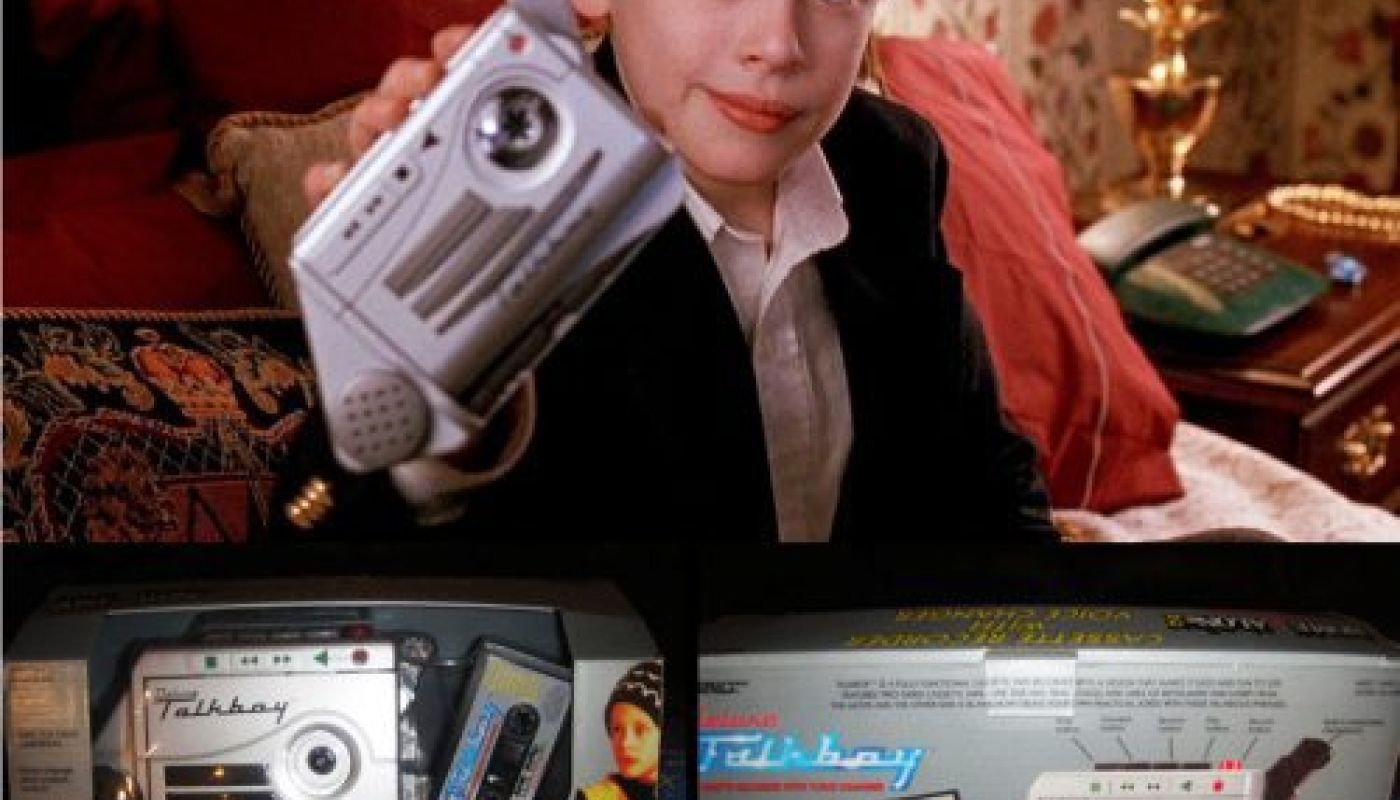
Sigh. It seemed so futuristic at the time.
But then again, as the world’s foremost expert on Haydn, and a 67-year-old man, Robbins Landon was probably interested in rather more cerebral presents. A case of Mouton Rothschild 1945, perhaps. But surely he would never have dreamed of asking for what actually came his way that fateful December: six manuscripts of hitherto undiscovered piano sonatas written by the great Haydn himself.
In the January 1994 issue of BBC Music magazine, Robbins Landon wrote: ‘These piano sonatas clarify, in a peculiarly striking way, Haydn’s search for a new musical language of strength and beauty, which was to emerge as the beginning of the Viennese classical style – for many, the culmination of music in the western world.’
Such a find must have felt like the crowning glory of the scholarly life he had devoted to the great composer.
It was doubly unfortunate, then, that in the February 1994 issue of BBC Music magazine, Robbins Landon had to write that ‘it now appears that the six Haydn sonatas are indeed likely to be a rather sinister forgery'.
The manuscripts had been faked by Winfried Michel, a German musician – but the most interesting part of this story is not that the expert was hoodwinked, but that he subsequently stood by his appraisal of the quality of these works, telling the New York Times that ‘the music is very good. If it is really a forgery, it's the work of an arch faker.’
(I am indebted to Tom Service for telling this story on this excellent episode of The Listening Service podcast.)
This sort of fraud inevitably gets more prevalent wherever there is lots of money involved, which brings us neatly to the world of wine. Fake wine has been headline news in recent years, most recently thanks to Rudy Kurniawan , who was jailed for large-scale wine fraud in 2013.
Like the fake Haydn sonatas, Rudy’s creations fooled laymen and professionals alike, which begs the question: how objectively good can fake wines be? And do they warrant critical appraisal?

We need look no further than this site to find intriguing thoughts on that very subject. In 1998 (best-selling Christmas toy: Furby, the creepy interactive pet pictured above), Jancis tasted a once-in-a-lifetime flight of Ch d’Yquem from vintages ranging from 1784 to 1991.
Or were they? Because the source of these antiques was Hardy Rodenstock, the alleged fraudster and recalcitrant antagonist of The Billionaire’s Vinegar .
In 2007 Jancis wrote : ‘I have no idea whether the bottle of Yquem 1811 [...] was genuine, but I assure you it was one of the most delicious liquids I have ever tasted, even if strangely raspberry-flavoured. Anyone who could create that has my respect.’
For those who spend a lot of time in the company of very fine wine, and the people who buy and drink it, the chances are high that they have tasted and indeed enjoyed a wine which is not what it purports to be.
But if a roomful of experts praise such a wine, does it not deserve the same high regard even if it turns out to be fake, as with the 1811 Yquem or the Haydn sonatas?
In other words, is objective quality in wine less important than its provenance? Perhaps in the abstract, we might agree that the hedonic pleasure given by great wine should be paramount. But in practice this appears not to be the case, because when authenticity is subverted then the value and enjoyment of that experience becomes greatly depleted.
(The reverse can be true for blind tasting, whereby wines become miraculously more delicious once their prestige is revealed.)
For the finest wines, authenticity is even more important because the financial stakes are that much higher (see also Oliver Styles’ recent piece about the relative indifference towards the faking of cheap wine). The intrinsic value of wines at the top level is not simply how good they taste – and possibly not even whether they taste any good at all – but whether it has the right provenance. Whether it gives bragging rights.
By that logic, the outward form of the fake is at least as important as the actual contents, if not more so. The Haydn sonatas had, according to the world’s foremost Haydn scholar, intrinsic musical excellence. But because the manuscripts were discovered to be fake (the handwriting was anachronistic, as was the pen used) they were excluded from the musical canon, and remain largely unloved and unknown despite their apparent excellence.
By the same token, if Rudy’s phoney bottles had never been discovered as such (some of the vintages he produced had never existed, many of his faked labels had inconsistencies), then the wines themselves might never have been questioned. In fact, it’s widely believed that many of his fakes are still out there, and presumably still giving whoever drinks them great pleasure.
After all, his recipes reveal impeccable ingredients: 1945 Mouton Rothschild consisted of 50% 1988 Cos d’Estournel, 25% 1990 Palmer and 25% 2000 California Cabernet. Now, blending is one of the great arts of winemaking, or so winemakers tell us. If Rudy’s formula can create a wine that can be universally enjoyed, then doesn’t that deserve approbation in its own right?
Let’s say I made a delicious multi-vintage blend of Penfolds Grange from the 2008, 2012 and 2014 vintages, and I tell you it’s a new blend called g3 that costs $3,000 per bottle. Would you like my version less than the recently released official version , even if the proportions were absolutely identical?
Or how about if I decanted genuine Mouton Rothschild 1945 into a fake bottle, and let it be discovered as such. As a fake, it would lose all value. The liquid in the bottle would become irrelevant, discredited. The status of the wine is more important than its actual taste.
This is nothing less than hard-wired human nature. Which child would be happy with an imitation, rip-off Talkboy instead of the real brand, even if they did exactly the same thing? Yes, I'm talking to you, Mum.
Much as we might like to think that intrinsic quality can be appreciated independently, in reality, whether it concerns children's toys, piano sonatas or fine wines, we are all in thrall of labels and brands – the supreme power of prestige.