Last summer I had the pleasure of tasting more than 60 red burgundies from the celebrated 2005 vintage to see how they are evolving (casting off the tannin at last in all but the grandest cases, as explained in Keeping cool with 2005 burgundies, followed up by this recent post on our members' forum).
The tasting was organised, with admirable efficiency, by the local generic organisation, the Bureau Interprofessionnel des Vins de Bourgogne. As is the way of such organisations, they asked those sending samples for me to taste to fill in a form that ‘imperatively’ had to accompany the bottles. One of the questions was ‘What is new in your Domaine since 2005?’
I was particularly interested in the answers since I think our general impression of the Côte d’Or, the heartland of Burgundy, is that it is one of the world’s most traditional wine regions and hardly changes at all. But I know from the changing roster of producer names alone that in fact it is evolving just as rapidly as anywhere else.
Since the late 20th century, for example, there has been a dramatic influx of Americans keen to acquire grapes if not land and try their hand at making their own version of one of the world’s most elusive wine styles. I have come across a number of Australians following the same path, and there is even the odd Asian owner of a Burgundian domaine (see Gevrey château’s sale causes angst).
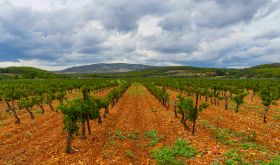
The most common development reported in these forms was a conversion to organic, biodynamic or at the very least certifiably sustainable viticulture. This applied to a full eight of the 30 producers who completed forms, with many of the 30 already certified organic or biodynamic before 2005.
Château de la Tour of Clos Vougeot, for instance, has been farmed organically since 1992 but reported that they are now replanting only with mass selections from plants they already have rather than planting selected clones from a nursery. They are explicit in rejecting selected yeasts or the sort of enzymes used by some producers to smooth the path of fermentation plus ‘still no racking or fining’. They claimed intriguingly that the admired local cooper Stéphane Chassin ‘builds our barrels from our own staves (only fine grain) once the first cuvée is produced for a better comprehension of the vintage, thus a perfect mix between wood and wine.’ Their 2005 certainly showed well.
Both Domaine d’Ardhuy of the Corgoloin no man’s land in the Côte de Beaune and Rossignol-Trapet of Gevrey-Chambertin have converted to biodynamic practices in the last 10 years while Antonin Guyon of Savigny and the Domaine de la Vougeraie of Premeaux-Prissey just south of Nuits-St-Georges, who also boast of new vineyards and a new winemaker in Pierre Vincent, have converted to organic viticulture.
René Bouvier has been spectacularly busy, not only converting to organics in time for certification in 2013, but building a new winery in Brochon just north of Gevrey in 2006, trialling whole-bunch fermentation (very fashionable) for the first time in 2010, adding some vines from the Grand Cru Clos Vougeot in 2012 and a new cuvée of Bourgogne, Cuvée le Chapitre Suivant, in 2014.
Jean-Louis Moissenet Bonnard of Pommard also added several new appellations to a roster now shared with his daughter Emmanuelle-Sophie. Like the substantial négociant and vineyard owner Bouchard Père et Fils, somewhat re-organised following the demise earlier this year of old owner Joseph Henriot, Moissenet Bonnard was recently certified an operation of ‘High Environmental Value’.
Buying new vineyards and constructing new wineries are the most common developments reported, which suggests that things are going rather well for these vignerons, because land prices on the Côte d’Or are at an all-time high – and are the highest anywhere in the world.
Burgundy grands crus changed hands for an average of more than four million euros a hectare last year according to a report from SAFER, the guardian of French land transactions. (SAFER will always favour a local Burgundian buyer over an incomer, so foreigners in search of vines have usually to work in cahoots with a Burgundian.) And premier cru vineyards sold for an average of about a million euros a hectare (white-wine vineyards being considerably more expensive than those for reds, presumably because they are much rarer). Admittedly the majority of the acquisitions noted on my forms were of lieux dits at village level, a notch below premier cru, but I'm sure they weren't given away.
I was particularly pleased to read of new generations joining the family enterprise. Now that wine in general and Burgundy in particular is so glamorous, it is rare for a domaine in Burgundy to run out of family members willing to take over from the previous generation, and nowadays, now that formal training is de rigueur (thank goodness) – most young Burgundian vignerons and vigneronnes build up a network, often a tasting group, of friendly peers while studying oenology and viticulture in Beaune. This is quite different from a generation or two back when wine producers typically claimed not to know any of their neighbours nor their wines. Today it is rare for a young French wine producer not to have worked somewhere abroad before joining the family domaine and, thanks to email and so on, most of them are truly a members of the global wine community – albeit some of the more envied ones.
Producing wine on a small family domaine in Burgundy approximates most closely to the bucolic idyll of working the land (and being paid handsomely for it), but it is not all plain sailing. French inheritance laws are a nightmare and most domaines are owned by a complex web of different interests – often by many members of the family even though only one or at most two of them actually work there. This can put considerable strain on family relations, with some members keen to extract max cash from the enterprise while others are more interested in building up the domaine’s reputation for wine quality.
One of the most complex family-owned domaines is arguably the most famous white burgundy producer of all, Domaine Leflaive in Puligny-Montrachet. Anne-Claude Leflaive who ran it from the early 1990s until her untimely demise earlier this year used to have to answer to what seemed like dozens of relatives, none of whom are intimately connected with wine production and vineyards. It is a measure of the force of her personality that she managed to convince them all, way ahead of most others, that biodynamic viticulture was the way to go. A force indeed.