Dry River’s Tūrangawaewae: taking care of the land and generations
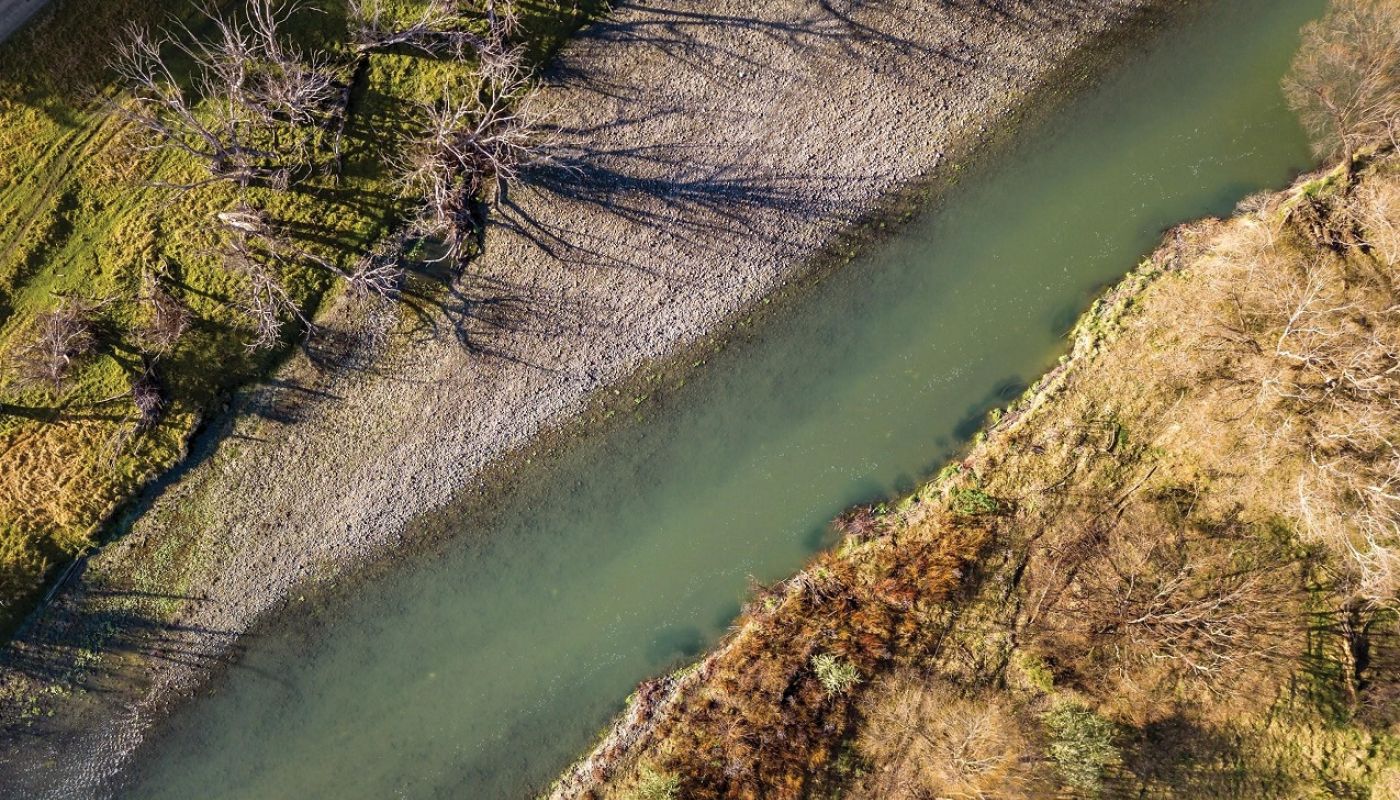
Ko ahau te awa, ko te awa ko ahau.
(I am the river, the river is me.) – Māori saying
Martinborough’s Dry River is a winegrower who places social and environmental responsibility ahead of the world-class wine they happen to produce. Increasingly, this small wine estate in Aotearoa New Zealand’s Wairarapa region is guided by Māori principles, which like other indigenous cultures, are inherently sustainable.
What does it mean to make and partake in wine from ‘New World’, post-colonial contexts like Aotearoa New Zealand, Australia or South Africa? If we are carefree, it simply means producing and consuming wine in the European tradition. If we are careful, it means acknowledging the historical legacies, ecologies and the communities within which wine is made and enjoyed. At Dry River, it begins by honouring the Treaty.
Honouring the Treaty of Waitangi at Dry River
The Treaty of Waitangi, New Zealand’s founding document, was meant to be a partnership between Māori and the British Crown. Two versions of the Treaty – one in English and only signed by Crown representatives, the other in Māori and only signed by Māori – have caused conflict since its enactment in May 1840. In recent decades, however, knowledge and efforts to honour the Treaty have expanded. Dry River, for example, has adapted the Treaty’s three key principles into its business model. This include:
- Protection: of equal rights, the environment and common resources.
- Participation: Shared decision-making on issues that affect the community and environment.
- Partnership: working together at all levels of the organisation and having a say in the policy and management of the organisation.
Protection: Safeguarding people and place
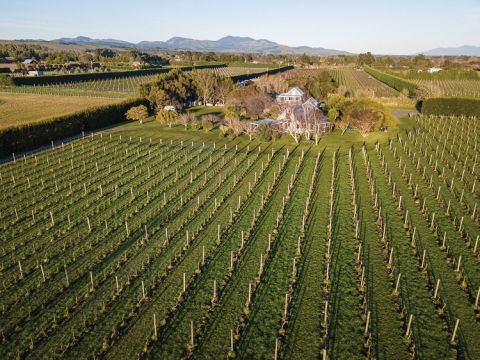
In recent years, Dry River has built upon its Biogro certified organic regime by integrating aspects of regenerative farming. While more common in sheep, beef and arable farming, this holistic approach considers soil health, animal welfare and social fairness as interdependent parts of a dynamic system. Along with dry farming (i.e. no irrigation), Dry River has begun implementing regenerative practices like no-till farming and little or no mowing due to the damage it can have on soil ecology. Instead, they plant bi-annual cover crops and allow local sheep to take care of the inter-row mowing. Good old manual labour in the vineyard results in low pest and disease pressures. Biodynamic sprays are used, and no artificial and especially no Nitrogen fertilisers are put on the vineyards. Anywhere on the farm without vines are native plantings, as Dry River aims to attract and provide healthy habitats for native birds and insects.

Along with composting organic waste, Dry River reticulates greywater and all hoses are low volume-high pressure to minimise water use. They use steam to assist for cleaning and only ‘soft chemical’, low Sodium content cleaning products. In the winery, no chemicals are added to the wine and indigenous yeasts do all the fermenting. Reds are bottled unfiltered, while the whites go through minimal, very gentle filtration (due to residual sugar). Dry River is careful with its use of inert gasses like CO2 and Nitrogen and is exploring technologies that could capture these during fermentation.
Solar panels supply most of Dry River’s energy needs and they are planning to replace their gas-powered forklift with an electric one. On the packaging front, they only use recycled cardboard, wax glues, and the labels are printed on recycled paper with vegetable dies. They’ll soon move to paper tape and are in the market for compostable pallet shrink-wrap suppliers. Unlike most wineries in this part of the world, they use cork, which is capped with wax rather than aluminium. Protection not only extends to the land and wine production but also to their people. Dry River has an extensive health and safety system in place, and staff has free access to counselling and skin cancer checks (very important in NZ!).
Partnership and Participation: community engagement and shared decision making
As Dry River sees it, the social license to produce their exquisite, cool-climate wines is based on their positive participation in the community. Hence, they donate to the local medical centre and hospice. Head winemaker Wilco Lam, originally from The Netherlands, coaches football for the local club and school and helps with local community events. He has also started an organic viticulture discussion group with local winegrowers to exchange information and experiences.
Beyond local partnerships and participation, Dry River takes its commitments the hospitality and distribution sector, international sales partners, NZ Winegrowers and wide New Zealand society with deeply serious. They aim to showcase the best of what the country has to offer through actions, not just words.
As a horizontal organisation, instead of positions of power, people assume responsibilities at Dry River. Shifting from hierarchy to responsibility is more egalitarian and respectful of human intelligence and dignity. Partnering and investing in their people, staff at Dry River are supported in wine-related training, from WSET to viticulture certifications. All staff, including outside or contract labour, are paid at least the ‘living wage’ (higher than the minimum wage).
Philanthropy is a core value of the Robertson family, who own Dry River. The Robertson Foundation targets transformative grants in the areas of education, environment and medical research. The family also supports a range of charitable entities through individual donations and their affiliated foundations, including the Tiger Foundation and Aotearoa Foundation. The Robertson’s also own the Cape Kidnappers Lodge, situated within New Zealand’s largest privately owned and managed wildlife sanctuary, where 2,500 hectares are protected by a predator-proof fence. Dry River is part of the Waiau Bay Farms group, a collective of farmers involved in local ecological restoration projects and native bird conservation.
Producing just 2,000 cases of wine a year, Dry River follows a ‘small is beautiful’ ethos. Remaining small allows for greater care and attention to the entire winegrowing process. With six full-time staff members, it means that everyone can lend a hand and aren’t limited to one function. Cultivating different skills and capacities, whether it’s vineyard work, bottling wine or engaging directly with customers is empowering. Head winemaker Wilco Lam, lives on-site and is deeply attuned to the seasonal cycles and rhythms of the farm and Martinborough community. Such intimacy and connectedness is similar to the social organisation of indigenous peoples like the Māori.

Tūrangawaewae and Kaitiakitanga: knowing and protecting people and place
Underpinning Dry River’s practice of the ‘three Ps’ is an ethos of guardianship and protection, which in Te Reo (Māori language) is called kaitiakitanga. This concept implies that land is never actually owned or dominated by human beings, whose role is to ensure its health and balance for future generations. From a wine perspective, we can see how kaitiakitanga contributes to making sustainable, terroir-driven wine. Dry River’s head winemaker, Wilco Lam views kaitiakitanga as a vessel to respect tūrangawaewae. Literally, tūranga (standing place), waewae (feet), it is often translated as ‘a place to stand’. Tūrangawaewae are places where people feel especially empowered, connected, and at home in the world. For Wilco, what the land provides for Dry River doesn’t go far enough.
We don’t operate via the land alone, thus kaitiakitanga is only a part of the fabric of our existence as a business. Making fine wine alone and building the story around that, we cannot acknowledge the wider communities; we’d only think of ourselves and the direct environment. Thus, we have to acknowledge that we stand in the world by being part of a system and forces that operate upon us, and then show what defines us [Dry River]. Wine is a story, a life philosophy, a way of being; we need to express this somehow.
The French invoke terroir. As a South Pacific winegrower, Dry River believes that respecting and preserving place means integrating indigenous concepts and honouring the Treaty of Waitangi. As Wilco explained:
Our Tūrangawaewae is more than the physical place that surrounds us; it is also an inward way of looking out; it is how we interact outside ourselves. The Treaty underpins all of this, though it has also scarred New Zealand life for the past 150+ years and it needs amendment given the ongoing cultural discrimination and social inequality. To recognise where and who we are, we have to adopt concepts from Māori culture, let them permeate our life and business. We aim to do that by respecting the Treaty of Waitangi and its history, so we can move into the future that is more socially just and environmentally sustainable.

Sustainable wine worlds require shifts in our production and consumption of wine. This also means reckoning with the historical legacies of colonialism and industrialisation. As Dry River demonstrates, we can learn valuable lessons in social and environmental sustainability from indigenous cultures such as the Māori. There are an estimated 6,000 living languages in the world today (there used to be more), meaning there are at least 6,000 ways of seeing and being in the world. The language of ‘economic growth’ has long been a dominant discourse, but one that has proven catastrophic to the environment and humanity itself. Inspired by the Treaty of Waitangi’s core principles – protection, partnership, participation – and guided by an ethos of kaitiakitanga (guardianship) and tūrangawaewae (knowing where they stand), Dry River shows that things can be otherwise.
















