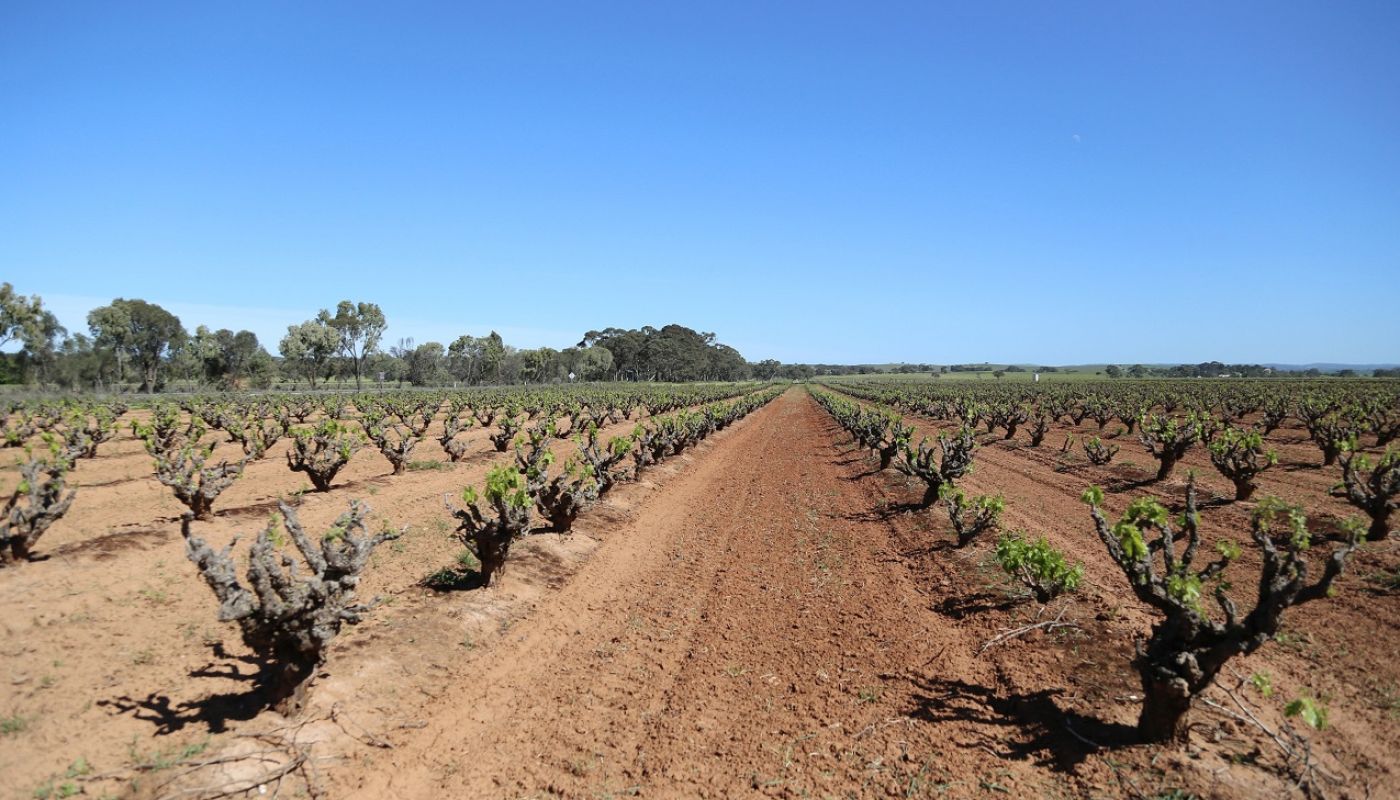
The ‘Agreed’ location
Watunga Road Vineyard, an unknown gem of viticultural paradise in the heartland of one of the oldest vineyard regions in the world, the Barossa Valley of South Australia. The birthplace of the great Aussie shiraz and the famed ‘stickies’ of a long gone but not forgotten golden era of winemaking. No doubt Watunga has seen a lot. Inhabited for 50,000 years, her story is one of challenges, heartache and fights for survival, peppered with triumphs against all natural and man-made odds.
Watunga Road Vineyard, at just 12 hectares in size, remains relatively unknown not only to the Australian wine industry, but to the locals who pass her daily, on their way from Koonunga to Ebenezer. At the very northern end of the valley floor, her red-brown earth with loam over clay subsoil, does not set her apart. She blends into her neighboring hectares which see red, dry dust and dirt for miles. On a brief glance, it’s hard to understand why anyone would have ever thought vines would survive here.

Watunga, an ancient name of the traditional custodians of Kaurna country, the Aboriginal people of the Adelaide Plains, allow her vines to age gracefully on their ancient land. In Kaurna language, ‘Watu’ means ‘agreed’ and ‘Nggn’ is a locative case marker, of which it assumed ‘nga’ is a derivative. Watunga translates then to the ‘Agreed’ location. Interestingly, the modern day custodians were unaware of this meaning at the time of purchase.
The Kaurna people nurtured and respected Watunga vineyard for 50,000 years, until the arrival of new immigrants from Prussia in 1836, they commenced developing the red land and changed the state of it forever.
Over the course of the next 100 years to 1936, the history of Watunga becomes somewhat blurred. The land may have been planted to vines at some stage, but this is to date unverified. But Watunga Road Vineyard did have a life as a dairy farm in the years’ immediately prior to 1970 which was not unusual for its time.
Watunga’s life as a high-quality vineyard started in 1972 where she began nurturing several blocks of Barossa Old Vine bush grenache and shiraz planted on own roots. The prized mature vines she continues to nurture are half century old vine bush grenache on blocks 9 and 10 (2.68 hectares, 1972), 48-year-old vine shiraz on block 6 (1.15 hectares, 1973) and a single hectare of 43-year-old vine shiraz on block 1 (1978). Blocks 1 and 6 are believed to have originally been bush vines but they have since been trellised in line with modern and innovative techniques to preserve these precious vines.
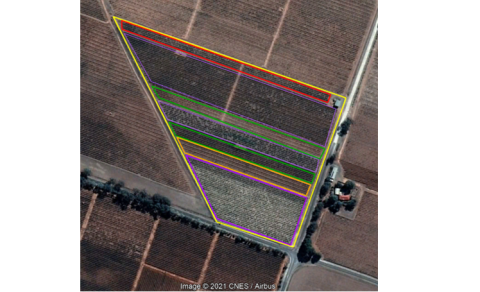
A quick search of the Barossa Old Vine Charter and Jancis Robinson’s unique Old Vines Register, reveals Watunga Road Vineyard as anonymous and unknown. When one considers the extraordinary challenges of Watunga Road Vineyard in the last 50 years, the four named blocks from the 70’s tell a remarkable story of determination, strength and survival.
In 1981, Watunga and the immediate area around her flooded with most of her grenache vines forced from the ground by the floodwaters. Thankfully, the vines were able to be saved and were physically lifted and replanted back into the ground.
In 1987, Watunga survived yet another agricultural catastrophe instigated by the South Australian Government’s vine pull scheme. Victims to bureaucratic decision making shrouded with little foresight, 100-year-old pioneer shiraz and grenache vines were bulldozed, suffering at the fate of this deadly scheme, the consequences of which were ill-considered and the devastation and loss for these vines still felt 35 years later.
Phylloxera has, and continues to, threaten and devastate vineyards in other parts of Australia, but Watunga, along with the Barossa region, and South Australia, remain unaffected. Biosecurity measures are strict in South Australia, however no one should remain complacent.
Drought, soil challenges and heat waves reign supreme and pose threat and challenge to Watunga constantly. Watunga is certainly not your typical viticultural environment. Anyone with remote knowledge of the northern valley floor of the Barossa knows just how unforgiving it can be. Harsh. Hot. Arid. Dry. This is one of the harshest and most marginal of viticultural conditions anywhere on earth.
Climate change at Watunga witnesses constantly rising temperatures, earlier budburst, increased incidences of heat waves and reduced rainfall. The heat waves of 2019 damaged much of Watunga’s crop, devastating the quality of her vintage. She walked away relatively unscathed as her neighboring vineyards sizzled to a cinder in the heat, decimating in some instances 80% of a vineyards crop. Surprisingly, for such a heat driven region, extreme spring frost frequently makes an appearance at Watunga, causing damage to yields and quality.
Conditions at Watunga in the finest of vintages are challenging and severe at best. Old vines, with their deeper roots and strong resilience to the heat and drought, have a much better chance than the younger vines to survive such stress. But the long-term viability of Watunga, and the Barossa, is under serious threat from climate change, and the changes producers and viticulturalists make in the next 20 to 30 years will be crucial to each vineyards survival. Some believe the Barossa is currently on course and destined to become the next Riverland.
In 2014, Watunga Road Vineyard was acquired by DMG Fine Wine from Turkey Flat, a producer with heritage in the Barossa dating back to 1847. DMG is not a large corporation for large-scale commercial benefit, but a small, privately owned producer making wine under the Handpicked brand. The brand has a strong sustainability and innovation ethos which filters strongly throughout its viticultural practices and business actions.
On purchase of the property by DMG, damaged vines were found needing replacement or repair and Senior Viticulturalist for DMG’s Handpicked brand, Andrew Butler, began a program of hand propagation by adopting the unconventional and ancient technique of layering, a method which continues to be used to this day at Watunga. Andrew advises this allows the vine to maintain the existing old vine root system and ensures Watunga continues to produce high quality grapes, from existing old vines, for premium wine production into the future.
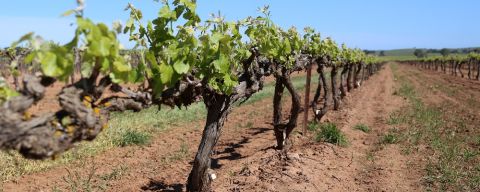
DMG is committed to improving and modernizing Barossa viticulture through its Watunga Road Vineyard, by pioneering organic viticulture for the region alongside a tiny number of other environmentally conscious producers. Whilst many of the multi-generational businesses remain traditional in their viticulture, DMG seeks to utilise methods like under vine mulching, composting, mid-row and mulch cover cropping and biodynamic preparations that aim to improve the liveliness in the vineyard, biodiversity and increase organic matter.
Andrew adopts soil improvement techniques at Watunga like microbial inoculation and probiotics for the soil which “encourages good things to grow” and will act as an insurance policy, a guarantee the vines can live and breathe for another 50 years and beyond. Andrew’s experience tells him that these vineyard and soil improvements will ensure healthier and better performing vines whilst reducing the risk of disease.
Andrew states “Left to themselves, these vines, growing in this place, would produce good wine. When soil, climate and vine age meet, this is inevitable. But we strive to make great wine, now and into the future. So we intensively manage each block and each vine, seeking every possible quality gain. As we approach greatness, we think again, and consider the next step.”
With the vineyard organically managed since purchase, and organic certification expected early in 2023, improvements to the health of the vineyard and conversion to organics are aimed at sustaining longevity of these old vines for future generations, in improving performance as they age, and facilitating continuous high-quality grape production. The end result? To improve the quality and experience of what is in the glass. DMG sets the bar high with the aim of providing pure hedonistic drinking pleasure for its consumers.
DMG’s Director of Winemaking Peter Dillon commits to letting the wines tell the story about where they come from. Expression of the character and personality of the site is foremost and he treats each parcel individually, teasing out the nuances that make each parcel unique. “Our job is to listen carefully, hear the different strands of the story and help it unfold in the glass.”
Highly awarded wines originate from these hand-tended, organically reared, low-yielding bush vines and their serious intensity has not gone unnoticed from international wine critics. The old vine grenache is revered by Nick Butler who awarded the 2018 Collection Grenache 96 points saying “As pure and bright an expression as you could expect from the Barossa… seriously delicious.”
James Halliday awarded the Handpicked 2016 Collection Shiraz 94 points whilst saying “… the power of the blackberry, black cherry and licorice fruit flavours comes from the vineyard. Will live for decades.” Testament that wines from the valley floor produce bold, dark wines that are structured and powerful, and are unforgettable for decades.
The ‘Agreed’ location is not a vineyard that oozes the romance of green, lush viticulture, European chateau or hundreds of years of heritage. Although she is ancient, she has fought for her right to be here, protecting her precious vines through constant changes in ownership, flooding, vine pull, climate change, heat waves, frost and soil challenges.
It isn’t a secret that the best wines grow in vineyards that thrive and survive in marginal conditions. Watunga is no different. How these vines have survived all that is nothing short of miraculous, but only for a human touch that cares. These vines are hearty survivors of the fittest kind, and its shows. What presents in the glass does not lie.
Shy and discreet, Watunga quietly achieves, and with the attention she deserves, is likely to do so for some time. Make no mistake, the fruit she bears will live on in the wines she curates, as they age and mature, they will drink for decades to come. Her key to survival is her management, innovation, knowledge, people passion and their drive.
DMG’s mission is to tread the earth lightly and make positive change where possible throughout ball facets of its business. Peter Dillon states “As the current custodians of these precious places, we accept the responsibility to nurture and improve what has been entrusted to us. That’s the bedrock of our approach to winemaking.”
Handpicked is a proud member of Sustainable Winemaking Australia.
The photos were provided by Kirsty Hill.
















