Thank you for reaching out. You’re right, the situation market-wise is certainly looking more grim for vintage 2026, although the previous two seasons have been quieter too. Quality-wise it looks like it should be a good one though. 2026 harvest yields look average to lower, which is handy given the lower demand. A very dry winter, plus a cooler-than-average spring and summer in Victoria so far mean that it looks like we will see vintage happening at a more normal time after the very hot, fast and early 2025 season. We are anticipating starting 1–2 weeks later than vintage 2025.
In terms of the state of the industry … As you know, our business model at Chalmers includes the nursery (selling vines) as well as two Victorian vineyards (selling grapes as well as growing for our own wine brands) and the winery. Our vineyards are located in Heathcote, Central Victoria, and Merbein in the Murray Darling. In our nursery and at both these vineyard sites we work with varieties that are not the classic international grapes, rather looking for grapes that are more suited to our drier warmer climates and promoting vines through the nursery that are better suited to future viticulture and sustainable farming. In 2025 we experienced the slowest year in decades across all three businesses. Usually in the past when the wine game has been slow, the nursery has been busy, or the nursery quiet but grape sales were good. In 2025 all three streams of the business were operating toward the bottom of the curve.
Wine sales in our usual domestic on-premise channels were reduced, although given our product mix, brand strength and good-value price point we have maintained a solid position in tricky times for the hospitality industry. In some cases we have been able to grow our reach as more high-end venues seek out better-value wines that can still deliver the high level of quality and provenance their clientele expect. Export sales in the US over the last couple of years have also been slower and finding new export markets has also been a struggle. Most markets we have been looking to break into are saying they are saturated, slow and importers were not looking to increase their portfolios.
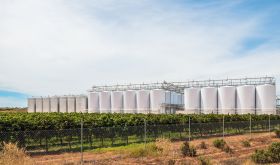
In our home region of Murray Darling the past couple of years has seen the closure of the Treasury Karadoc facility, home of Lindemans and 19 Crimes, and the discontinuation of many wine-grape supply contracts, being let go rather than renewed at the end of their terms. More generally I feel like we are seeing the slow death of high-volume, low-value, multi-regional, mass-production homogenous wine, which I personally think is not such a bad thing, culturally. I feel like it had reached a point where no one was making money out of it; growers going backwards, market-driven low prices, wineries with very thin margins, not to mention brands/products with no stories or soul behind them. In a world where provenance, sustainability and authenticity are ever more important at every level of consumption, and wine needs to be very mindful of our social licence, making shiploads of cheap wine seems misaligned with our cultural aspirations.
As you point out, this change in the ‘engine-room’ wine-growing regions has led to many growers ‘giving up’ or being forced to end their wine-farming businesses, which is a sad and difficult socio-economic situation, especially as many of these operators are of retirement age with no energy or capital to change industry and no interest from the next generation to step in. Losing jobs and infrastructure like the big Karadoc winery in a community is a hard blow, but the realignment of how and why we make wine is a question we are all pondering, no matter where we are based around the world right now.
At Chalmers, with our Murray Darling hat on, we see this change as an opportunity to reshape the concept of great value wine – school-night wine, pizza wine or everyday wine as we like to call it – bring people and stories, places and purpose into the picture. Move away from corporate, million-litre blends that attract that horrid descriptor ‘commercial wine’ and embrace the purity, freshness and deliciousness we can deliver from places like the Murray Darling and Riverland. Bring them to the table from family-run farms and wineries who celebrate the sense of place in these wines, not hide it under non-denomination generic labels. There is no need to be the $5 bottle, we can be the $15–$20 bottle and own that space, where other cooler, trendier, more expensive, more built-up or closer to the capital city regions can no longer play. A price point where farms and wineries can run sustainably and profitably and deliver the kind of wines that don’t exclude whole swathes of society because they are too expensive and unattainable. We might even be able to connect with new wine drinkers better by crafting accessible, delicious AND interesting wines with real people behind them. Wouldn’t that be great?
We only use about 20% of the grapes from our estate vineyards for our own Chalmers wines, the other 80% are sold to a band of around 40 winemakers across the eastern seaboard, from large to garage in scale. The past two seasons have seen a decrease in the number of winemakers buying grapes along with a decrease in the quantity of grapes ordered by our regular buyers. Everyone is selling less wine, therefore making less wine. Sadly we have ended up with some unsold grapes at both sites the last couple of years and it looks like 2026 will be the same.
Interestingly we have seen a swing to higher interest in lower-price-point grapes as people are chasing value, happy to move GI to save $$, putting the emphasis on the grower rather than the region in their decision-making. Our grape-sales model is a bit different than the norm in that we have a fixed, per-tonne price at each vineyard and operate on a season-to-season basis. We don’t enter into long-term contracts but work with a group of return winemakers year-on-year who have built brands around our grapes, along with a few new and evolving winemakers looking to branch out into new varieties. This means we don’t have the safety net of a contract of grape sale, but also that we can be price setters, rather than price takers at the whim of corporate wineries dictating prices driven by market forces. Most of the time this approach works really well for us and we have built a strong network of producers in our little ecosystem that trust us, as we do them.
Having a good mix of varieties, a strong long-term investment in white grapes and delivering consistent high quality and great service has allowed us to stay in a relatively strong position. But it’s a tough operating environment and in addition to having to manage unsold grapes we have also made changes to our plantings, removing unprofitable blocks (mostly red) and rationalising new plantings.
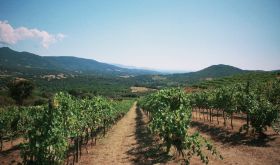
The story in Central Victoria is similar despite it being a very different region. A couple of big players in the Heathcote region along our street have pulled the pin – Brown Brothers have sold and are completely removing their Heathcote vineyard at the moment and Treasury sold their large Northern Heathcote Seppelt site a couple of years back. Again, I would echo the above sentiments about a general shift away from larger blends/brands and towards regional, unique and interesting stories delivering more relevant wines for the modern table in the Heathcote region as well.

In the nursery we have been ticking along propagating mostly Pinot Noir and Chardonnay predominantly for replanting efforts in the Yarra Valley and increased plantings in Tasmania, supported by a steady stream of small- to medium-sized orders for our Italian varieties from many different regions. But as an indication of planting trends, the 2025 nursery season was just 20% the size of 2022. Not many people are going into planting wine grapes right now, as you would expect. We are currently in the process of importing some PiWis or disease-resistant varieties as we call them in Australia from our partners Vivai Cooperativi Rauscedo (VCR). There is quite a bit of interest in them already; they’ll be released out of quarantine in May 2026. I know Yalumba Nursery have some French selections on the way in, too.
Yes you’re right, people are busy grafting-over or replanting to whites, although the swing has been hard and like all reactionary permanent-planting changes in agriculture, could see the pendulum go too far. Spot market pricing for white grapes in vintage 2026 is already lower and industry bodies have started calling it an ‘over-correction’.
In other news … You’ll be excited to know that we have FINALLY (after all those years ago we spoke about the difficulty of trying to source Nerello Mascalese and Carricante selections to import to Australia) planted Carricante in Heathcote this year and have Nerello Mascalese going in next year.
Over the last decade we have collaborated with Giuseppe Russo of Girolamo Russo in Etna and our colleague Agronomist Dr Stefano Dini from Matura Group to select two Nerello clones and one Carricante, the shared result of clonal identification and characterisation work done for Giuseppe’s new single-vineyard plantings at San Lorenzo. It’s super-cool that our instigation of the health and DNA checking for import has helped inform his clonal selection for new Etna plantings. What a great story that his new Etna vineyards and our new Australian vineyards are being established at the same time with the very same clones. We can’t wait to see what the unique Heathcote geology does with these grapes – a truly new kind of Victorian wine about to be born. So much of Etna is the soil, taking the grapes away from that and seeing how they translate other soils is so exciting. I saw Giuseppe at VinItaly this year and he was impatient to taste the Aussie wines, not realising just how long and drawn-out the whole importation, quarantine and establishment process was. I first visited him in 2012 – and we only just released the first mini 60-litre batch of Australian Carricante from the nursery mother vines in 2025.