21 March 2012 The notes below on the 50 current bottlings of one of the world's great wines were taken at a rather extraordinary, and extremely unexpected, tasting for just me and Australian wine writer Max Allen in Melbourne last month. See Rutherglen ambush for more details.
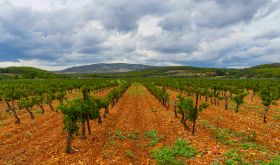
The sweet, fortified 'stickies' of Rutherglen are hugely distinctive wines, and – along with Hunter Semillon – the style is one of Australia's unique gifts to the world of wine. These dental nightmares owe their extremely high sugar levels to the hot, dry climate of Rutherglen in the north east corner of the state of Victoria where nights are cooled by the Victorian alps – and autumns are (generally) so reliably dry that grapes can be left on the vine to shrivel and notch up extreme Baumés. It is not unusual for one of these wines to have a residual sugar level of 250 g/l.
The two principal grapes for these wines are Brown Muscat, a particular red-skinned version of the small-berried Muscat (the one responsible, for example, for most French vins doux naturels) and Muscadelle, known for years in this part of the world as Tokay – until the Hungarians objected. So now, as recounted in this wine of the week, it has been officially renamed Topaque.
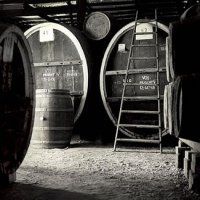
The wines are fortified early to retain the sweetness, like port, and aged in very old casks for differing lengths of time according to style, but the ages specified below are more impressionistic than actual. A blend designed to taste like a 10-year-old wine might be a blend of much older and much younger wine for example. Very important in fashioning the wine is exactly where it is aged. Some of the eight members of the Rutherglen Network, the close-knit association of producers, have hotter and /or drier cellars than others. Some, like the Morris cellar shown above, are little more than tin-roofed shacks. Floors may be dirt or concrete, with effects on the ambient humidity and temperature.
Most but not all producers maintain old stocks as soleras, and there is heritage involved in the people too. Several of the producers were founded in the mid-19th century and at least one winemaker is seventh generation. See details of all eight here.
A stylistic classification of the wines has been drawn up thus, in ascending order of apparent age, and price:
Rutherglen The foundation of the style; displaying fresh fruit aromas, rich fruit on the palate, clean grape spirit and great length of flavour. Should taste approximately like a five year old.
Classic A maturing style imparting greater levels of richness and complexity; exhibiting the beginnings of 'rancio' characters produced from prolonged maturation in oak. Should taste approximately like a 10 year old.
Grand A mature style with greater intensity and mouth-filling depth of flavour, complexity and viscosity; producing layers of texture and flavour with seamless integration of the flavours of fruit, grape spirit, and mature oak. Should taste approximately like a 15 year old.
Rare The richest and most complete wines; displaying deep colour, intense fruit and 'rancio' characters, rich viscous texture and extreme depth of mellowed complex flavours. Should taste approximately like a 20+ year old.
The Topaques generally have slightly more obvious acidity and a certain greenness of both colour and aroma while the Muscats are even sweeter and can have a reddish tinge, though the older the wines, the more the difference between the two styles are eroded.
The Rutherglen Network members were obviously cheered by the fact that sales of fortified wine, representing only about 4% of all wine in Australia, had risen last year although they admitted that the recent revival of Seppeltsfield in South Australia may have played a part in this.
Note that these wines are ready to drink when they are bottled, which is why the drinking dates below are all the same. Though of course it is difficult for us consumers to distinguish between different bottlings of the same producer's offering of a single style.
At the tasting we tasted by style but the notes below are sorted alphabetically by producer (sur)name, by grape variety and then in ascending richness. I may have been even meaner than usual with my scores. There is, quite literally, nothing to compare them with, so I was marking them by their own high standards.
ALL SAINTS

Pale bright orange tawny. Very sweet almost sugary nose. Raisiny...
One of the lightest. Yellow/green rim. Big leap up from their...
Dark brown. Malty nose. Sweet and a little simple. Lots of...
Fox red. Very sweet and sticky again. Thick creamy syrup. But...
Yellow rim. Very sweet indeed. Bit sticky. Chewy and a bit...
Dark fox red with some yellow at the rim. Very sweet and round...
Paler than most. Not that expressive on the nose. Just a tad...
BULLER WINES
Rather old wood? Then exotic almond liqueur notes. Very sweet...
Goes back to 1996 for the youngest ingredient. Very dark brown...
Brown. Mousy nose. Very thick and syrupy. Pretty extraordinary...
Very dark. Chestnut colour. Savoury, meaty, a bit metallic on...
Very dark. Lots of rancio. Surely from a very old lot? Dramatic...
From 1996 back to 1975. Dark brown. Lifted. From the corner of...
CAMPBELLS
Savoury nose. Quite subtle and already with some age impression...
Orange with greenish rim. Macerated raisins on the nose. Again...
Dark brown with a yellow rim. Positively savoury on the nose...
Very shiny blackish brown with orange/yellow rim. Rose-petal...
Fox red. Very lifted and actually not all that Muscatty. Fresh...
Dark brown. Heady floral nose. Sweetness completely trumps the...
Brown black. Not sure I would sense this was a Muscat on the...
CHAMBERS ROSEWOOD
Mid tawny. Slightly musty wood on the nose. Sweet and quite...
An oddity available in Oz only. Dark brown with a greenish rim –...
Blackish brown. Intriguing nose – hint of coffee – though...
Thick dark brown. Like fermented treacle toffee. Very chewy...
Pale rosy tawny. Again some old oak on the nose here. Very sweet...
Dark brown. Rancio but quite muted. Very sweet with strong tea...
Brown black but with enormous sweetness and rather metallic...
MORRIS
Pale dark tawny with some green at the rim. Very broad and...
Fox red and dark brown. Light fresh nose. Very vibrant and with...
Almost black! Rose petals. Almost as though there is some Muscat...
Mid fox red. Darker than most. Treacly and very sweet but with a...
Dark reddish tawny. Edge of liquorice and treacle. Very very...
15 years average. Much blacker and denser than most. Hot tin...
20 years average. Extraordinarily dark. Intensity but balance...
PFEIFFER WINES
Orange tawny. Lift and that green streak of Muscadelle. Fresh...
Orange and quite pale – especially relative to the rest. Quite...
Not as deep and dusty as some and with quite a lot of acidity on...
Paler than most. Mid level of dark tawny but these wines are...
Transparent red tawny. Not 100% clean on the nose. Relatively...
Quite light. Rose petals and green vegetation on the nos. All...
Sweet and rosy and transparent on the nose. Fresh and fruity and...
Paler than most. Tea leaves and refreshment on the nose. Nothing...
RUTHERGLEN ESTATE
Greenish fox red. Correct and well balanced. Quite refreshing...
STANTON & KILLEEN
Bright orange. Floral nose. Very fresh and fruity and refreshing...
Rose-petal aroma. Very clean and fresh and luscious though not...
Not as dark as most. Light foxy tawny. Very juicy fruit and firm...
Mid to deep fox red. Lively broad and creamy with strong Muscat...
Bright rich red. Quite a lot of lift and tension on the nose. A...
Very dark brown. Unctuous and treacly. Lot of refreshment as...
Dark blackish brown. Savoury meat extract. Malt too. Very ‘out...