These spectacularly good sparkling teas are some of the best no- or low-alcohol drinks, including wines, that I have ever tasted. They are also beautifully packaged and well priced.
Despite a cellar of 1,700 wines to choose from, Danish sommelier Jakob Kocemba was stumped. It was 2010 and he trying to find a perfect match for a particular dessert in what was then the Michelin-starred Herman restaurant in Copenhagen.
So he started experimenting with homemade tea extracts. Many hundreds of trials later, he had the basis for his sparkling teas.
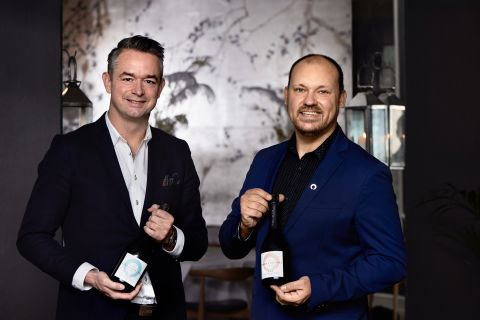
In 2017, he teamed up with business-development expert Bo Sten Hansen and they sold their first sparkling tea in Copenhagen in May of that year. The business has expanded rapidly, with sales in 45 countries and listings in over 80 Michelin-starred restaurants. According to Master Sommelier Stefan Neumann, who introduced me to these sparkling teas, the first to promote them in the UK was the upmarket Piccadilly department store Fortnum & Mason, where they were given a prominent window display under the tagline ‘Tea but not as you know it’. Kocemba and Hansen describe the teas as ‘the combination of Nordic innovation and Asian tea traditions’.
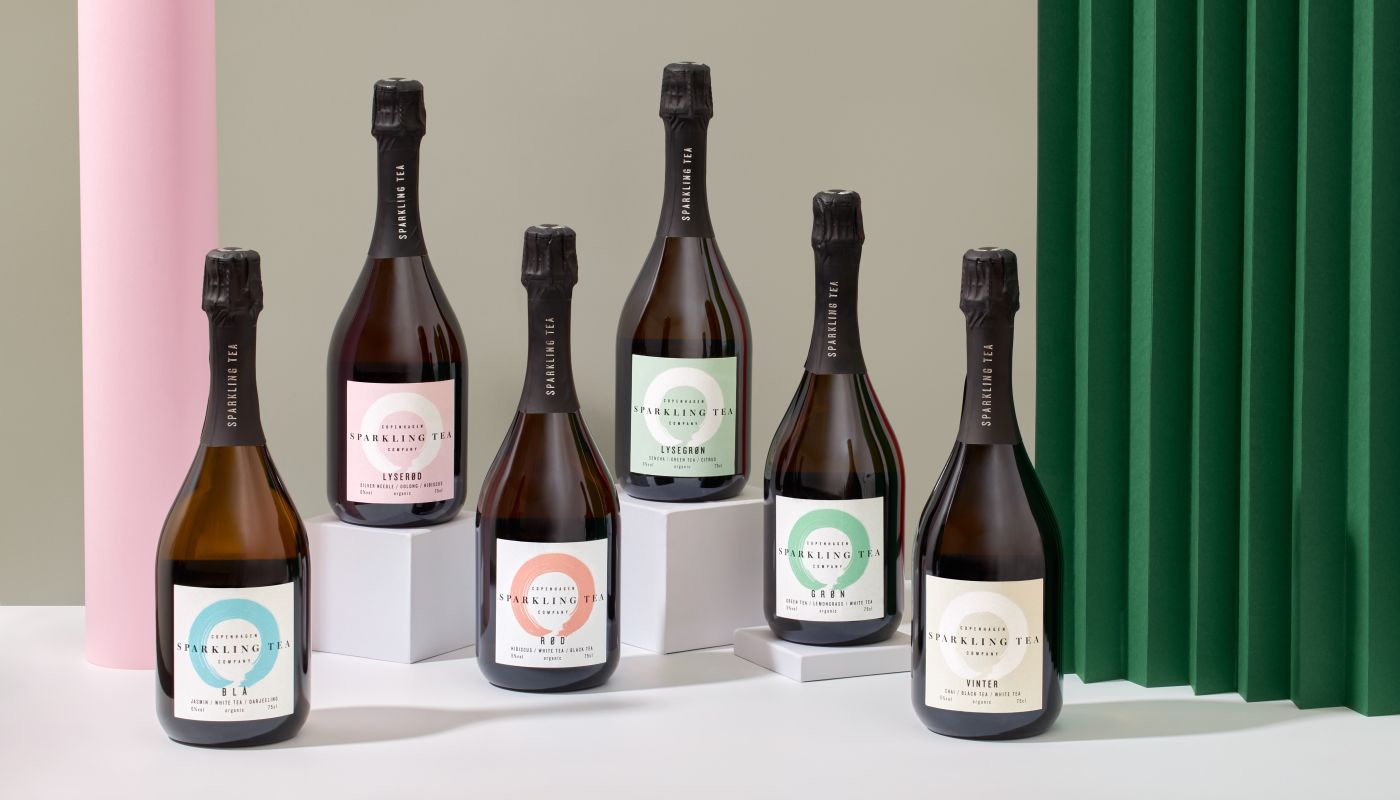
There are currently six sparkling teas in the portfolio, three with 0% alcohol and three with 5% alcohol thanks to the addition of a small amount of wine. It’s the specific blend of organic teas, as many as 12 or 13, that gives each version its distinctive character, with additions such as a dash of lemon juice, a small amount of grape juice or white wine (Müller-Thurgau or Riesling from Germany) enhancing and balancing the flavours and tannins of the teas.
According to UK importer Fells, the non-alcoholic wines are outselling the 5 percenters by a large margin but I think the latter would be a great option for anyone not trying to avoid alcohol altogether but looking for a great alternative to sparkling wine.
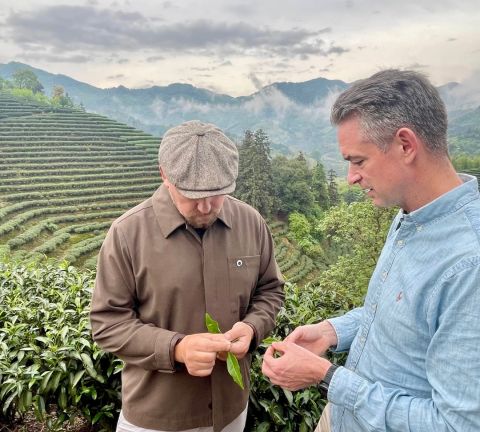
The teas are sourced from highly regarded plantations around the world and include black (mainly first-flush Darjeeling), green, white (mainly Silver Needle) and oolong as well as more scented hibiscus and jasmine. The first-flush Darjeeling, for example, comes from the Happy Valley estate, one of the oldest and highest in that region. Kocemba and Hansen hand-brew each tea in small batches at a specific temperature and for a specific length of time.
When the brewing process is complete, the other components mentioned above are added to the tea blends. Finally, before bottling, the CO2 is injected in a closed-loop system in three stages to ensure the best integration, achieving at least 5 bar pressure – just a little lower than in champagne, which is typically 6 bar – but avoiding foaming. The mousse in all these teas is both fine and persistent. The bottles are left to rest for 6–8 weeks before release, and a fresh batch is made every month. All the teas are certified organic and vegan. The non-alcoholic teas are pasteurised so that they remain stable in the bottle.
I found the whole range impressive, especially their distinctiveness one from another, but I’ve picked out my two favourites, one with 0% alcohol and one with 5%. I gave both a score of 17 out of 20, which is, I am pretty sure, the highest I have ever scored any sort of low- or no-alcohol drink. While I tasted (and then drank) these straight away, the producers suggest they should be drunk within two years of production and there’s a best-before date on the back label.
Blå, meaning ‘blue’ in Danish, contains 13 types of organic tea, including black tea (14% jasmine and 3% Darjeeling first flush), 19% white teas as well as green tea, ‘herbal leaves’ and a small amount of grape juice (for sweetness) and lemon juice. There are no added sulphites and it has 50 g/l of residual sugar. All the ingredients are listed on the back label. This is one of the three with zero alcohol. It’s currently served at The Ritz with afternoon tea, apparently.

Here’s my tasting note:
Mid gold, like a very pale tea – with a lively and extremely fine mousse. Fabulous and intense aroma of jasmine, citrus and chamomile. Perfumed and totally inviting with just a light impression of very fine teas. There’s citrus freshness allied with a delicate floral character and just a hint of green tea. Wild flowers and a touch of dried grasses. It is technically medium dry but perfectly balanced by the acidity and tastes a lot drier than I expected. Long presence in the mouth, unlike so many no-alcohol drinks, with maybe even a hint of ginger on the finish (though I don’t think there is any ginger in this one). There’s surprising body and roundness without alcohol. Jasmine comes to the fore on the aftertaste. This would be particularly good as an aperitif. The interaction of aroma, texture and freshness is just so good.
Grøn (‘green’ in Danish) is one of the three sparkling teas that does include some alcohol: just 5%, and the difference is perceptible in the weight of the liquid in your mouth. It includes seven organic teas, mainly green and white, plus lemongrass and ginger. The blend is combined with a small base of white wine and a dash of lemon juice plus cane sugar. With 40 g/l of residual sugar, it is drier than the Blå but not bone dry.

Here's my note, which reveals just how hard it is to describe a drink you are not familiar with:
Pale gold, seems a little less fizzy than the Blå but with equally fine mousse. This has all the lemony freshness of Blå but also more spice notes. You really can smell the lemongrass and ginger but they are subtle enough not to overwhelm the tea character, which is also delicate. Lemongrass and citrus dominate the palate and it’s surprising how much fuller in the mouth this feels with 5% alcohol. Creamy, with a lovely biting citrus-ginger freshness to balance the sweetness so that like the Blå, this tastes drier than I expected. Vibrant and persistent, and the ginger comes through on the finish. I didn’t put my finger on this until I read the background notes but it does also have a suggestion of mint, a sort of minty dustiness. Very different from the Blå but just as delicious and tantalisingly hard to describe.
The low- or zero-alcohol levels and range of sweetness levels of the teas – from 20 g/l to 60 g/l – make them particularly good with desserts and afternoon teas but I found the drier examples (for example Lyserød, meaning ‘pink’) tasted pretty dry, even with 20 g/l residual sugar, and were great with more savoury dishes. Vinter (‘winter’), the sweetest of all with 60 g/l residual sugar, was a great match with rhubarb crumble. Having said that, I enjoyed each of the sparkling teas on their own because they are so harmonious and so aromatic that I wanted to savour them without competing flavours.
With a sommelier at the origin of these sparkling teas, it’s no surprise that there are suggestions for food pairings and cocktail recipes on the Inspiration page of the producer’s website.
The UK importer, Fells, list the following stockists:
- Blå: Selfridges, Cambridge Wine Merchants, Corks and Cru, Fenwicks, Yorkshire Vintners.
- Grøn: Selfridges, l’Art du Vin.
The US importer is Zepeim, who work with distributors throughout the country but also sell online directly to consumers via beClink.
There’s a very useful Buy it here page on the producer’s website that allows you to search for the retailer nearest your location.
All photos courtesy of Copenhagen Sparkling Tea.
Find more information about and recommendations for no- and low-alcohol drinks here.