
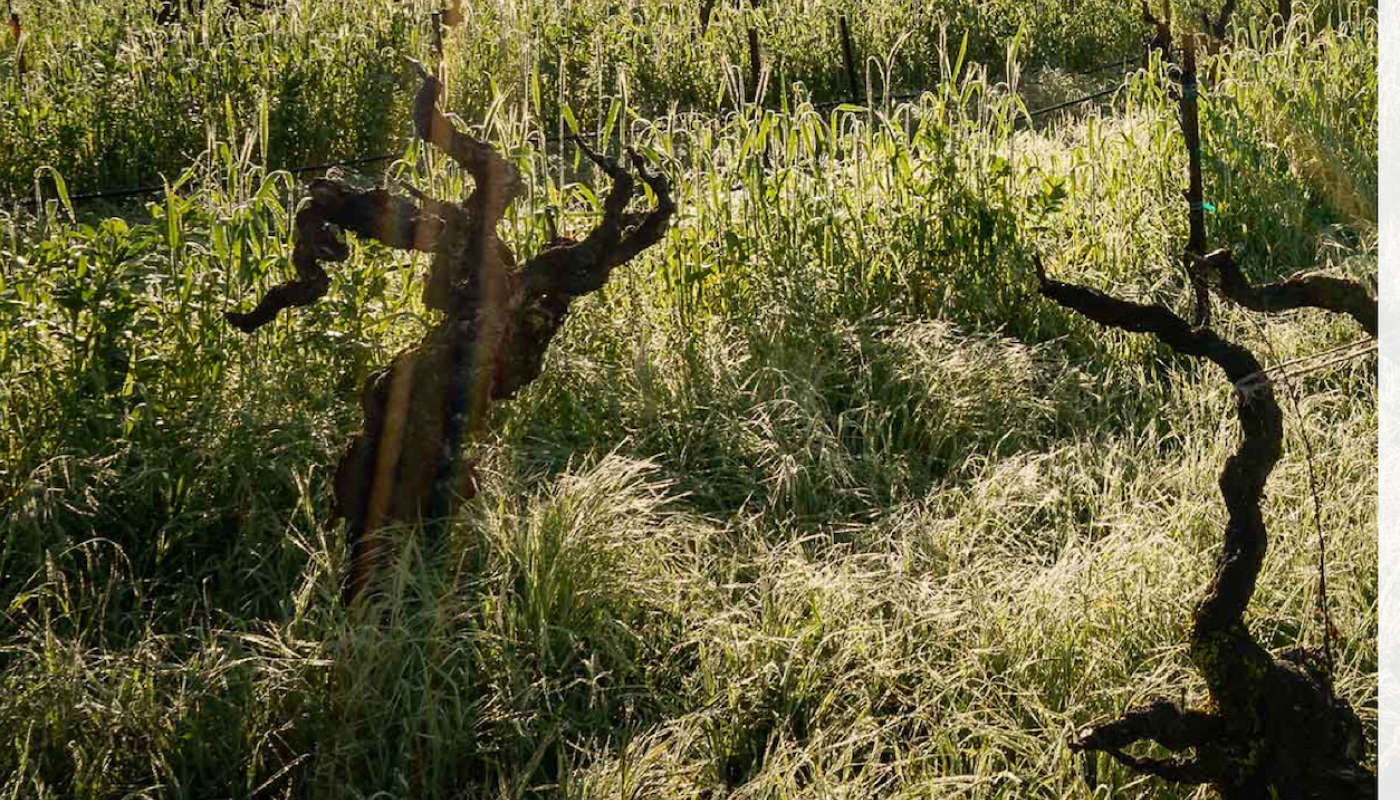
On Halloween last year in California I enjoyed a day free of pumpkins and skeletons. Instead I spent it tasting wines made from notably old vines on the opening day of a convention organised by the UK-based Old Vine Conference, an organisation dedicated to celebrating and sustaining wine production from senior plants.
Vines, which are hardy plants that will grow on land too arid or poor for other crops, can last a lot longer than humans. At the convention several scientific papers were presented proving that wine made from old vines is in general more complex and higher quality than that from young vines – provided the vines are of a suitable variety planted in the right place.
Old vines are worth saving. Not just because they provide a tangible link to a past era of cultural history. (The vine at Hampton Court Palace outside London has flourished since Capability Brown planted it there in 1768 and a 416-year-old wild vine was recently identified in eastern Tibet.) In a world in which agriculture is under increasing meteorological threat, the thick, well-established trunks of old vines that have survived decades make them singularly robust. In a drought-prone world, the more mature the root system, the more likely a vine is to find the underground water essential for growth, as has been widely observed all over the wine world.
The widespread belief that yields necessarily decline with vine age was countered by several speakers at the convention who maintained from experience that pruning techniques sensitive to the flow of sap and designed to encourage maximum woodiness could prolong a vine’s healthy crop levels well into old age.
Because of the general (if, until recently, unproven) association between vine age and wine quality, many wine labels have boasted of Old Vines, Vieilles Vignes, Alte Reben or similar, but until now there has been no definition of what constitutes ‘old’ in a vine’s life. The OIV, the international organisation governing winegrowing, recently decreed, however, that 35 years is the cut-off age – and that to qualify as old, the vine’s planting date has to be documented.
This was great news for those of us involved in The Old Vine Registry, a brilliant, free website maintained by our colleague Alder Yarrow based in the Bay Area. We had also decided on 35 years as the crucial age for this attempt to catalogue and detail every ‘old’ vineyard in the world. So far, more than 9,000 have been identified and described, with, usefully, links to where you can buy each vineyard’s produce. Old vines will stay in the ground only if there is a commercial imperative to keep them there.
This is why California is especially blessed with ancient vineyards. The gold rush of 1849 attracted hopeful immigrants from all over Europe, especially Italy, who brought their wine-drinking habits with them. So in the late nineteenth century there was a flurry of vine-planting, especially but not exclusively in Sonoma County, where many of them settled. (It would be a century before Napa became more famous than Sonoma.)
In the 1880s, as Europe’s wine production shrank thanks to the predations of phylloxera, Californians believed for a while that they would become the world’s wine suppliers and new plantings peaked, as they did when Prohibition was imposed in the early twentieth century. Because home winemaking was permitted, there was a dramatic increase all over the country in demand for grapes. Many of these old vines have survived, to be celebrated by California’s Historic Vineyard Society, a non-profit formed in 2011 to preserve them as the Pinot Noir mania induced by the film Sideways that was threatening so many of them. (Life-preserving pruning techniques were not so well known then.)
The Society had a special presence at the tasting I attended on Halloween, fielding four of the 69 California wines on show. I asked a local specialist to mark my card and tasted 29 of them. Although there was a surprising number of white wines, including three of the four shown by the Society, what was very noticeable was the general preponderance of Zinfandel, the dominant grape variety in 19 of the wines I tried and 39 of the total 69. Zinfandel took over from Mission as California’s most planted vine in the nineteenth century, with Carignane (thus spelled) also popular. Cabernet Sauvignon didn’t overtake Zinfandel to become the state’s favourite red-wine grape until the very late twentieth century.
Despite its popularity, Zinfandel, originally from the Balkans and known as Primitivo in Puglia, is not that easy to grow. Its tightly packed bunches tend to rot, and to ripen unevenly. If grown somewhere too hot, some of its grapes have a tendency to desiccate into raisins, robbing the resulting wine of freshness. But the theory is that the Italian immigrants were pretty clever at working out which were the best (cooler) sites for Zinfandel, and often planted it mixed with other varieties as a sort of insurance against weather hazards. ‘Mixed blacks’ is the California term for a vineyard planted with several, sometimes multiple, varieties as was common not just in Sonoma but also in Lodi at the northern end of the Central Valley, a stronghold of both old vines and Zinfandel.
But if made sensitively, Zinfandel, sometimes fermented with these other dark-skinned varieties, can make wines of great subtlety and staying power that truly, unlike Cabernet Sauvignon, express California wine history – although like Grenache, Zinfandel demands full ripeness, hence relatively potent wines. Ridge Vineyards, based south of San Francisco but with its own old-vine specialist Lytton Springs winery in Sonoma, is the arch proponent. At the Old Vine Conference tasting, Ridge was determined to show how well these wines age. Winemaker John Olney poured a Lytton Springs 2005 (from 77% Zinfandel, 17% Petite Sirah, 6% Carignane vines well over a century old) and a 2007 vintage of his other famous Sonoma blend Geyserville from even older vines (58% Zinfandel, 22% Carignane, 18% Petite Sirah, 2% Mataro or Mourvèdre). They would qualify as extremely fine, still-evolving wines in any context.
Ridge Vineyards wines are particularly – unusually for California – easy to find outside the US. In the UK there are multiple stockists of them in full and half bottles.
But both at the Ridge table and at others at this event I was frustrated by what one might call Zinfandel cringe. No matter how good the Zinfandel-based wine, and how old the vines, it was always considerably cheaper than an equivalent Cabernet Sauvignon from the same producer. Take Grgich Hills, for instance, a Napa Valley producer I admire enormously for pioneering regenerative practices in the vineyard and for offering solid value. At the Old Vine Conference the Grgich family decided to show two of their top wines. Miljenko’s Old Vine Zinfandel 2020 from 100-year-old vines was a superb wine by any measure and, in a California context, probably not overpriced at $125 a bottle. But Grgich Hills’ Paradise Block 2021 from 66-year-old Cabernet Sauvignon vines, admittedly certified regenerative and organic, was listed at $295.
I for one would prefer many a characterful Zin to an example of the huge and disappointingly homogeneous Cabernet Sauvignon category. But presumably these relative prices represent demand and I am out of step with it.
It’s true that basic, inexpensive red Zinfandel is a pretty unappetising wine, with sweet, jammy berry flavours, and the fashion for commercial ‘White’ (very pale pink) Zinfandel that took hold in the 1980s did nothing for the reputation of the grape (while probably keeping many a Zinfandel vine in the ground). But fine Zinfandel can vary enormously, from brisk and appetising such as the Frog’s Leap through intensely terroir-driven wines and Ridge’s complex essences, to a sort of port counterpart. The Historic Vineyard Society even showed a traditional-method tomato-coloured sparkling version from the 137-year-old Bedrock vineyard in Sonoma.
There is so much more variety to be found in the humble Zin than in the highly priced Cabernet category.
Historical Zins
Most of the Ridge wines mentioned are available from a wide variety of retailers, often by the case; see Wine-Searcher.com.
Buena Vista Zinfandel 2023 California 14.5%
£17.99 All About Wine
Dry Creek Vineyard, Heritage Vines Zinfandel 2021 Sonoma County 14.5%
£24.67 Vinatis
St Amant, Mohr-Fry Ranches Zinfandel 2022 Lodi 14%
£27.90 Roberson Wine
Pedroncelli, Mother Clone Zinfandel 2023 Dry Creek Valley 15%
£28 Amathus
Frog’s Leap Zinfandel 2022 Napa Valley 14.5%
£34 The Wine Society
Ridge, Three Valleys 2023 Sonoma County 14.6%
£37.95 James Nicholson Wine and many others
Ridge, Three Valleys 2022 Sonoma County 14.2%
£41.50 Divine Fine Wines and many others
Ridge, Geyserville 2022 Alexander Valley 14.5%
£52 The Wine Society and many others
Ridge, Lytton Springs 2022 Dry Creek Valley 14.5%
£52 The Wine Society and many others
Turley Old Vines Zinfandel 2022 Lodi 14.5%
£39 Good Wines Good People, £40 Woodwinters, £45.95 Perfect Cellar
Ridge, Geyserville 2021 Alexander Valley 14.5%
£56.50 Four Walls Wine Company and many others
Chateau Montelena Zinfandel 2021 Calistoga 14%
£46 London End Wines, £51 VINVM
Ridge, Lytton Springs 2021 Dry Creek Valley 14.5%
£51.95 Divine Fine Wines and many others
Ridge, Pagani Ranch Zinfandel 2021 Sonoma Valley 14.6%
£52 The Wine Society and others
Ridge, Geyserville 2023 Alexander Valley 14.6%
£28 per half Hedonism, £59 Amathus, £63.95 Lea & Sandeman
Ridge, Lytton Springs 2023 Dry Creek Valley 14.4%
£31.96 per half Uncorked, £65.50 Lea & Sandeman
For tasting notes, scores and suggested drinking dates, see Northern California Zinfandel. For more UK retailers and international stockists, see Wine-Searcher.com.
For more on the glories of Zinfandel, see Zinfandel – California’s other red and Sam’s recent articles, Tasting Zinfandel and Zinfandel – a wine lover’s wine, or simply click on the Zinfandel tag below.













