
Before I get to global news, I would like to remind all wine communicators who are listening that the deadline for the 67 Pall Mall Global Wine Communicator Awards is this Sunday, 8 March. As far as awards go, this is the Pulitzers of the wine world. So go dig up your audio, video or written pieces and submit!
An update on Trump tariffs
As discussed here on 20 February, the Supreme Court of the United States ruled that the reciprocal tariffs the Trump administration imposed under the International Emergency Economic Powers Act (IEEPA) were unconstitutional.
Later that same day, the Trump administration issued an executive order to halt collections of tariffs imposed under IEEPA after midnight on 24 February. Trump then invoked Section 122 of the Trade Act of 1974 to impose a temporary 10% global tariff effective 12.01 am on 24 February for the maximum allowable time period of 150 days.
On 4 March the US Court of International Trade ordered Customs and Border Protection to issue refunds for tariffs collected under IEEPA.
On 5 March a coalition of 24 US states sued the Trump administration on the grounds that the new 10% tariffs imposed under Section 122 of the Trade Act are also illegal, that the law is not meant to address trade imbalances and that only Congress has the power to impose sweeping tariffs.
In the last year, the strain of the IEEPA tariffs and declining consumption has caused producers, importers and distributors to downsize and close at an unprecedented rate. The tariffs have raised costs not only for businesses selling international wines but have also raised equipment costs for domestic producers and resulted in fewer distribution options. The trade war lost US wine producers their largest export market when, just over one year ago, Canada banned US alcohol in response to Trump’s tariffs – resulting in a 78% contraction in exports year over year and a $357 million loss in export value. 81% of total global US wine export losses in 2025 are attributed to Canadian bans.
Flooding in Bordeaux and Victoria
The end of February marked the end of a record-breaking 40 consecutive days of rain for France. Bordeaux received 321 mm (12.6 in) of rain in one month – more than projected for the entirety of winter. On 23 February the publication Vitisphere reported that this has resulted in flooding in numerous vineyards. Producers are not overly worried about their vines, which are currently dormant, but have reported that this has resulted in delays in pruning and in shipments.
Unfortunately, Victoria in Australia has been much harder hit – Mildura in northern Victoria received 150 mm of rain in one week compared with 159 mm in all of 2025. With harvest just around the corner, heavy crop losses are expected. Tennille Chalmers of Chalmers Winery in Murray Darling stood in her flooded vineyards while telling 7 News that the threat of botrytis is high and could ‘absolutely ruin the crop’. It seems that rain in southern Victoria, while significant, was not as detrimental. If you have more information, please email [email protected].
French lawsuits over copper fungicides
As reported earlier this year, organic producers in France have been reeling since ANSES (French Agency for Food, Environmental and Occupational Health & Safety) banned most of the 22 available copper-containing fungicides. On 23 February, during the Paris International Agricultural Show, the National Confederation of AOC Wine Producers (CNAOC), the National Federation of Organic Agriculture (FNAB) and the National Interprofessional Association of Organic Wines (France Vin Bio) announced their support for all companies that have filed, or intend to file, briefs with administrative courts which challenge the ANSES ban. Five companies are reportedly taking legal action. Bernard Farges, president of the National Committee of Interprofessional Organizations of Wines with Appellation of Origin and Geographical Indication (CNIV), called the ban ‘unenforceable and irresponsible’.
For the moment, there remains no fungicide that is as effective or affordable as copper at treating downy mildew. While there are a handful of biological alternatives making their way to market, none has the long-term track-record that copper does.
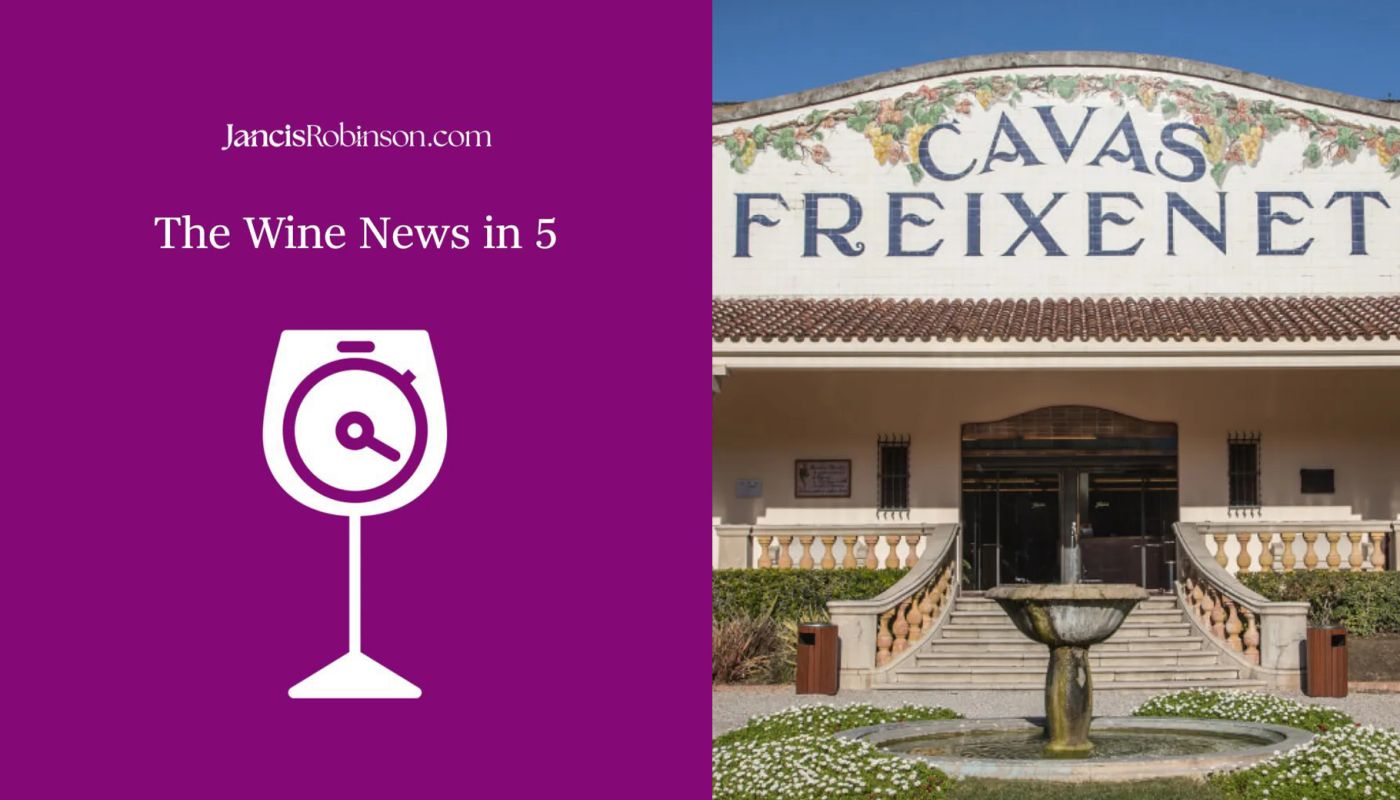
Henkell buys out Freixenet Cava
In 2018, Henkell acquired 50.6% of Freixenet. On 2 March the Ferrer family and José Luis Bonet, descendants of Freixenet’s original founders, sold the remaining shares to Henkell, completing the transfer of ownership.
Alleged bribery at top US wine distributor
On 4 March a federal grand jury in Oakland, California, indicted five employees of Southern Glazer’s, the largest beverage distributor in the US, and one Napa winery salesman for engineering a multi-year bribery scheme to control which wines received placement on California supermarket shelves. According to the United States Attorney’s Office, employees came up with a scheme ‘to provide bribes to employees of retail grocery chains to increase the purchases of certain alcohol brands and to obstruct any investigations into the bribes by creating and maintaining false financial documents.’ While the distributor in the documents is listed only as ‘Distributor-1’ all employees listed are current or former Southern Glazer’s employees.
That’s all for this episode of the wine news. If you enjoy this newscast and would like to see it continue, please become a member of JancisRobinson.com. And if you have breaking news in your area, please email [email protected].
Photo at top courtesy Freixenet.
This is a transcript of our weekly five-minute news broadcast, which you can watch below. You can also listen to it on The Wine News in 5 Podcast. If you enjoy this content and would like to see more like it, please become a member of our site and subscribe to our weekly newsletter.