If Valentine’s Day Sweethearts were fortune cookies, I would have pulled a box of ‘Me & Goo’, ‘My H.flu’ and ‘Honey – run’.
Instead, that day I remained blissfully unaware that the exquisite bottle of 2013 Eric Rodez Empreinte Blanche Champagne that I marvelled at on Valentine’s Day would be the last wine I would taste for a month.
For the entire rest of February and beginning of March, I subsisted entirely on memories of this glorious wine, selected for me by talented former WSET students who opened a brilliant little shop in Portland called Ora et Labora, and drunk boisterously with my partner and friends. It was a sublime moment before a dreadful head cold set in. And when my senses returned this week, I did not faff about deal-hunting for a bottle of wine. I went Rodez hunting.
The thing is, Rodez doesn’t come cheap. Rather than the Empreinte I had on Valentine’s Day, I went for the Cuvée des Crayères Ambonnay Grand Cru, his ‘entry-level’ wine. It cost me $79 (though it can be found for less), making it, by a very long shot, the most expensive wine of the week I have ever recommended.
It was worth it. Every sip brought colour flooding back to what had been, in my head, a bleak, grey world, painting it in tones of pink-tinged cherry pit, warm cream-coloured almond paste and smoky burnt orange.
The Rodez family has been farming grapes in the village of Ambonnay in the Montagne de Reims since 1757. And, while it’s common for winemaking families in Champagne to trace their lineage back generations – and I am sure they know which members of their family stewarded their estate – I have never actually seen each generation listed out like they are on the Champagne Rodez website. There’s something about knowing Jean-Baptiste Rodez, born 1757, handed off to Marie-Louis Rodez, then to Louis, to Eugène, to Camille, to Pol, to Eric’s father Jean, to Eric and soon to Mickaël – that makes the whole ‘nine generations’ feel less like a throwaway marketing comment and more like people who signed their names on letters through the French Revolution, the rise and fall of the First French Empire and a couple of World Wars.
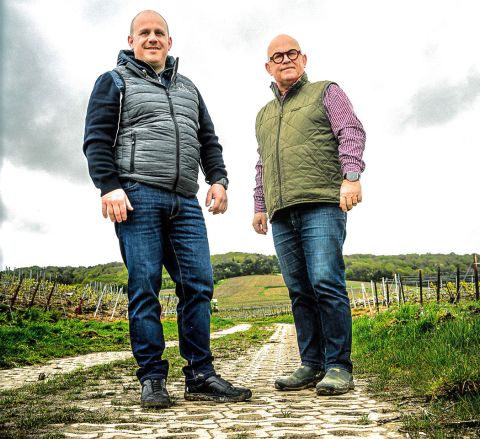
The generation currently at the helm, Eric Rodez, hasn’t had to deal with any World Wars to date and so has instead used his time to make what was once a grape-growing operation into a renowned grower-champagne house. After spending six years as the oenologist at Krug, Rodez launched Champagne Rodez in 1984.
Shortly after founding the brand, Rodez became disillusioned with conventional farming and began to focus on soil health, gradually eliminating herbicides and pesticides on the family’s six hectares (15 acres). By the mid 2000s Rodez had begun to incorporate biodynamic practices. The estate was certified organic in 2012 and biodynamic through Demeter in 2015. Rodez does not source grapes elsewhere, so you can be certain that every one of his bottlings is farmed to the same standard.
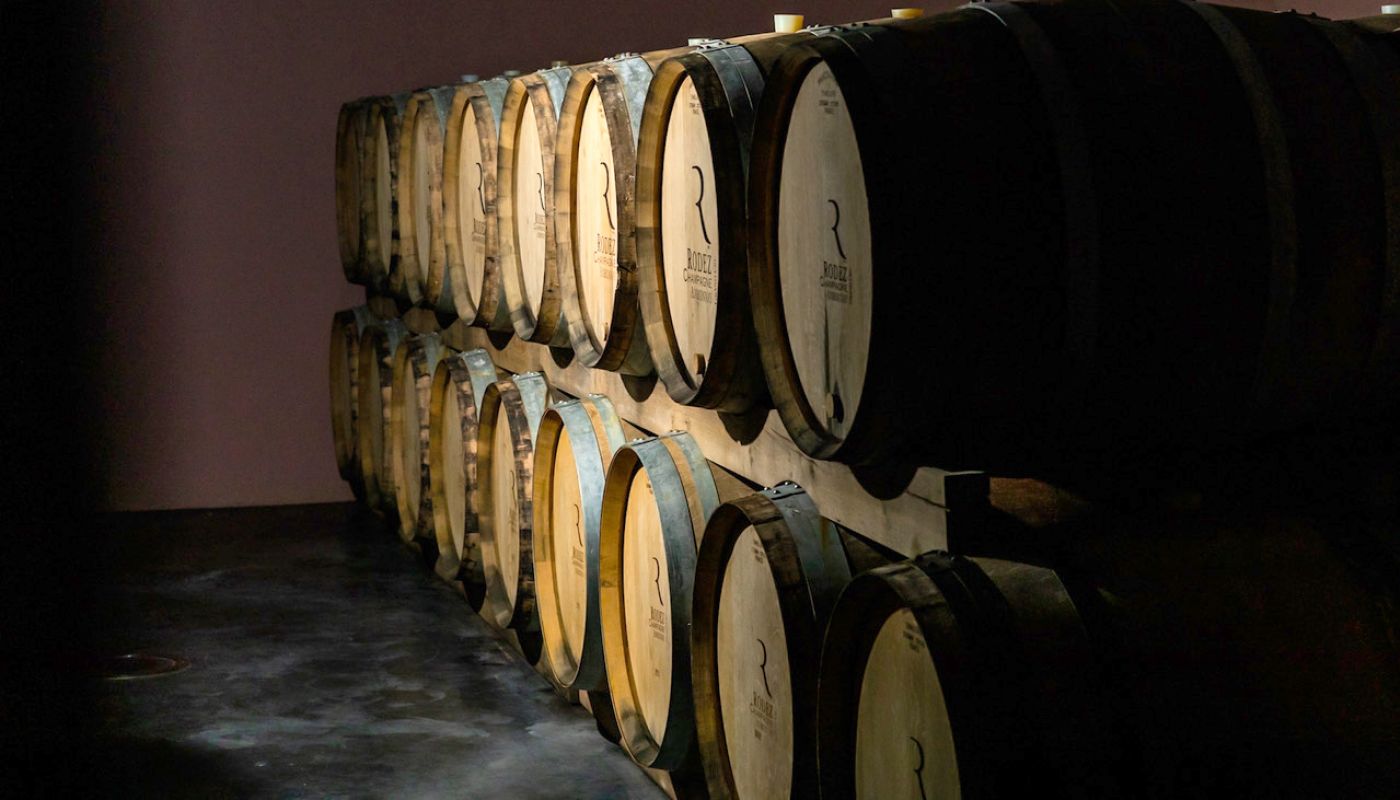
His Cuvée des Crayères, a blend of 60% Pinot Noir and 40% Chardonnay, is generally blended from an average of 15 different wines from five to six vintages. However, the wine that I tasted, the 38th edition, was a blend of 28% 2021, 32% 2020, 20% 2019 and the remaining 20% reserve wine, blended and bottled in spring of 2022. Ninety per cent of the base wine in the blend was fermented and matured in barrel – a practice that I find gives an incredibly attractive broadness to the wine (I am always searching for producers who ferment their base wines in oak). Further upping the texture ante, this wine has gone through partial malolactic conversion and the acidity, while energetic, isn’t sharp or prickly. The bottle informs me that it was disgorged in May 2025, more or less 36 months after bottling. The nine months or so that have passed between disgorgement and my opening the wine have given the well-judged 2 g/l of dosage (always grape concentrate, never beet or cane sugar) enough time to integrate seamlessly into the blend.
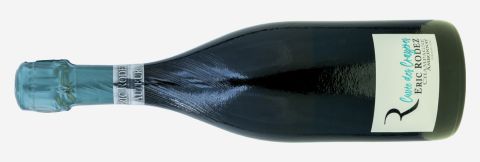
According to Wine-Searcher, Rodez’s Cuvée des Crayères is available in the US, UK, Japan, Hong Kong, Italy, Germany, Spain, Portugal, Lithuania, Romania, the Netherlands, Switzerland, the Czech Republic, Austria, Ukraine, Ireland, Australia, Canada, Taiwan and Singapore.
For more champagne recommendations, see our tasting notes database.