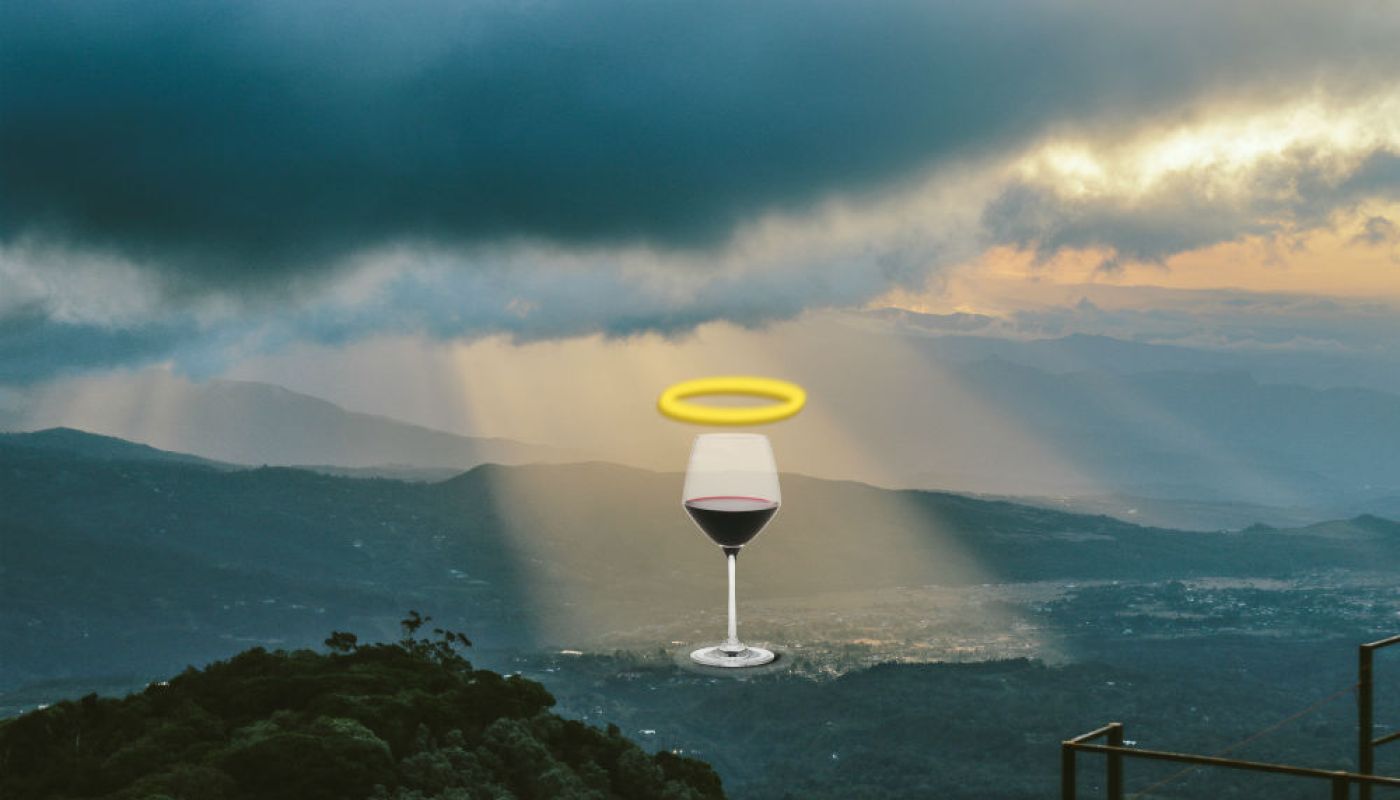
Fostering a true and unfaltering love of wine requires not just perpetual humility, boundless curiosity and a preternaturally durable liver, but something even more superhuman: faith.
Much of what makes wine so fascinating remains unexplained – the nuance of terroir, the miracle of maturation, the enigma of bottle variation and the labyrinthine complexity of our own palates – all these elements elude the full comprehension of science and so instead rely, to a certain degree, on personal belief.
The extent of that faith varies from person to person, and biodynamic viticulture provides a good case in point. Involving elements of astrology, homeopathy and folk remedy, the efficacy of biodynamics remains largely unproven by scientific method. However, empirical evidence from thousands of grape-growers, including some of the world’s most respected estates, suggests that biodynamics makes a tangible difference to the health of the vineyard, the natural balance of the vine and thus to the resultant quality of the wine.
Some experts believe that biodynamic wine has a tangible trait that distinguishes it from conventionally made wine, often described as somehow ‘energetic’. For other perhaps more moderate mindsets, biodynamics signifies an attention to detail and commitment to sustainability that can improve quality, although not necessarily in a directly connected way. While for cynics, biodynamics is sheer nonsense.
The difference between these positions ultimately comes down to faith. Our palates become the arbiter: if we find a difference in what we are tasting, which is ultimately a matter of personal opinion, we can believe in any cause. The perception of oyster-shell flavours in Chablis might be a literal transference of terroir for one person and a chimera formed by reduced sulphur compounds for another.
The same logic (or lack of it, depending on your perspective) can be applied to any element of wine where the scientific explanation is not currently adequate – where the mystery still resides. After all, before the role of microbes in fermentation was understood, winemaking itself was subject to all sorts of outlandish explanations.
But what happens if you lose your faith in wine and reject any explanation that is not supported by cold, hard science?
First of all, you might well argue that you lose a great deal of what makes wine so pleasurable because, for most drinkers, the inscrutability of wine is integral to what makes it so compelling. Second of all, you might soon find yourself cast out as an apostate.
Whenever someone attempts to debunk the world of wine, to challenge the faith of its congregation, they generally fail. In 2001, You Heard it through the Grapevine by Stuart Walton (published by Aurum) declared that ‘all aspects of wine, from the way it is made to the way it is marketed to the way it is talked about, are infected to a dismaying degree with dishonesty and pretentiousness, and that there exists a kind of silent conspiracy to prevent the truth of this being known'.
Seven years later, Malcolm Gluck’s The Great Wine Swindle (Gibson Square Books, 2008) accused the wine trade of being ‘populated by liars, scroungers and cheats, administered by charlatans and snake-oil salesman and run on a system of misrepresentation and ritualised fraud. It's a world that still deliberately surrounds itself in impenetrable, pretentious and often plain misleading wine-speak, churned out by snobby writers and duplicitous merchants who delight in the obscure and the shadowy, the indistinct and the imprecise.’
Well, that made me choke so violently on my breakfast caviar that my monocle nearly fell out. But whether you agree with them or not is entirely beside the point. While it may have ruffled feathers at the time, this rhetoric ultimately made no difference to wine whatsoever. What those authors see as conspiratorial and dishonest is the self-same mystery that others find so intriguing, and that is the belief that has prevailed.
There is an obvious parallel to be made with religion here – including the axiom that you should never criticise or question another person’s faith. I certainly have no intention of doing that, but will use my own experience to make a point.
I was raised in an Anglican household, attending church every Sunday and saying prayers before bedtime every night. I was christened and confirmed, and attended Christian holiday camps. By my mid teens I had started to question some of the aspects of religion I had always taken for granted: my beliefs were based on what I had been told to think, rather than what I had personally experienced. By the time I left home for university, I was atheistic and remain so to this day.
For the record, since this is such a sensitive subject, let me reiterate that I don't seek to judge anyone else’s faith, and I still have great affection for the Christian tradition.
Has my own apostasy reduced the worth or fulfilment of my life? I’d argue not, of course, although I’m sure others might disagree. Then how about wine: is the enjoyment of it diminished if we reject those elements of it which rely on faith? Following the same logic, the answer should be no – yet this would seem to strip wine of the mystery that makes it so appealing.
Questioning one’s faith is a healthy exercise, ensuring that we don’t simply accept things without due diligence. For most wine lovers, the balance lies between scrutinising wine’s more esoteric aspects and dismissing any claims that seek to exploit our credulity, while maintaining an open-minded acceptance that there is much that we still do not comprehend.
Perhaps wine serves as a substitute for religion in this way – an article of faith for the secular. Otherwise, wine risks becoming something simply for pleasure and inebriation, although maybe there's nothing wrong with that. Yet disconnecting wine from the thing that makes it special, the thing that takes it beyond both science and art, seems to sacrifice one of its most enduring characteristics.
Keeping faith with wine might not be so good for the liver, but it is certainly good for the soul.