One of wine’s many special attributes is its ability to get better with time – along with its ability to express a particular spot on the earth in liquid form, to go so beautifully with food, and to act as a social lubricant. But it’s a myth that all wine improves with age. Less than 10% of the volume of all wine produced will improve in bottle, although that proportion includes many of the world’s most interesting wines.
Most wines under £10 a bottle are best drunk as young as possible, while their youthful fruit is maximally fresh. And this applies to many wines under £20, too, with the most obvious exception of wines based on the Cabernet Sauvignon grape, which is naturally high in tannins whatever the price of the wine.
Tannins are what makes strong or cold tea taste chewy. In wine, they are the preservative derived from grape skins, and sometimes oak, that over time combine with other compounds in the wine and may eventually form the sediment to be found in bottles of long-aged wine. In fact, the presence of sediment is a good guide to the maturity of a serious wine designed to age – although some producers filter their wines to such an extent that not much sediment is formed.
When judging a young Cabernet, professionals try to work out whether there is enough fruit and flavour in the wine to outlast the youthful tannins. So long as that is the case, the result will be a wine with much subtler flavours than were evident in the young wine, thanks to all those reactions between different elements in the wine, including the anthocyanins that give it colour. This is why, with time, all red wines – not just Cabernets – lose colour and change from deep crimson to pale garnet, then ruby and eventually a sort of orangey rust colour.
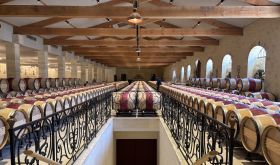
Red bordeaux from the Médoc on the left bank of the Gironde (see this World Atlas of Wine map) is the archetypal Cabernet, typically blended with (the closely related) Merlot grape to give the wine flesh, and to provide insurance against poor weather at flowering because the two varieties flower at different times. The grandest versions are the classed growths, with first growths such as Châteaux Lafite, Latour, Margaux and Mouton Rothschild at the top of the tree. Winemaking has evolved in classed-growth cellars so that these expensive wines are drinkable much earlier than they used to be but to enjoy their unique qualities I still think it’s worth keeping them at least a decade and ideally 20 years or more before drinking them – truly a long-term asset. This will involve storage charges (see Back to basics, below) unless you have a capacious wine fridge or, preferably, a cellar.
But those in more of a hurry are in luck because, thanks to a glut, some of the best value in wine today is in the so-called petits châteaux, Bordeaux wine farms lower down the ranks than the classed growths. Their wines are made along exactly the same lines but mature faster, reaching their peak at 5–10 years old. British wine merchants who take more trouble than most to select the best of the hundreds of wines available at this level include Haynes Hanson & Clark, Tanners and The Wine Society.
The Wine Society have been offering Château Citran 2016 Haut-Médoc (13.5%) at £22, for example. I’d want to keep this well into the next decade to maximise the pleasure potential – and even longer for the magnums they have been offering at £45 because the bigger the bottle, the slower but usually more magnificent the evolution of the wine.
Great-value examples of wines worth ageing include Haynes Hanson & Clark’s seductively glamorous Château de Lyde 2022 Cadillac Côtes de Bordeaux (14%) at £14.
But the value currently available in Bordeaux has not escaped the attention of the supermarkets. Château Sociando-Mallet just north of St-Estèphe created quite a stir by outperforming much more expensive classed growths in blind tastings. The second wine, La Réserve de Sociando-Mallet 2018 Haut-Médoc (13.5%), is available at £30 in many a Tesco store and online – and at £29 from Tanners. I’d keep it at least three and preferably up to 10 years from now.
Suitable candidates among recent Bordeaux vintages to squirrel away now are 2022, 2020, 2019, 2018, 2016, 2015 but the Bordelais have shot themselves in the foot by pricing young vintages more ambitiously than many mature ones. Vintages currently drinking well include 2017 (for those in a hurry), 2014, 2012 and 2009.
But most Cabernets from elsewhere, or blends made in the image of Bordeaux, are also worth cellaring, even if they tend to be released much closer to when they are drinkable than the Bordeaux wine trade’s habit of expecting customers to buy its wines long before they are even bottled. Margaret River Cabernets from Western Australia and Bolgheri reds repay ageing, as do the more subtle California Cabernets.
South America produces some of the most obvious examples of inexpensive reds worth cellaring. Errázuriz, Gran Reserva Cabernet Sauvignon 2022 Aconcagua (13.5%) from Chile looks very smart but is only £11.50 at Tesco and £12 at Waitrose and should last well into the next decade. Majestic’s Marcelo Pelleriti, Signature Cabernet Franc 2021 Uco Valley, Mendoza (13.5%) should reward those who keep it a few years, and costs £18 per single bottle but only £12 if six assorted bottles are bought.
Fine Italian reds such as Barolo, Barbaresco, Brunello and Chianti Classico are prime cellar candidates. Fogliati, Treturne 2019 Barolo (14.5%), £46 from Berry Bros & Rudd, needs a few more years yet, while the 2021s from the likes of Roberto Voerzio and Paolo Scavino, available by the case from Justerini & Brooks, will continue to evolve into the early 2040s.
Querciabella, Riserva 2021 Chianti Classico (14%) is from a Tuscan vintage that should continue to gain complexity over the next 10 years. Lay & Wheeler are offering it at £42.72. Even more youthful, and less expensive, is the magnum of Fontodi 2020 Chianti Classico (14%) that was £59 from The Wine Society. I wouldn’t think of opening it before next Christmas and would happily cellar it until 2040. These are two of the best producers in the region.
Rioja producers, bless them, have traditionally released their wines only when they are ready to drink, although this is much less true of the new generation of producers such as Telmo Rodriguez, whose single-vineyard Yjar 2021 Rioja (14.5%) was one of the stars of this year’s Beyond Bordeaux tasting. It’s not cheap – from £131.12 from Vinatis – but I’m tempted to agree with Lay & Wheeler, who offer it only in bond, that it’s a ‘legend in the making’.
Most wines from Spain’s other important red wine region, Ribera del Duero, are pretty tannic when released. The tannins in Aalto 2021 Ribera del Duero (14.5%) have actually been beautifully managed so you could drink this now but it will doubtless repay quite a few years in bottle – especially the magnums that Justerini & Brooks have in stock at £98.90 each.
The most obvious red-wine candidate for long-term ageing is of course vintage port, which can take – indeed needs – many decades for the intense ingredients in the young port, not least the tannins, to interact and soften.
Not that many producers of other reds deliberately make wines designed to be aged over the long term, and red burgundy seems in general to be increasingly approachable in youth. But Australia’s most famous producer, Penfolds, is proud of how long their intense reds can last. The very earliest vintages of their Penfolds Grange from the 1950s are still impressive. They even claim that their much simpler and cheaper wine Penfolds, Bin 28 Shiraz 2023 (14.5%) that Berry Bros & Rudd sell for £25.50 will last until 2043!
Sauternes, about which I wrote at length last July, is the longest-lived white wine but, alas, sweet wines are unfashionable. As for drier whites, wine lovers have become wary of ageing white burgundy too long since so many examples were ruined by premature oxidation early this century.
Neither of the two most popular white wine grapes – Chardonnay and Sauvignon Blanc – are designed for very long-term ageing even though there are certainly exceptions. My beloved Riesling, on the other hand, almost always repays ageing, as do serious Chenin Blancs. Riesling really evolves in bottle and there is no desperate hurry to open bottles of even relatively inexpensive young examples. The generally high level of acidity helps. I’ve enjoyed German Rieslings that are decades old. A bottle of Hugel, Jubilee Riesling 2009 from Alsace was delicious the other day and had at least another four years in it.
Much to my dismay, Riesling was notable by its relative absence from the big retailer tastings this autumn but faithful followers of German wines Howard Ripley and Justerini & Brooks showed exciting ranges of young ones. The dry wine I thought would be worth keeping until 2045 was Carl Loewen, 1896 Riesling 2024 Mosel (12%), a dry-tasting wine made with ultra-traditional techniques. J&B charge £275 for a case of six bottles in bond and I’m sorely tempted - although will I live to see it at its best?
This is a common problem for wine collectors, most of whose cellars are already overstocked. There is one obvious solution: pull those corks!
For tasting notes, scores and suggested drinking dates, see our 286,000-strong tasting notes database. For international stockists, see Wine-Searcher.com.
Back to basics

How and where to store wine |
|
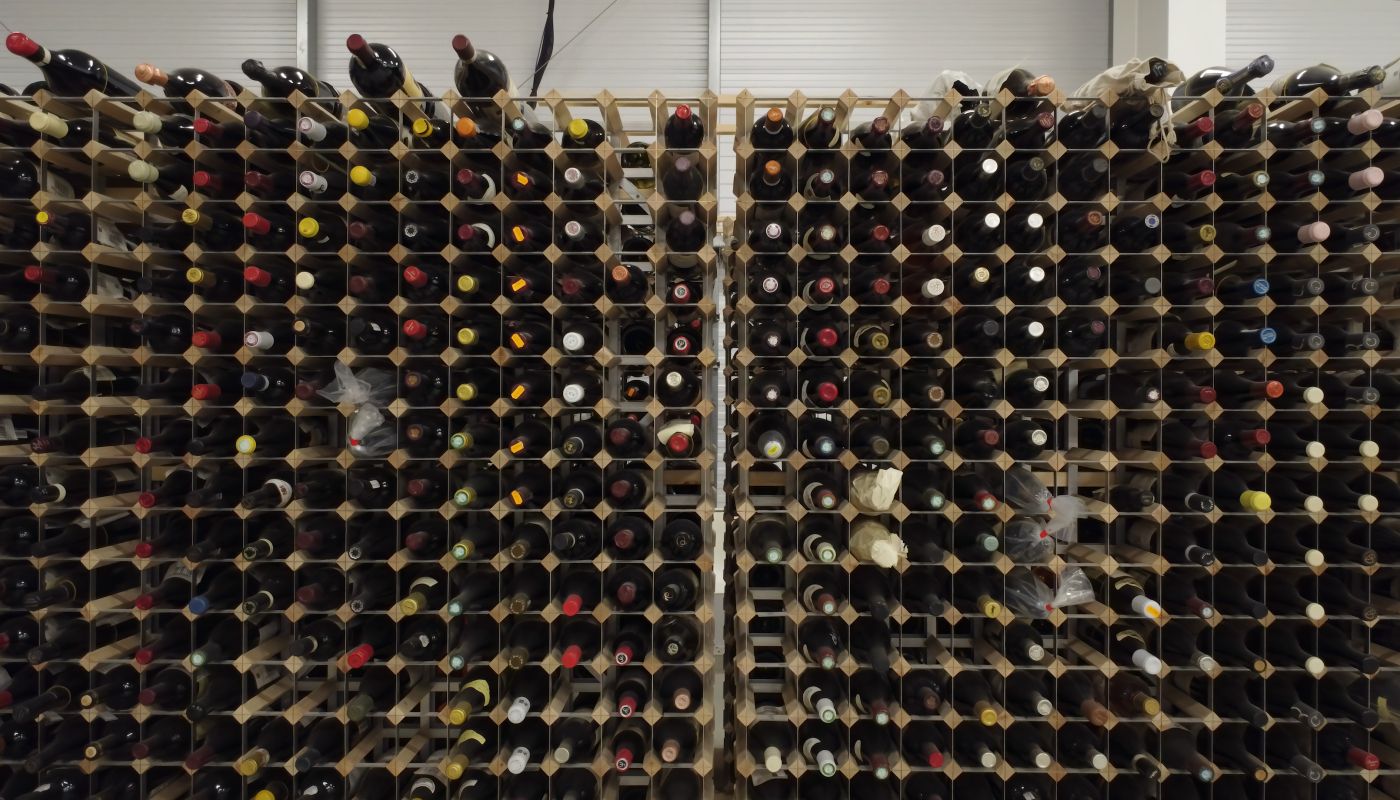
Wine needs relative cool – about 13 °C/55 °F – with no dramatic swings of temperature. It should ideally be kept free from vibration and strong light (particularly dangerous for champagne and wine in clear glass bottles).
Professional wine storage companies offer this with guaranteed temperature and humidity control – at a price. This is usually charged per case of a dozen unmixed bottles or part of a case per year and generally includes some insurance. Many of them offer help with selling wine. A high proportion of the wine they store is in bond, before duties and taxes are paid. This makes sense for overseas clients, and for UK wine collectors who may like to retain the option of selling their wine to someone based outside the UK.
Most UK wine merchants offer to store their clients’ wine, usually at one of the two major wine storage companies listed below.
Octavian
London City Bond
Other specialist wine storage outfits include Locke King Vaults in a large air-raid shelter in Surrey and Big Yellow Self Storage in Fulham and Smith + Taylor lockers in Battersea.
Wine merchants with their own storage facilities include the following.
Averys/Laithwaites
Berry Bros & Rudd
Lay & Wheeler
Seckford Wines
The Wine Society |
Images courtesy of Coterie Vaults.