Canada’s all-time high temperature was broken this week – thrice. The rocky little village of Lytton, British Columbia, where my dad hunted wild sheep on craggy cliffs in his youth, 100 km (62 miles) west of the Okanagan Valley, broke its Sunday and Monday records with 49.6 °C (121.3 °F) on Tuesday.
Across Canada’s central British Columbia, and much of Washington and Oregon in the US, a heat dome has settled in. Imagine a big invisible, inverted glass bowl, descending from above, trapping the torrid temperature inside. The dome amplifies the sunlight beaming down, and prevents any other weather patterns from getting in. It’s really, really hot, and until the dome is broken, each day gets hotter and hotter.
No one has a simple explanation for why the Cascadia bioregion (as British Columbia, Washington and Oregon are collectively known) is trapped in the dome, but scientists have explained that climate change is a factor, and that this will not be the last extreme heat event we Cascadians will be facing.
In Cascadia’s north, British Columbians have been facing the most extreme temperatures. Although I do own a parka and have slept many nights in snow huts (the Canadian stereotypes are true, at least in my case), I actually live in a semi-arid desert. British Columbia’s Okanagan Valley has a very dry, very continental climate. The temperature in Kelowna, my home and the largest city in the Okanagan Valley wine region, swung from -22 to +37 °C (-8 °F to +99 °F) in 2020. We are used to flipping the switch from cooling to heating, back and forth, each year. But this is something else.
In my backyard today (Wednesday) the knee-high ground cover kept the temperature at a mere 45 °C (113 °F). Out on the asphalt street, according to my meat thermometer, it was 47 °C (117 °F). We’ve been checking on our elderly and newborn neighbours, ensuring everyone is cool enough and not in danger.
The kids and dogs have been inside the house from dusk to dawn, sheltering in the air conditioning that is nonetheless struggling to keep our house cool. My husband refused to bike to work, and took the car instead, which usually happens only when there is snow on the ground. Our little chicken coop outside normally provides shade for our three Plymouth Rock hens, but when they started open-mouth panting on Monday, I decided to move them temporarily into a dog kennel in the garage. ‘Think of them as striped parakeets’, I told the children as I ferried the little birds inside.
My vegetable garden is going wild – all the brassicas are spontaneously bolting into flower (so much for eating broccoli). The strawberries and raspberries instantly stopped fruiting as soon as we hit 40 °C. However my poor grapevines, despite nightly watering, are obviously under strain.
Most of my backyard vines are very young – I’ll share what happened to my established vineyard in another story – and these babies don’t have a sufficient root system to weather the heat storm. All the new vines have yellowing leaves, whereas the (two) older vines seem unfazed by the heat.
I wondered what effect Cascadia’s heat dome is having on the commercial vineyards throughout British Columbia, Washing and Oregon. I called my friend Karnail Singh Sidhu, owner of Kalala Organic Estate Winery, and asked him to explain what he saw happening to the vines over the last few days of 40–47 °C weather.
Karnail (pictured below with his family) was British Columbia’s inaugural Viticulturist of the Year, and he has a knack for sharing his knowledge in a way that even a backyard grower like me can understand.

Karnail explained, ‘Grapevines are living like us. What do we do when we get too hot? We stop working, and try to move as little as possible. Our brains tell us to go into the shade. Plants are even smarter than us. In this heat, grapevines stop working and go into survival mode. They shut down, they stop working and stop producing any sugar.’
With his Okanagan Valley vineyards spread from his estate in West Kelowna to120 km (75 miles) further south on the US border, I asked Karnail if he was seeing a difference in the health of the vines according to latitude.
‘Our home vines are doing just fine. I don’t see any effect. Their roots are deep and they can handle the heat. Down south near the border, we do have young vines that we just planted this year. The south Okanagan also has sandy soils that drain faster and get hot really quickly. Some of those young vines are losing leaves.’
To my surprise, Karnail wasn’t concerned that there will be a lasting effect. Then again, I do know he’s a rather unflappable fellow. ‘I believe the vines start shutting down at 36 °C (97 °F). But the vineyard isn’t more than 36 °C 24 hours a day. The vines get a little break at night. It’s like us – if we work all day in the heat we will get heatstroke. But if we take little breaks, and cool down, we’ll probably be fine.’
His chief concern wasn’t for the vines. ‘I’m not really worried about the vines. Whatever nature gives us, we will deal with it. If the vines have enough water, and this doesn’t go on too long, they will survive.’ He was mainly concerned about his workers, who he said are starting in the vineyards at 4.30 am and stopping work for the day at 10 am. ‘After that it’s just too hot, and too dangerous. We have to take care of our people.’
In addition to hyperthermia, which has caused of a surge of deaths across the Cascadia region, fire is a constant threat. There is an extremely elevated risk of wildfires. The forests are as dry as, well, kindling. I could already see a plume of smoke emerging from the mountains above the Okanagan Valley this afternoon.
Tonight, we’ve been warned, we may see dry lightning under the dome. That means an electrical storm without any rain to put out fledgling fires. It sounds like something out of a sci-fi movie. After talking to Karnail, I’m not concerned about our local vineyards, but I am very worried for the safety of the people in the Cascadia region.
Early morning addition on Thursday 1 July 2021, coincidentally Canada Day
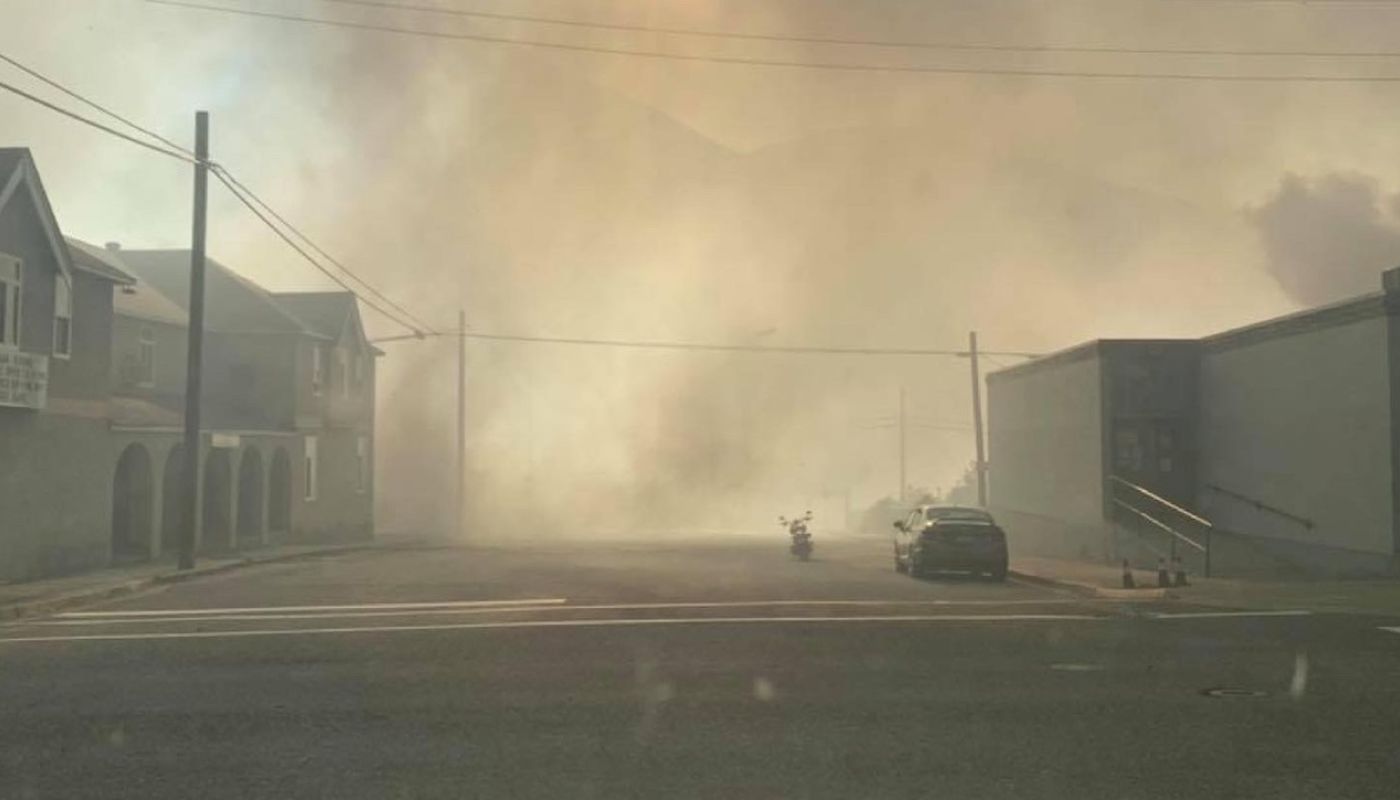
I’ve learned that the little record-breaking village of Lytton was torn apart by flames last night. A nearby wildfire engulfed the community, and a wall of flame swept through, destroying 90% of the village’s buildings in its wake, as well as the power infrastructure. The entire town has been evacuated. Lytton First Nation is also evacuating its 1,000 community members to Lillooet, but has not yet been able to account for everyone.
If you would like to donate to assist the evacuees of Lytton and Lytton First Nation, the Savage Society and 2 Rivers Remix Society have started a donation drive. Funds will be used for both immediate needs and for the re-establishment of the community.