On 26 June 2023, a group of wine lovers, dedicated to the cause of preserving old vines, gathered online to celebrate the launch of The Old Vine Registry (OVR), dedicated to recording the details of vineyards all over the world aged over 35 years. It felt like a groundbreaking achievement at the time because it was the culmination of years of work and vision from numerous individuals and organisations who had collaborated to turn fragments of disconnected ‘stuff’ (initially collated into a spreadsheet hosted on this website) into a single, online, crowdsourced, interactive global database with its own identity, website and vision, masterminded by Alder Yarrow.
If you’re not familiar with the rather inspiring story behind the OVR, you can read more about it in The Jancis Robinson Old Vines Register and Old Vine Registry launched.
Yesterday, we celebrated its third anniversary. I pinch myself when I see how far it’s come.
At the annual webinar yesterday, Yarrow, with characteristic modesty and mastery of understatement, presented the highlights of the last year, including what’s new, what we’re learning from the OVR, who won the 2026 Heritage Vine Hunt competition, and, drumroll, some very exciting news. More on that later.
What’s new
Back when we at JancisRobinson.com handed over our simple, creaky spreadsheet of old vineyards to Yarrow, we had very rough, minimal-detail records of around 2,000 vineyards. In three years, Yarrow and his team of volunteers turned this into a multi-dimensional, mineable mother-lode of information, holding open-access data on (as of June 2026) 10,575 vineyards. The original goal was to reach 10,000 vineyards by June 2027 – a goal achieved 14 months ahead of schedule! The OVR went from 29 countries to 42; from having no clue as to how many hectares were represented by the vineyards to accounting for around 46,000 ha (113,668 acres) of registered old-vine vineyards.
I remember being awed, in 2023, at what Yarrow had designed and built in just a year. Although Jackson Family Wines have generously funded the project, the reality is that everything has been achieved on a shoestring and largely thanks to many people giving of their time and expertise freely. It’s therefore even more impressive, and testament to Yarrow’s incredible work ethic and relationships, that the OVR has become a sophisticated, elegant, user-friendly, beautiful and rich resource. Search results are now customisable; data points now drill down to previously unimaginable detail from soils and yields to trellising and vineyard practices (including certification). You can click on a button to find wines to buy from the vineyard. You can view map data, look at photographs, and search on 144 grape varieties.
What the OVR might teach us
Although Yarrow made it very clear up front that there are caveats – simply because some regions have given the OVR a huge amount of data and others have no representation – he was also able to show that much could be gleaned from collecting and analysing the existing data. Extrapolation of the data shows that France has the most representation by vineyard count and by hectare, that German old-vine vineyards are on average the largest (followed by Argentina), that Italy’s old vineyards contain the greatest number of unique grape varieties, and that Chile’s have the oldest average age. South Australia spans the widest vine-age range, and Bordeaux has the greatest number of outliers. It looks like the decades of the ’70s and ’80s saw the most prolific plantings – or perhaps those were the plantings that have most commonly survived. A cluster chart showing vine age v elevation was especially interesting.
As the database matures, the data are only going to become more relevant, tracking the patterns of the past which might well inform the future of wine. Such data could guide us to regions, varieties, soil types and viticultural practices that result in the most resilient vines and the most delicious wines.
Celebrating the unsung heroes
It’s impossible to overstate the thousands of hours of work that have gone into the Old Vine Registry. Most of the time, knowledge and expertise have been volunteered by unpaid and highly qualified professionals; most of this work has been done quietly, in the background, without fanfare or acknowledgement.
But last year, the OVR started the Heritage Vine Hunt Contest, a competition to see who could submit the most qualifying vineyards to the database. The person who submits the most vineyards by 26 June 2027 will win the big prize (a trip) but in the interim there are annual prizes. This year, prizes went to:
- Rusty Gaff, USA, for adding 75 vineyards
- Michael Donohue, USA, for adding 163 vineyards
- Silvina Van Houten, Argentina, for adding 710 vineyards!!
Apologies for the unseemly bold italics and exclamation marks, but that’s a huge contribution from a single volunteer. She’s an agricultural engineer working for Catena Zapata, and is known locally as la chica de las Old Vines. Her Master’s degree is in genetic diversity in Malbec and her mission is identifying old vineyards and collecting cuttings to preserve genetic material.
Beating 710 vineyards is quite a gauntlet, but I’m throwing it down. At the end of year three, the ‘grand winner’ will receive:
- a travel bursary covering flights, hotels, meals and tickets to attend a future Old Vine Conference Field Trip
- a lifetime membership to the Old Vine Conference
- a full set of wine maps from Vinous
- a copy of The Essence of Wine by Alder Yarrow
- a set of six Original Jancis Robinson x Richard Brendon wine glasses.
We’re calling on Spain, Greece, Roussillon, Eastern Europe. We know you have old vineyards.
The Old Vine Registry seal
From the very beginning, all of us involved with the old-vine movement, codified to begin with by Sarah Abbott founding The Old Vine Conference, wanted what Yarrow distilled into three points at this update:
- Identify: record the details because we can’t protect what we don’t know and knowledge is power.
- Value: if we connect curious, conscious, caring consumers, importers, sommeliers and retailers with these wines, we start to value to them, we become willing to pay for them. We quite literally pay vignerons to keep these vines in the ground.
- Protect: we protect what we value, quite simply. As Yarrow said in his presentation, ‘We preserve what is valuable, we celebrate what has meaning, we respect what is tradition’.
Today Yarrow unveiled a really significant milestone that, in one elegant lodestone, encompasses these three values.
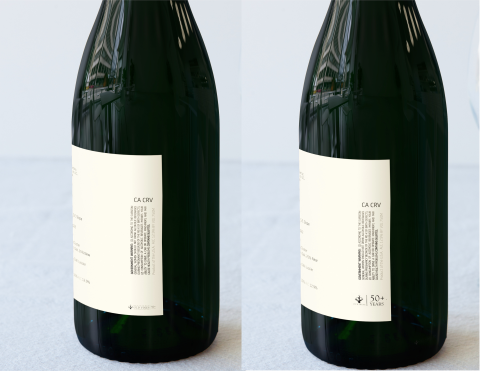
The OVR is launching a seal that recognises, officially, that a wine or a vineyard has its place in the Old Vine Registry. From 1 October 2026, producers with verified vineyards can, for a very modest, one-off fee, display a physical Old Vine Registry seal on bottles, vineyards and winery signs, and a digital seal on websites and socials. Importers, retailers, wine competitions and wine publications will also be able to use the seal.
Yarrow writes that the ‘seal and the program surrounding it have been developed in conjunction with a group of outside stakeholders including the folks from Plaimont, Isidoro Vaira and his family at G D Vajra, Derek Mossman Knapp of Garage Wine Company, Juan Munoz-Oca at Stag’s Leap, and Isabel Guilisasti at Concha y Toro as well as Sarah [Abbott] and Belinda [Stone, director of the Old Vine Conference]’. The fee will go towards maintaining the not-for-profit Old Vine Registry.
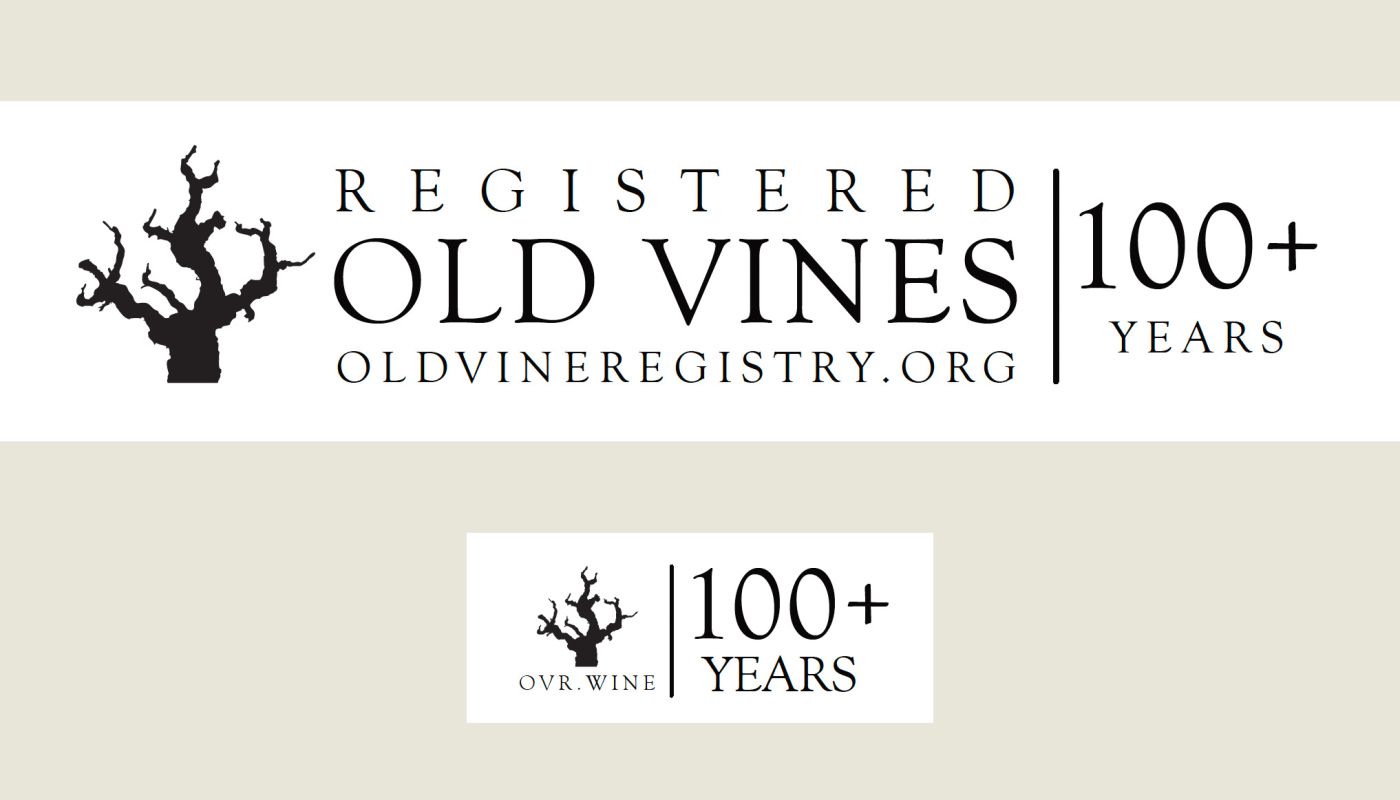
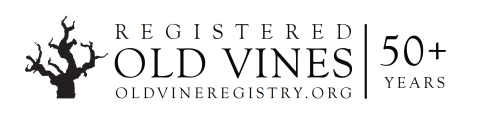
The elegant seal has been designed in two formats (shown in the main image at the top of this article) to allow producers flexibility in incorporating the seal into their label designs, and in versions indicating vine ages of over 35, over 50, over 75, over 100 and over 150 years.
The seal has value and relevance for several reasons.
Firstly, there is no international, legal framework governing the definition of ‘old vines’ in the wine world. I know producers who have labelled their wine from 20-year-old vines as ‘vieilles vignes’ and others who call their 50-year-old vines ‘young’. There are some regional programmes, for example South Africa, where a vineyard must be over 35 years to qualify for the Certified Heritage Vineyard seal. However, in a global context, the definition of ‘old vines’ is subjective, cultural, contextual and even occasionally mendacious, depending on where you are and who you are talking to. A global reference point (at least 85% of the vines are over 35 years old), even if not framed in international trade legislation, is a starting point for accountability, transparency and a common language. It also builds consumer trust and starts to wipe away some marketing obfuscation. (The International Organisation of Vine & Wine agrees on the 35-year minimum, and this may eventually lead to EU legislation on the matter.)
Secondly, while some will justifiably point out that old vines do not guarantee better wine, there is no doubting old vineyards are, by their very existence, resilient and interesting. In an era when everything is disposable, that which endures and continues to contribute in a vivid, valuable way is a rich source of research material and an endless source of inspiration.
Thirdly, it puts the message of old vines quietly but firmly on the table – on my kitchen table, on your dining room table, on her chef’s table, on their restaurant table, on his pub table. When you see this seal, you know that the stories are true and you can pass them on.

For more information on old vines, see our Guide to our old-vines coverage. And join the Heritage Vine Hunt Contest, too!