The most extraordinary thing is going on in Bordeaux, the centre of the European wine trade where the latest vintage, 2001, has just been launched to potential buyers and commentators from around the world.
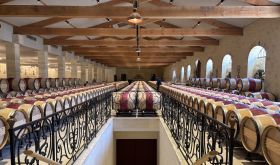
The sale of futures in fine bordeaux wine at this time of year, known as the en primeur campaign in France, has become such an important factor in the economy of Bordeaux that wines are now being groomed especially for this crucial presentation. Samples are taken from barrels just a few months after fermentation, and much more than a year before individual barrels are blended together and bottled, let alone shipped or drunk.
Bordeaux has traditionally produced particularly digestible wines, relatively low in alcohol and high in acidity and tannin that take many years to mature into complex, appetising, suave expressions of their origins. Ascetic Pauillac, harmonious St Julien, scented Margaux, fruity St-Emilions and richly intense Pomerols have all made up the special magic of red bordeaux.
Since the late 1980s a new sort of wine has emerged however, a wine that is deeply coloured, high in alcohol, notably sweet and often smelling of mocha or toasted oak flavours – almost New World in fact. The wines are crafted to grab a hard-worked taster's attention during the en primeur season when those who are really assiduous may well stain their teeth and hands with between 50 and 100 wines a day.
Finishing off the fermentation in barrel is an increasingly popular trick that makes a wine taste smoother in its extreme youth but has no proven ability to improve quality in the long term. Using specially toasted new barrels tends to add sweetness to a wine, even if it may well even mask its natural fruit flavours. Encouraging the extraction of maximum phenolics (colour and tannins) from the wine makes it look deeper than the rest, but too often results in wines that are painfully dry at the end of the tasting experience. Each year, regardless of the vintage conditions, in some camps there seems to be a competition for who can make the best imitation of port from grapes grown in the quite different conditions of Bordeaux.
This style came to prominence in St-Emilion but is spreading to virtually all other subregions of Bordeaux so that the differences between appellations are much less marked than they were.
For me, the ideal red bordeaux is certainly riper than wines made in the 1970s when typical alcohol levels were much closer to 12 or 11 per cent than the 13s and even 14s we are seeing today and wines demanded keeping for longer than seems sensible today. But red bordeaux, made in a temperate maritime climate, should also be subtle – well-balanced without an excess of tannin, overripe flavours or oak – and should express the place that produced it (one of wine's unique attributes, after all).
This year for the first time I sensed genuine widespread exasperation throughout the Bordeaux wine community with the new, pastiche style of winemaking. Longstanding criticism from the grandees of the more traditional Médoc and Graves has been attributed to sour grapes, but now many of those in St-Emilion and Pomerol, even those who flirted with the new techniques themselves, are recanting.
One of the early exponents was the dapper German Stefan von Neipperg (even his black labrador is well dressed). With his Ch Canon La Gaffelière and, especially, his micro-bottling La Mondotte, he pioneered super concentration, low yields and late picking to produce wines that would show well at the all-important en primeur tastings.
Nowadays he repudiates the caricature modern style. 'I don't make plum pudding,' he told me last month, with pursed lips and more than a little satisfaction. And his Ch Canon La Gaffelière 2001 is certainly a model of restraint combined with opulence and a true expression of what St-Emilion specifically has to offer the wine lover. He even nowadays reproaches his own 1989, a wine made when he was more besotted with the new techniques.
Hubert de Boüard of Angélus in St-Emilion also admits that he quite understands the new style because he was initially a practitioner. Nowadays however he is making much more elegant wines that people would actually like to drink at their tables rather than be impressed by in a tasting room.
Even Jean-Luc Thunevin of Valandraud, one of St-Emilion's new wave of wines sculptured from minuscule plots of vineyard to win points, plaudits and huge amounts in francs (now euros) from international collectors, seems to be toning things down.
Chief among the current practitioners of caricature winemaking is Gérard Perse, who has used a supermarket fortune to buy such extensive properties as Chx Pavie, Pavie-Decesse and Monbousquet in St-Emilion and who has just amazed le tout Bordeaux by paying AXA-Millésimes more than 3000 million francs for the tiny Ch Petit Village in Pomerol.
This year he has launched a very limited production (for which read decidedly unlimited pricing) of a St-Emilion he calls Bellevue Mondotte (despite its having nothing at all to do with either Ch Bellevue or La Mondotte) which is surely a joke. How can anyone want to drink a wine that smells so unappetisingly overripe and follows up almost port-like sweetness with a mouth-puckeringly dry finish? The wine assaults rather than assuages the palate.
The big force in all this of course is the extremely powerful (and admirably conscientious) American wine critic Robert Parker whose points out of 100 dictate demand and therefore prices in the international wine market. However much he may write that he values subtlety, he has continued to reward sheer size. And whatever sort of wine individual winemakers may wish to produce, it is the château owners who call the tune. What they tend to seek above all is a high score from Parker and, preferably, the American Wine Spectator magazine. For points out of 100 and subsequent high prices, you cannot beat them.
For points out of 20 and tasting notes on the Bordeaux 2001s, and an attempt to sniff out the most appetising wines, see purple pages.