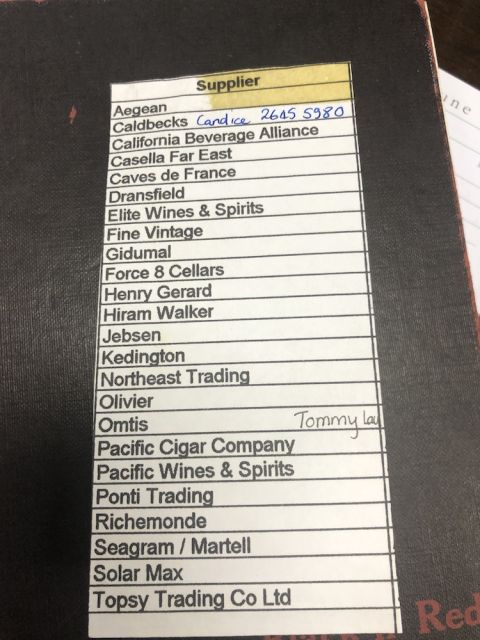
When I first came to HK in 1994 there were really only about 25 wine importers in total. The list that I used when I worked for Decanter wine shop in HK is below – very different from the scene these days.
Coming from the UK wine industry, I found it a culture shock in more than one way. In the UK we had so many wines available to us, but in HK the range was extremely limited – not only because demand was small, but also because we had 90% duty to deal with. In order to import wine you had to be a registered importer and hold an import licence. The procedure for applying for a permit to import wines was far from simple – and in those days had to be done on paper forms which you physically had to hand in to a customs official through a hatch for processing.
I started work for one of the handful of retail wine shops then in the city. While some things have changed, most of those original shops (or companies, should I say) are still with us. Remy Wines, originally started by Watsons, had two or three shops in HK and was one of the biggest wine players with some of the best agencies. Remy is no longer and Watsons, who now have more wine shops in HK than anyone else, pretty much replaced it when it folded. Of course now there are hundreds of newcomers who have joined the retail market.
Unlike these days, wine tastings weren’t common then. To get to taste wine, you had to be either a big customer of a wine merchant or a member of a private club. There was really only one annual public tasting, which was the Winpac tasting showing wines of the Pacific rim at the Furama Hotel. You could buy an early-bird ticket at a premium price which included lunch and allowed you to arrive from 10 am and spend the whole day there, which many people did. The cheaper tickets were for the afternoon only. Not only did they regularly run out of wine, there were usually several people who required assistance on exiting the hotel.
So when we set up Farr Vintners Asia in 1997 we really were something rather different, being the first UK wine merchant to have a presence in the territory. Farr has never held stock in HK and with my existing links to most of the trade in those days, we made it clear to HK merchants that our purpose was not to steal their business, or to try to replace them, but to develop a new, emerging sector of the market here focusing only on fine wine, all offered ex-UK with emphasis on provenance and competitive pricing. Most customers who bought from us at that time stored their wine in bond with us in the UK and planned to ship it when it was mature, hoping for a lower duty rate in the future.
The first turning point came almost as soon as we got going, the lowering of the duty to 60%. Duty was still high, but any decrease was welcomed and the range of wines started to broaden while interest in learning about wine grew massively. Having had import experience, we were able to obtain an import licence for the company and started to help our customers who had wines stored in the UK with us to ship to HK. It’s hard to imagine that we started with a sporadic shipping schedule which ended up being a consolidated air-freight service every couple of months or so. (Since duty was reduced to zero in 2008 we have offered a weekly service.) The number of temperature-controlled reefer trucks that logistic companies had then were limited. Often, even if you paid for reefer delivery, it didn’t actually happen, so Farr Vintners purchased its own lorry to ensure all our customers’ wines were transported in temperature-controlled conditions – important in the HK climate.
We then had the Asian financial crash in 1998, which, I have to say, was dire and really quite depressing at the time. The market rebounded but then took another beating with SARS in 2002. With what’s been happening recently, those that were here then necessarily reflect on SARS. While SARS was far more deadly than COVID-19, its impact was pretty minor in comparison! But at the same time as SARS, the Financial Secretary delivered another blow to the industry by increasing duty from 60 to 80%.
Despite the additional rise in tax, the market yet again recovered – but this time the paperwork involved in importing wine severely restricted any further development of the industry and HK customs departments just couldn’t cope with the volume. Not only were more people drinking and learning about wine, but also more and more different wines were being imported to quench HK wine drinkers’ increasing thirst for knowledge. The system for importing wine was outdated and at breaking point.
I was privileged to be invited to a number of meetings with the HK government and HK customs department where different options for making business easier and less stressful for all were discussed. I was incredibly impressed that a government was open to listening to people from within the trade to hear their thoughts and suggestions to make it a win–win situation for everyone. I really thought that the government would move to a new flat-rate tax, so when it was actually cut to zero in February 2008 I was totally stunned. It seemed that they decided it was far more complicated to pass the legislation required to change the duty system and far simpler for the Financial Secretary to simply set the rate at 0% in his budget, requiring no legislation changes.
With this the floodgates opened. The London wine trade flocked over to HK and Chinese mainland importers opened branches in HK. At one point it seemed that anyone interested in wine opened a wine shop or company. The market was flooded with thousands and thousands of traders – yet the market itself had not grown to anywhere near the same extent. Competition was fierce.
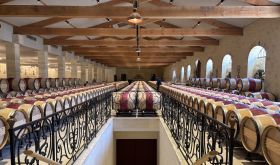
Then entered the new wine consumers from the Chinese mainland. Their wine taxes were far higher (import taxes basically doubled the price of wine in China yet Macau and Hong Kong just across the borders had zero duty). Before then, the number of professional storage facilities in HK could be counted on one hand, but suddenly cellars were starting to open. Space has always been at a premium in HK, added to which the climate requires constant temperature and humidity control. The investment in these new wine-storage facilities was huge. What has emerged as the most popular form are those cellars which rent out ‘rooms’ or lockers. You can have your wines delivered there but you are responsible for unpacking them and stock control, with 24-hour access allowing you to take wines out when you want – very different from the bonded warehouse systems in the UK.

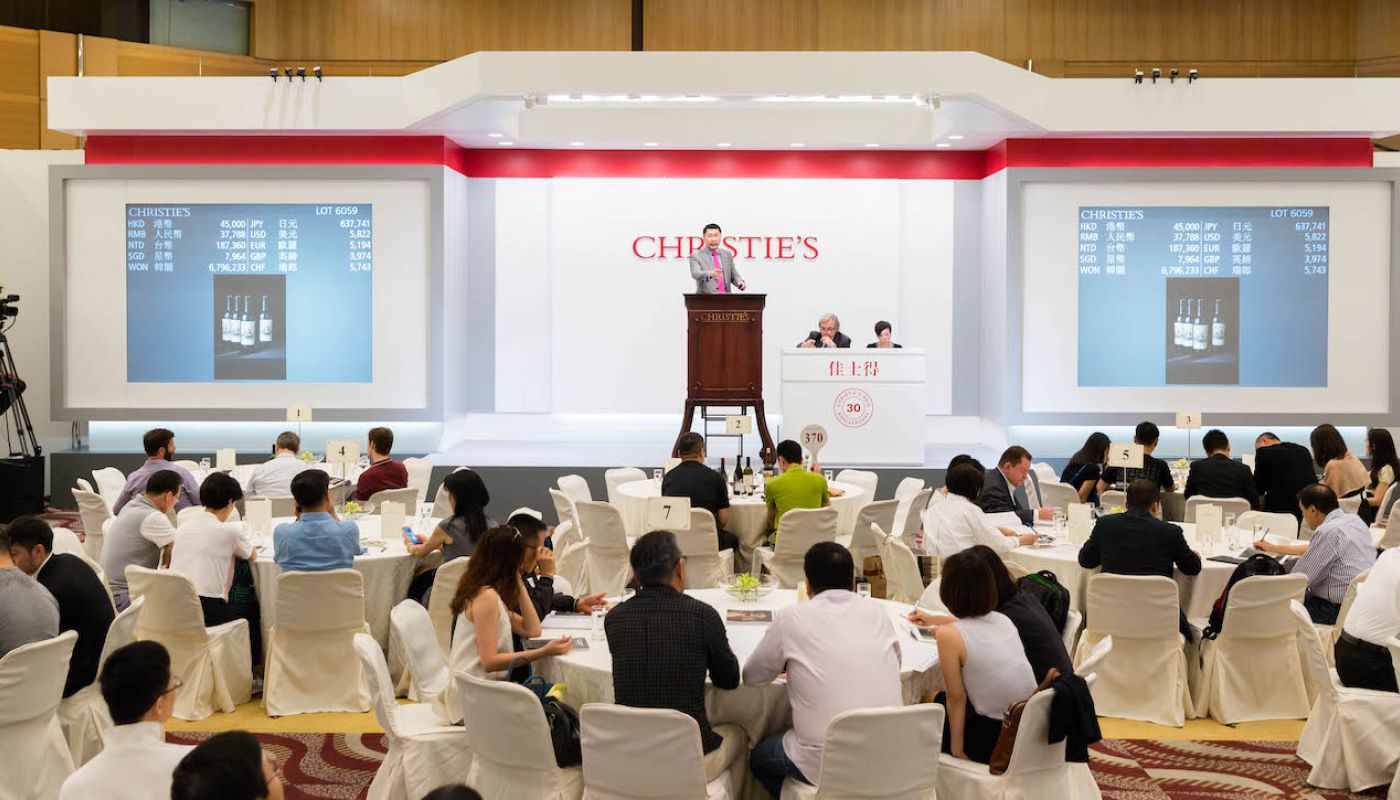
Next came the auction houses. Christie's for instance, held their first major sale, of wines direct from Ch Latour, in 2008. They took a completely different approach from the rather sterile salerooms of London. US-style, customers were wined and dined, with diners trying to outdo each other in the bottles they bought. I was astonished at the prices achieved for wines with only the vaguest details of provenance. People would bid on wines that were widely available in the market, buying them from respectable merchants at huge premiums (even before the buyer’s premium!).
The wine industry like others has had its ups and downs. The most recent up, when the Chinese seemed to fall in love with wine, was of an order no one had ever seen before. Those with industry knowledge made hay while the sun shone but were prepared for when the rainy days finally came, which they did a few years later with China’s new leader bringing in new austerity measures.
Many companies have since ceased trading and the industry, quite rightly, has had what can only be described as a clear out. Although many British wine merchants still have a presence here, I remain living in HK and working for Farr Vintners, whereas many of the original individuals who set up here have since moved on. Consumers have become far more educated and are now much better at checking out the provenance of wines and in choosing which merchant to deal with. Those with strong core fundamentals and good people continue to thrive here.
Last year HK faced yet another challenging time. Social unrest seriously affected all businesses in the last half of 2019, and then this was compounded by the restrictions imposed by the coronavirus. In terms of the number of cases of COVID-19, we have been very lucky here and our numbers are low. Unlike the UK, neither companies nor individuals have had anything like the support or funding that the UK government has supplied. Many hospitality professionals have taken unpaid leave in order to help companies stay afloat. While restaurants have managed to remain open throughout, they have had to cut capacity by half, and at one point limit numbers to four people per table. Even by offering takeaway options, many establishments have found it impossible just to break even.
Now there are no table-size limits (bars still have a maximum of eight per table) but tables have to be 1.5 m apart and restaurateurs continue to check body temperature and give hand sanitiser to all guests on arrival. Customers are required to wear a mask before and after their meal. Weddings are taking place once more and you can gather in public places in groups of up to 50. So, compared with elsewhere, things are not too restricted and the government has now implemented some schemes to try and assist businesses and individuals.
It has been incredibly tough for the hospitality industry here, but the resilience and dynamism of HK’s business people is something to behold.