
There are two sorts of blind tasting, sampling wines without knowing what they are. The aim of the first is to identify the mystery wine, a sort of party trick. When I started out, people expected me to get it wrong and only remembered my performance when I got it right. Today, exactly the opposite is true, alas, so it is the second sort of blind tasting of which I’m a fan: tasting a wine to assess its quality, untrammelled by prejudice and expectation. Admittedly, the process robs you of the pleasure of tasting a wine in context, and I’d hate it if I always tasted wine blind. But a well-organised comparative blind tasting can be a salutary and educational experience, especially if your favourite wines turn out to be some of the least expensive or most surprising.
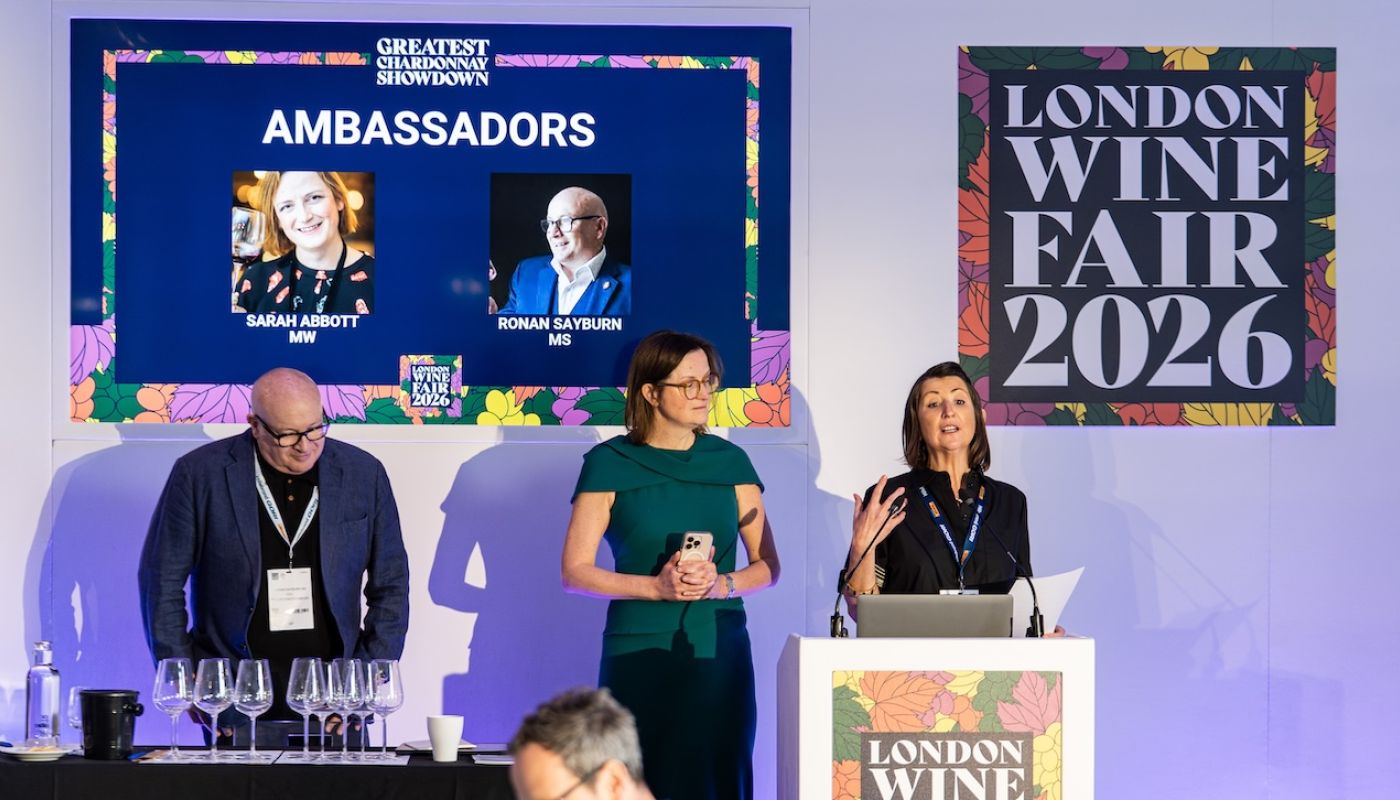
This happened to me last month at a tasting grandly called the ‘Greatest Chardonnay Showdown’. Hannah Tovey, who directs, and now owns, the annual London Wine Fair at Olympia likes to get things off with a bang. For the last three years, she has ensured that on the Monday morning 20 or so of us sit in a quiet room above the exhibition stands and are efficiently served a carefully selected series of similar, important wines blind. She gathers up our scores and announces the ‘winners’ on the Wednesday morning to add a bit of drama to the event.
Two years ago, I took part in what she called ‘The Judgement of London’, which was modelled on the famous California v France taste-off in Paris in 1976. We were served 16 pairs of wines, one of which was classic European and the other a vaguely similar non-European. (We don’t use the term ‘New World’ nowadays.) In the end, the results were decidedly equivocal, with the total tally of points for each geographical group more or less equal. But it afforded me a wonderful opportunity to taste blind and admire not just the familiar but the likes of Felluga’s Terre Alte 2020, Promontory 2019 Napa Valley and Qvevri Wine Cellar’s Saperavi 2019 from Georgia (although, as you may imagine, there was no direct classical equivalent of this last).
Last year, a ‘Battle of the Bubbles’ tasting compared 13 champagnes with 13 other sparkling wines. I was unable to attend but was intrigued to see that, although the champagnes outscored the rest by quite a margin, the highest-scoring sparkling wine was English: the 2010 vintage of Nyetimber’s top cuvée 1086.
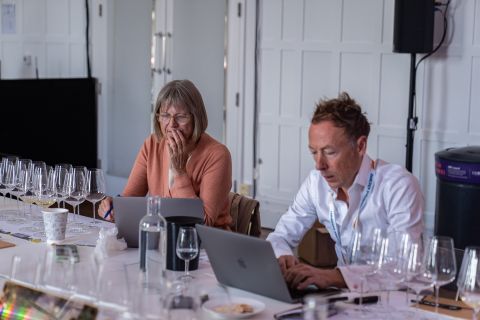
This year 18 of us, including 11 Masters of Wine and one Master Sommelier, sat down to taste blind 27 top Chardonnays from around the world – including representatives from Japan, Italy, Germany, South Africa and Chile. As every year, those who choose the wines, Master Sommelier Ronan Sayburn and Master of Wine Sarah Abbott, quite rightly urged us not to try to identify the wines. Our job was simply to assess the quality – which was very much more varied, I thought, than in the Judgement of London tasting, when I scored most of the wines very highly. While I see my scorecard was peppered with 18s and 18.5s out of 20 in 2024, my scores for the Chardonnays shown this year varied from 15.5 to 17.5.
As at that first tasting, one wine was simply too old to judge, or possibly our bottle was out of condition (Clos Ste Hune Riesling 2008, the Alsace superstar, in 2024 and Torres Milmanda 2018 from Catalunya this year).
But to my great delight two of my highest Chardonnay scores went to two of the least expensive wines, Sieur d’Arques, Toques et Clochers Haute Vallée Chardonnay 2024 Limoux and the Uruguayan Chardonnay recommended below. Admittedly my other two favourites were much more expensive (and both from New Zealand): Bell Hill, Limeworks Chardonnay 2020 North Canterbury and Felton Road, Bannockburn Chardonnay 2021 Central Otago. (It’s worth noting, incidentally, that the Bannockburn bottling is a notch below Felton Road’s top Block 2 bottling, while Limeworks is Bell Hill’s best, or at least most expensive.)
The tasting certainly illustrated my oft-repeated observation that there is no direct correlation between price and quality. I did like the most expensive wine in the tasting, Henri Boillot’s 2022 Bâtard-Montrachet, a grand cru white burgundy at about £700 a bottle, not least for its unashamed richness. But I wasn’t crazy about the other two expensive white burgundies, the extremely youthful Coche-Dury 2020 Bourgogne Blanc (£225 in bond Farr Vintners) and the oddly muted Raveneau Premier Cru Chablis Montée de Tonnerre 2021 (£331 CRS Fine Wines), admittedly from the challenging 2021 vintage. Alex Moreau’s Chassagne Premier Cru Chenevottes 2022 seems a relative bargain at ‘just’ £156 from Four Walls.
It could be argued that these last three white burgundies were simply too young. They all tasted pretty tight, verging on austere, at this stage. A bit like the four Australian Chardonnays (including Penfolds, Yattarna 2019, the only one over £100 a bottle), all of which seemed to be desperately trying to prove they were nothing like the over-oaked, over-alcoholic Chardonnays for which Australia became infamous a quarter-century ago.
It was one of these, Tolpuddle Chardonnay 2023 from Tasmania, that was the group favourite when all our scores were added up. It smelled quite markedly of the struck-match aroma that comes with reduction, a sometimes-controversial style favoured by Tolpuddle’s co-owner, Master of Wine Michael Hill Smith, and one traditionally associated with Coche-Dury in Burgundy. In fact, in at least this way, the Tolpuddle tasted more like a Coche wine than the actual one in the tasting. (The current regime at Domaine Coche-Dury seem to have been dialling down the reduction.) For what it’s worth, I actually preferred the slightly more generous style of the less expensive Shaw + Smith, M3 2021 from Adelaide Hills, another wine from Hill Smith who is the Smith of Shaw + Smith.
The two California wines were considerably more expensive than their Australian counterparts and certainly weren’t tight and tense, but nor were they anything like the sickly popcorn style of inexpensive California Chardonnay. I preferred the Kistler, Les Noisetiers 2022 Sonoma Coast by a smidgeon to Peter Michael, Belle Côte 2021 Sonoma, but they were both superior examples of the genre.
The group’s second- and third-favourite wines were Vasse Felix, Heytesbury 2020 from Western Australia and – surprise! – Danbury Ridge Octagon 2023 from Crouch Valley in Essex. There is no way all 20 tasters could have identified the origins of the Danbury and be accused of favouritism, although it certainly tasted as though it came from somewhere cool. I wrote in my tasting note, ‘Is this a Chablis?’, but it was not in any way meagre (note the alcohol!) and, as you can see from my recommendations, I also rated it highly.
Overall, for the group, it was the Australians who were touted as victors in this comparative tasting, whereas for me it was probably New Zealand, plus that eye-wateringly expensive grand cru white burgundy.
Top-scoring international Chardonnays
17.5/20
Sieur d’Arques, Toques & Clochers Haute Vallée Chardonnay 2024 Limoux, France 13%
£19.99 Hay Wines
Familia Deicas, Preludio Barrel Select Lote No 29 Chardonnay 2020 Juanico Canelones, Uruguay 13%
£27.36 Georges Barbier
Felton Road, Bannockburn Chardonnay 2021 Central Otago, New Zealand 14%
£53 Ad Hoc
Bell Hill, Limeworks Chardonnay 2020 North Canterbury, New Zealand 13%
£260 Terra Wines
17/20
Ataraxia Chardonnay 2024 Hemel-en-Aarde Ridge, South Africa 13%
£26 Street Wines, £28.35 VINVM/Wine Direct
Shaw + Smith M3 2021 Adelaide Hills, Australia 13%
£35.50 The Online Wine Tasting Club, £35.99 Paul Adams Fine Wines
Ktima Katsarós, Stella Chardonnay 2020 PGI Krania, Greece 13.5%
€54.20 (2022) House of Wine in Greece, €89 MyGreekWine in Germany
Vasse Felix, Heytesbury Chardonnay 2020 Margaret River, Australia 13.5%
£57 (2021) London End Wines
Danbury Ridge, Octagon Block Chardonnay 2023 England 14%
£70 on allocation danburyridge.com (2022 is £64 Swig)
Kistler, Les Noisetiers 2022 Sonoma Coast, California 14.5%
£99 Huntsworth Wine Co, £110 The Wine Society, £119.50 Butlers Wine Cellar
Domaine Henri Boillot, Grand Cru 2022 Bâtard-Montrachet, Burgundy, France 13.5%
£695 Mumbles Fine Wines, €800 or about £700 iDeal Wine UK, plus many offers in bond
Back to basics
Visual tips for identifying wines blind |
| Nothing beats a blinding, intuitive flash of recognition based on past experience, of course. But, failing that, here are one or two pointers. Colour and hue, especially with red wines, can help enormously. The thicker the grape skins, and/or the drier the growing season, the deeper the colour (and the chewier the wine). Cabernet Sauvignon produces some of the deepest wines, often with a blue/purple tinge. Syrah/Shirazes and Tempranillos are usually quite dark, too, while Pinot Noir, Grenache/Garnacha and Cinsault grapes are quite thin-skinned so their wines tend to be paler (though the winemaker may choose to deliberately leach colour out of the skins by extended maceration). Oak-ageing tends to fix colour, too. After years in bottle, red wines get paler and go from purple to ruby, or even orange. Nebbiolo often acquires an orange tinge quite early in its life. White wines, on the other hand, deepen in colour with age; if a white wine has a brownish tinge, it will either be very mature or possibly have been exposed to too much oxygen. Rieslings are generally very pale and greenish, Chardonnays and Sémillons more golden. And that’s about it. Good luck! |
The image at the top of this article is courtesy of Nate Dainty.
For tasting notes, scores and suggested drinking dates, see The world’s best Chardonnays? For international stockists, see wine-searcher.com.













