Daria Antonenko writes Daria Antonenko is a wine specialist from Ukraine, international wine judge, student of the Court of Master Sommeliers and Gérard Basset Foundation & Artemis Domaines Scholar.
A perfect Odesa pairing
Fishing for Odesa goby had long been a habit my father and I carried through everything else: my teenage dramatics, several years of life abroad, a couple of medium-deep crises, and even that stage of life when people begin saying «time flies» far more often than they should. We never discussed these trips. We simply woke up early, drove to the sea and went out on the water. Some things survive only because nobody tries to improve them.
Odesa at that hour looks especially romantic. The air is warm and humid, carrying the smell of salt, seaweed and sun-heated yellow stone. The city is not yet noisy, joking or bargaining; it feels more like it is sleeping off last night’s party. Anyone who has ever been to Odesa knows that the Black Sea is not black at all. It lies there heavy, green-grey, with dull glints across the water, and possesses absolutely none of the polished beauty people usually expect from a seaside resort.
My father laid out the tackle lightly, almost theatrically, pausing now and then to look at the horizon, the gulls or a particularly beautiful stretch of light on the water. He had always been able to romanticise the most ordinary things: fishing, bad weather, a random conversation with someone at the port. As a child, I assumed all fathers were like that. Later, I discovered that most people never think to admire the sea at six in the morning simply because it looks somehow special that day.
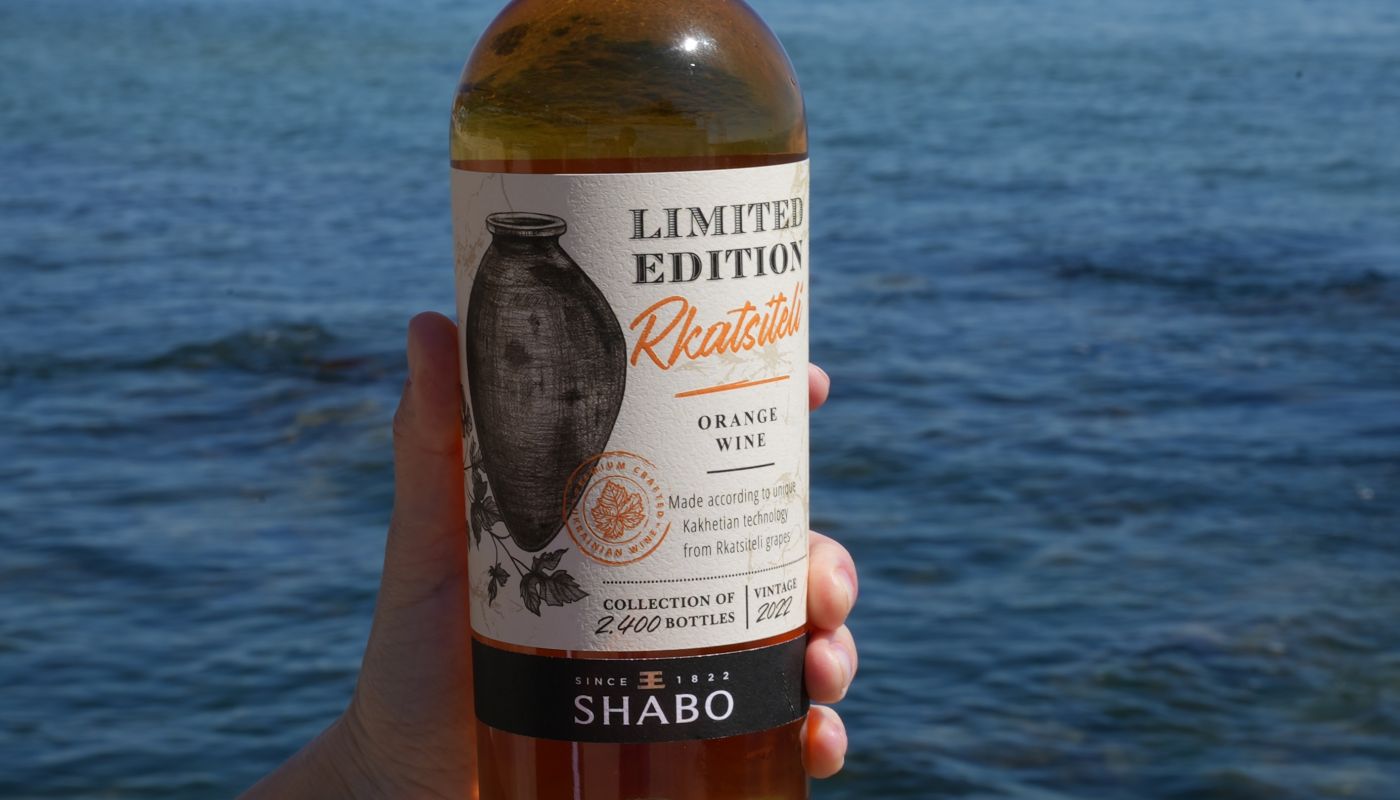
I opened a bottle of Rkatsiteli. Odesa loves orange wines the same way it loves everything slightly incomprehensible, finding in them a peculiar sort of romance. Deep amber with copper reflections, lightly cloudy, dense in the glass - it looked as though it already knew it would not appeal to everyone and was perfectly unconcerned by the fact.
The aroma gathered itself slowly and confidently: dried apricot, quince, baked apple, then orange peel, black tea, nuts and a touch of herbs and tobacco. And salt. Not bright, not decorative, but real, like the damp air surrounding us.
On the palate, the wine carried itself with remarkable confidence. The high acidity kept it focused, the tannins gripped the palate, slightly rough around the edges, while the alcohol added warmth rather than weight. The bitterness of orange peel, dried fruit, herbal notes and the long saline finish came together into a wine with a character impossible to imitate.
My father pulled up the first goby, small, compact and perpetually irritated-looking. Gobies always seem as though life has caught them in a bad mood. He was delighted, carefully removed the fish from the hook and immediately cast again, before launching into an old story I had already heard at least twenty-three times.
We love for imperfections - people, cities, wines. Without them, everything becomes equally smooth and lifeless, like faces after plastic surgery, where the wrinkles disappear together with the character. The sea, Odesa and this Rkatsiteli all preserved their rough edges with an almost defiant stubbornness.
The salt in the air deepened the wine. The tannins matched the pauses between us, - those calm, familiar pauses. The ripe apricot notes in the aroma carried the feeling of time slowing down while sitting beside the person who has known you longer than anyone else in the world.
I took another sip. The wine no longer existed separately from the sea, the wind or the morning around us. My father kept catching gobies, occasionally distracted by the light, the water and his own memories.
And at some point, it occurred to me that perfect pairings are never born from similarity.
They are created by the perfect amount of imperfection.
The photo is the author’s own.
Published unedited and in accordance with the rules of the competition published here.