
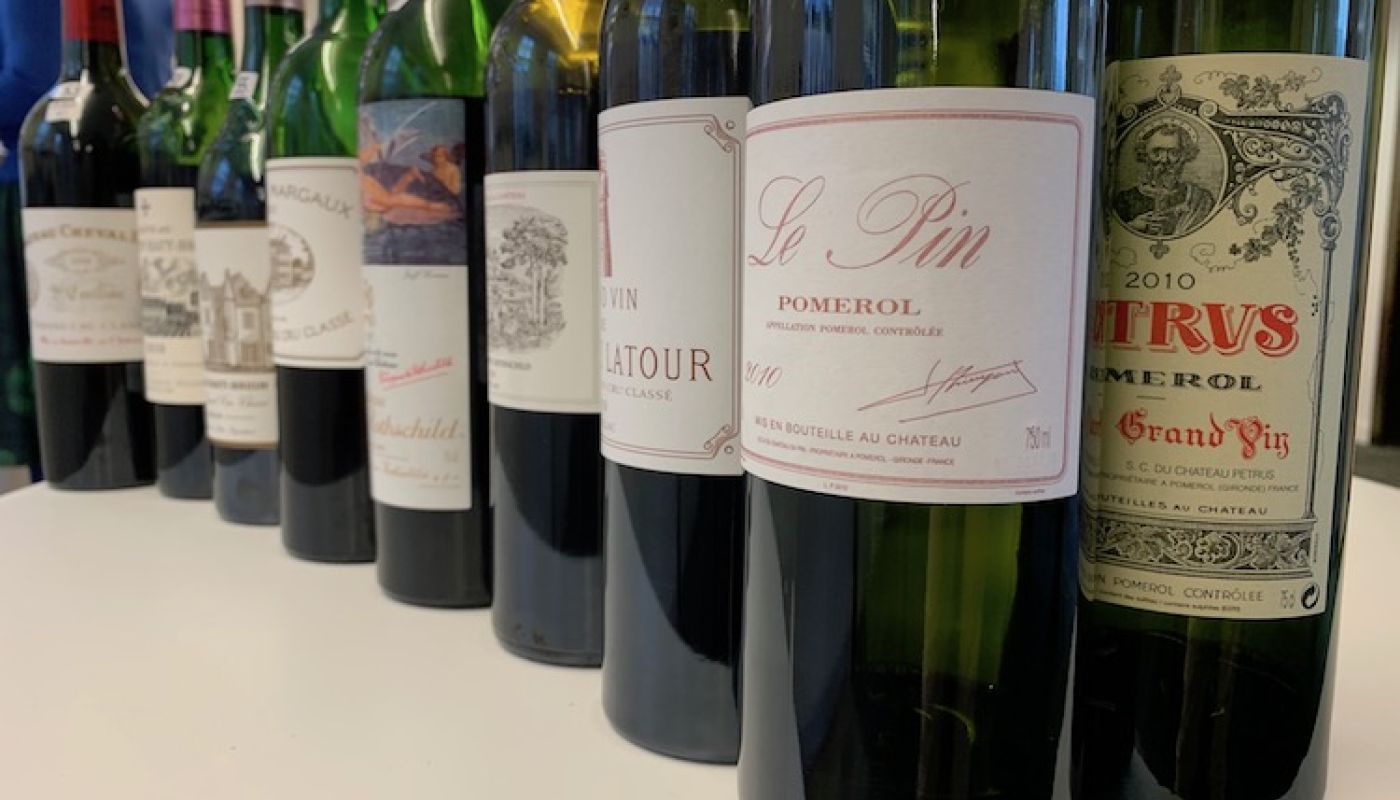
Next month Bordeaux château owners will be attempting to stir up interest from wine merchants and commentators round the globe in their embryonic 2019s. But who on earth in this unsettled world will be interested in forking out for expensive wines that won’t even be bottled until next year?
Asian investors got their fingers burnt with the overpriced 2009s and 2010s and, even in the last few years pre coronavirus, were showing little interest in Bordeaux en primeur. (Fashionable Burgundy is another matter...) The American wine market, which has shrunk markedly since the imposition of a 25% tariff on French wine imports last October, is no more promising.
There will be some Europeans who faithfully invest every year but younger wine drinkers seem remarkably immune to the charms of long-lived bordeaux, despite the fact that, at the bottom end of the price range, between £7 and £20 a bottle, Bordeaux can provide some of the best-value reds in the world. (The wines offered en primeur can cost three- or sometimes even four-digit figures per bottle.)
It’s true that red bordeaux is rarely charming in youth when it’s generally a little chewy thanks to its habitual charge of tannins. It needs a bit of time in bottle to soften and be truly appealing, but its special quality is that the best examples can continue to improve in bottle for decades. This is impressive, but inconvenient in an era when most people have to pay for wine storage rather than having their own cellars.
Tradition has it that superior red bordeaux starts to be ready to drink at around 10 years of age, which is why fine-wine traders BI Wines (who used to be called Bordeaux Index) organise an annual tasting of the vintage that reaches that age. This year’s was therefore of the 2010s, from a vintage that was famously tannic and reserved in youth. I write this, having tasted all 61 wines earlier today, and my mouth still hurts under the impact of the drying tannins, even though I have swilled it with fluoride mouthwash as recommended by my dentist.
If there was one lesson from comparing this tasting of 2010s with the more comprehensive (and blind) tasting of 2016s I reported on recently, it was how brilliantly Bordeaux technical teams have improved their management of tannins, polishing their rough edges by minute adjustments to temperature, maceration and extraction periods in the cellar. I am not in a position to compare the raw ingredients in 2010 and 2016, but it clearly helps to have a crack team of wine scientists at the local research centre, the ISVV.
In the best 2010s, such as Vieux Château Certan, Ch Latour and La Mission Haut-Brion, the tannins are subsumed under the weight of thrilling ripe fruit. But in rather too many examples, such as Beauséjour Duffau-Lagarosse (£3,000 – all prices approximately per dozen bottles in bond) and Pape Clément (£1,640), one wonders whether the fruit will ever overpower the current drying sensation of aggressive tannins on the finish.
The Bordelais, still flushed by how successfully they had sold the 2009s to Chinese buyers, overpriced their 2010s horribly, but not all the wines seem overpriced now. (There have been considerable price ‘corrections’ since the 2010 en primeur campaign – another disincentive for potential purchasers of the 2019s this spring.) The most obvious example of a bargain in the recent BI tasting of 2010s was Ch Potensac (£260), the cru bourgeois run in tandem with the most expensive and ambitious St-Julien, Ch Léoville Las Cases (£1,940). It may not be the most concentrated 2010 but it’s already drinking well and should continue to develop during the coming decade.
Another 2010 that seemed relatively well priced considering its drive and potential is Malartic-Lagravière (£500), a Pessac-Léognan with quite enough energetic fruit to compensate for its charge of ripe tannins. And Branaire-Ducru (£325), a well-balanced St-Julien, had none of the foot-dragging over-ripeness of some 2010s – in fact it positively danced on the palate and seemed distinctly twenty-first rather than twentieth century in its elegance.
There could hardly have been a greater contrast than that between wines three and four in the BI tasting, both St-Émilions but tasting as though they were from different planets, or at least different cultures. Ch Figeac 2010 (£1,910) was the last vintage made under the auspices of the late Thierry Manoncourt, celebrated old-school proprietor who believed that his wines deserved at least two decades in bottle. Hugely distinctive in its sleek freshness, this was probably roundly criticised initially for its lack of flesh but I suspect it will outlive most of its peers.
Next to it, proudly advertising its 16% alcohol on the back label, Troplong Mondot (£1,325) was so dried out on the finish, and bound up in rasping tannin and alcohol, that it was virtually impossible to discern any fruit. As I never tire of writing, as far as wine is concerned, there is no direct relationship between price and quality. Both these St-Émilion properties have new teams in place, that at Troplong Mondot very obviously wielding a new, more refined broom.
There were other illustrations of recent Bordeaux history in the line-up. By 2010 another St-Émilion, Ch Canon, was already owned by the Wertheimer family who own Chanel (and Ch Rauzan-Ségla in Margaux) but the most conspicuous wielder of a new broom on the right bank, Canon’s and Rauzan’s managing director Nicolas Audebert, was not yet in post. Today he is famous for picking well before his neighbours.
One of the favourite St-Émilions in my recent comprehensive tasting of 2016 Bordeaux, Ch Belair Monange, didn’t even exist as a name or in its current extent in 2010, and the plots of land responsible for Ch La Fleur Pétrus, which showed rather better in 2010 than in 2016, have changed almost out of recognition. Such is the power and creativity of owners JP Moueix.
On the left bank, in Pauillac, the battle of the Pichons seemed on the basis of this tasting to have been definitively won by the glamorous Pichon Baron (£1,400), clearly aiming to knock its first growth neighbours off their pedestals. Pichon Lalande (£1,380) seemed looser and more evolved than the Baron in 2010. As for the battle of the absurdly expensive Pomerols, their relative scarcity boosting their prices, in 2010 the clear winner is Petrus (£35,500). In 2010 Le Pin (£36,000) was picked just a tad too early to be sublime.
My top-scoring 2010 red bordeaux
I gave these wines scores between 17.5 and 19 out of 20. Approximate prices were supplied by BI Wines per dozen bottles in bond.
St-Émilion
Figeac (£1,910), Cheval Blanc (£8,200)
Pomerol
Le Gay (£1,100), Vieux Château Certan (£2,700), Le Pin (£36,000), Petrus (£35,500)
Pessac-Léognan
Malartic-Lagravière (£500), Smith Haut Lafitte (£1,175), La Mission Haut-Brion (£4,300), Haut-Brion (£6,400)
Margaux
Rauzan-Ségla (£1,350), Pavillon Rouge du Ch Margaux (£1,780), Palmer (£2,490), Margaux (£6,175)
St-Julien
Léoville Barton (£1,075)
Pauillac
Grand-Puy-Lacoste (£690), Pichon Baron (£1,400), Mouton Rothschild (£5,700), Lafite (£7,300), Latour (£10,850)
St-Estèphe
Montrose (£1,750)
See my tasting notes on these 2010s and international stockists on Wine-Searcher.com. For previous coverage of Bordeaux 2010, see this guide.













