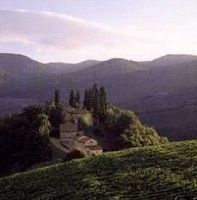
It's difficult to describe the incredible sensation one feels during the final days of the growing season, particularly those days when our well-organised picking team, made up of friends and family, harvest the grapes we have been nurturing throughout the year. Up until those last days, as a grower, you have this nagging recollection that no matter how good things have been up until that moment, a sudden change in weather could downgrade an excellent vintage into an average vintage. Mother Nature lays out the path we follow throughout the season. The trip always includes a number of steep inclines and twisting turns in our rollercoaster weather ride. The 2009 vintage was a particularly exceptional ride with an extremely satisfying outcome.
The 2009 season started off with close to record-setting winter rainfall, which caused our winter work, such as pruning and the tying up of young vines, to get off to a slow start. As the season progressed, passing from late spring into early summer, we endured the hottest and driest growing season since 2003. This was particularly stressful since in March we planted our largest vineyard, Bació, doubling this vineyard's original size. Luckily the heavy winter rainfall proved to be an important foundation. The hot, dry days were tempered by cooler nights and winter water reserves allowed the young vines to grow happily throughout the season without the need for irrigation.
We did suffer some crop loss due to extreme heat in our Curva vineyard, which was planted in 2006. This young vineyard was hit hard by two extremely hot days (40 deg C) in mid July. Unfortunately, since we had not yet arrived at the time in the season when we drop the extra bunches, the vineyard was overloaded with beautiful grape bunches and a still-immature root system. The heat stress coupled with the large crop load caused excess demand for water. The result was a loss of bunches far greater than what we would have dropped several weeks later. It's hard to predict such an outcome, but in the future we will adopt practices which are more preventative in nature, especially in our young vineyards.
Experience has taught us the importance of temperature during the last weeks of ripening prior to harvest. It is the key to determining the final aromatics in the resulting wine. Basically, if temperatures are on the cooler side, the resulting wine will be fresher, more aromatic and abundant in fresh fruit flavours such as cranberry, cherry, and raspberry. On the other hand, if the season finishes with warmer temperatures, the wine will be dominated by plummy, prune-like characteristics.
It seems appropriate to highlight the importance of this after the conclusion of the 2009 vintage. Much of the season was very hot and arid, and harvest was early. One might have expected very mature, overripe aromas and possibly some unripe tannins. Although the days were hotter than in recent years, nights remained cool, so that the average soil temperature never surpassed 22.4 deg C, and then in September we experienced a dramatic cooling.
I must admit, I had initial doubts, but I immediately noticed beautiful, fresh aromatics during fermentation and fine, mature tannins at pressing. This would not have been possible if the season had continued to be hot and arid, and nights had been warm.
Why is this important to us? Given the vastness of Chianti Classico, only a small part of the zone can produce fresher, more aromatic and finer-structured Chianti Classicos; just as only a small part of the Rhône valley can produce comparable Syrahs, such as Côte Rôtie, while the majority of the Rhône yields plumper, richer Syrahs. Although we love and appreciate wines from both areas, we feel this is an important distinction between Panzano and other communes, in particular those of southern Gaiole and Castelnuovo Berardenga. It is for this reason we choose to emphasise these characteristics in our wines.
In the winter prior to bud-break, we use thousands of ties in our vineyards. Each vine is tied to its support poles and surrounding wires. Tying gives support and structure to our vines and ensures they will have a well-spaced canopy for balanced growth during the season. This is one of the most fundamental things we can do for our vines – to provide natural light and aeration throughout the canopy, thereby reducing pest and disease pressure naturally.
In 2009 we re-introduced to our vineyards a practice common to most local vineyards 20 years ago but now nearly forgotten. We stopped using the conventional green rubber ties in favour of the shoots of the willow tree. Willow trees grow near streams and each year produce many new shoots which are flexible and strong, making them the perfect natural material for vine ties. This year every tie we made was made with willow shoots. We removed and collected several kilos of the rubber ties and hope to remove and replace all existing ties within a couple years.
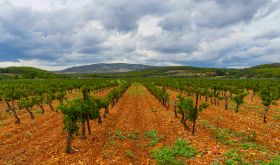
At the end of every season we turn the soil in every other vineyard row so as to aerate the soil, to increase winter rain penetration and to seed cover crops. In the first couple of years, I remember sitting on the tractor, looking over my shoulder as I turned the soil of our Sa'etta vineyard. I was amazed at the abundance of large, sun-reflecting rocks I saw. In the last couple years, as I turned the earth, I began to notice fewer rocks remaining on the surface. One might have thought rocks had been removed from our vineyard, but instead what I was seeing was the result of several years of application of biodynamic preparations as well as cover crop additions. The soil structure had dramatically improved and the surrounding earth was no longer as fine and sandy as before; it had more structure and weight.
What does this mean? This means we have built up the humus (organic material) in our soil; we have improved our water-holding capacity; and we have increased the minerals available to our vines as well as the population of beneficial microbes residing in our soil; all changes which should, ultimately, improve the health of our vines and the quality of our grapes.