
Occhipinti, Il Frappato 2012 Sicilia (Frappato)
Salvo Foti, Vinupetra 2011 Etna (Nerello Mascalese)
Librandi, Magno Megonio 2011 IGT Val di Neto (Magliocco Dolce)
Dettori, Badde Nigolosu Tenores 2009 IGT Romangia (Cannonau = Grenache)
Franco M Martinetti, Georgette 2008 Colli Tortonesi (Croatina)
Nervi 2006 Gattinara (Nebbiolo)
Ronchi di Cialla Schioppettino 2004 Colli Orientali del Friuli (Schioppettino)
Mining Italy's riches
• 5 分で読めます
This article was also published in the Financial Times.
Looking for a wine at the cutting edge of fashion? Take my tip and head for Timorasso. It's a 'heritage' white wine grape that ticks all the boxes. The name is distinctive, easy to say and easy to spell. It is rare – the Italian wine census of 2010 found a total of only 100 hectares (250 acres), all in the north of the country. And, most of all, it tastes great. It has the same sort of rather classical nobility about it – something that reminds me, weirdly, of breastplates – as the southern Italian red wine grape Aglianico and makes me want to associate it, completely erroneously, with ancient Greek origins. Some clever classical scholar may perhaps point out that the ancient Greeks didn't wear breastplates but I hope you get the picture. A good Timorasso has some floral notes and some fruit – grapefruit perhaps – but also a strong streak of something mineral, and it is obvious that this is a white wine with the ability to age.
I was able to test this out recently with the chance to taste not just two 2011s but a 2008 from Walter Massa, the man who rescued this once decidedly obscure grape in the Colli Tortonesi in south-eastern Piemonte. His family have farmed the steep hills east of Tortona for five generations and for a long time were the only growers of Timorasso; the previous 2000 vine census found only six hectares of it in all of Italy. But by dint of sheer persistence, and not helped by being slightly off the vinous beaten track, he has introduced increasing numbers of wine lovers to its charms, and proved that it can last a decade or two. (His UK importer Michael Palij MW of Winetraders came across it when a determined Massa himself approached him in a local restaurant and forced a glass of it on him. His US importers Porto Vino could doubtless tell a similar tale.)
The variety was once widely planted in Piemonte but after the ravages of phylloxera at the end of the 19th century, growers replanted with the more productive Cortese (a pattern of expediency that was repeated all over Europe).
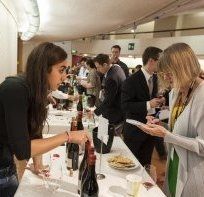
There was a veritable swarm of tasters round the Massa table, and the Martinetti one next door also showing a Timorasso, at a tasting devoted to Italian wine at the recent Masters of Wine symposium in Florence and much muttering afterwards about the virtues of Timorasso, but this was far from the only reaction. The original plan had been to treat us to 'the 50 best wines of Italy' but this was never going to work when a selection committee was involved rather than one individual. So the committee decided to invite 25 Italian producers specialising either in obscure local grape varieties, or terrain that had either been recuperated or is particularly difficult to work. This was to be Italy in the raw – and probably a great deal more interesting, at least more stimulating, than any assemblage of the conventional 'best'. (The picture shows Arianna Occhipinti pouring her lovely south eastern Sicilian reds for me.)
It must have been immensely difficult to limit the number of invitations to 25. Of all the world's wine-producing countries, Italy offers the greatest variety if not of wine styles then certainly of terrains. Its lower latitudes than France's mean that vines are planted at significantly higher altitudes, and its vine-growing coastline is considerably longer, and so more varied. Even in our strictly selective tasting we were able to marvel, for instance, at the difference between the delicate alpine character of Lo Triolet's 2013 Pinot Gris grown at 900 m above sea level in the Valle d'Aosta, and Gianfranco Fino's full-throttle 16.5%-alcohol Primitivo from the arid plains on the heel of Italy.
What is incontrovertible is Italy's unparalleled multiplicity of wine grape varieties. When, over the four years leading up to its publication in 2012, we assembled all the grape varieties we could find making wine in commercial circulation for our book Wine Grapes, my co-authors Julia Harding MW, Dr José Vouillamoz and I found that Italy had the greatest number, 377 out of a total of 1,368. Since then even more Italian grapes have been rescued from commercial obscurity and in his admirable and even more recent book Native Wine Grapes of Italy, Ian D'Agata describes 500 varieties, even if many of them are too obscure to feature on shelves and wine lists.
It is clear is that there is still a wonderfully rich heritage of Italian grapes to be explored and fully exploited. In Florence we saw, for instance, no fewer than three wines made from the obscure Tintilia of Molise on the Adriatic coast – which I would not include in my list of most stunning grapes but was grown on only 34 ha in 2010 apparently. It makes easy, rather soft, strawberry-fruited wines and seems if anything to benefit from the extra structure that a dollop of Montepulciano grapes can add. The 2010 vine census found fewer than eight hectares of the Romagnan white wine grape Centesimo, but producers Morini brought two examples from their estate near Ravenna. This variety seems to have a little more personality – notable aroma and acidity – but was not one of the brightest stars of this particular showcase.
My prize for most worthwhile Italian grape recuperation goes to Librandi, by far the most dynamic wine producer in wild Calabria. They already had the marvellous, rose-scented Gaglioppo grape as the established main ingredient in their local and unexpectedly haunting Cirò red and the firm Greco Bianco as its white counterpart. But they have also single-handedly researched other local grape possibilities, over many years. The result is their fine, dense red Magno Megonio, made from the local Magliocco Dolce, also known as Arvino, another variety that has great depth, great ageing potential, and a whiff of classicism. Again, and tantalisingly, no link to any grape variety currently grown in Greece can be found. (This despite the fact that dozens of Italian grape names and synonyms have the words Greco and Grechetto in them.)
An even more recent offering from Librandi is their Efeso made from Mantonico Bianco, a white wine grape probably known in the region as early as 1601. Its wine is actually not that dissimilar from my new best friend Timorasso.
See my tasting notes on all 46 discoveries. Below are some of my favourites. Grape varieties in brackets. Wines listed by colour and in age order.
WHITES
Vigneti Massa, Derthona Costa de Vento 2011 Vino d'Italia (Timorasso)
Vigna Petrussa, Richenza 2011 IGT Venezia Giulia (blend including Friulano)
Perla del Garda, Madonna della Scoperta Superiore 2010 Lugana (Trebbiano di Lugana = Verdicchio)
REDS


購読プラン
スタンダード会員
$135
/年間
ワイン愛好家向け
- 296,386件のワインレビュー および 16,123本の記事 読み放題
- The Oxford Companion to Wine および 世界のワイン図鑑 (The World Atlas of Wine)
- askJancisへのアクセス(AIワインアシスタント)


プロフェッショナル
$299
/年間
ワイン業界関係者(個人)向け
- 296,386件のワインレビュー および 16,123本の記事 読み放題
- The Oxford Companion to Wine および 世界のワイン図鑑 (The World Atlas of Wine)
- askJancisへのアクセス(AIワインアシスタント)
- 最新のワイン・レビュー と記事に先行アクセス(一般公開の48時間前より)
- 最大25件のワインレビューおよびスコアを商業利用可能(マーケティング用)
ビジネスプラン
$399
/年間
法人購読
「プロフェッショナル」プランの内容に加えて
- 最大250件のワインレビューおよびスコアを商業利用可能(マーケティング用)
- レビュー依頼用のワインを提出可能
- 従業員向けにメンバーシップを提供し、一元的に管理可能
- APIアクセス(※別途料金)
More 無料で読める記事
無料で読める記事
この記事はAIによる翻訳を日本語話者によって検証・編集したものです。(監修:チャーリー・ギーガン、写真:ジェイソン・ロウ)...
無料で読める記事
20世紀のワイン界のアイコンたちが関わった初の大西洋横断ジョイント・ベンチャー、オーパス・ワン。この記事の別バージョンは『フィナンシャル...

無料で読める記事
速報!オールド・ヴァイン・レジストリが記録を更新し、障壁を打ち破り、新たな地平を切り開いている。そして今、オールド・ヴァイン...

無料で読める記事
この記事の別バージョンはフィナンシャル・タイムズにも掲載されている。 世界最高のシャルドネとは?も参照のこと。写真上、左から右へ:ロナン...
More from JancisRobinson.com
テイスティング記事
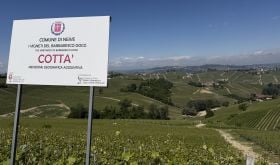
熱波に見舞われた年に生まれた、魅惑的にフレッシュで親しみやすいワイン。ソッティマーノは、写真上のコッタ・クリュから...
テイスティング記事
この記事はAIによる翻訳を日本語話者によって検証・編集したものです。(監修:Yuri Shiraishi)...
テイスティング記事
暑さの中でもリフレッシュできる25の方法。 先週、ヨーロッパは6月としては記録的な熱波に見舞われた。今週は...
今週のワイン
元化学者の正確さとブドウの樹の囁きを聞く者の魂で造られたヴィーニョ・ヴェルデの白ワイン。23ドル~、22ポンド~。写真上はラモスと...
テイスティング記事
ヴァーティカル・テイスティングで、ジャンシスがカリフォルニアを象徴する赤ワインの画期的な始まりを振り返る。ロンドンの67パル...

Don't quote me
ブドウの樹に日陰を提供し、ワイン樽の材料となる森のテロワールは、ブドウ畑やワインと相互につながっている。写真上は...
Don't quote me
キャンセルと治療に明け暮れた1カ月となった。 年配の読者の中には、コーニー&バロウの魅力的な人物として故ロビン・カーニック (Robin...
テイスティング記事
この人気の白ワイン品種の豊かな表現。写真上はラッドのマウント・ヴィーダー・エステート (© Rudd)。 過去3年間...