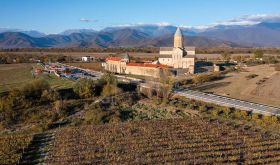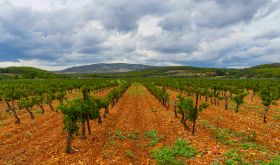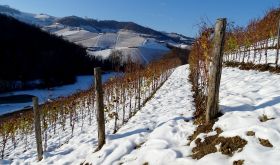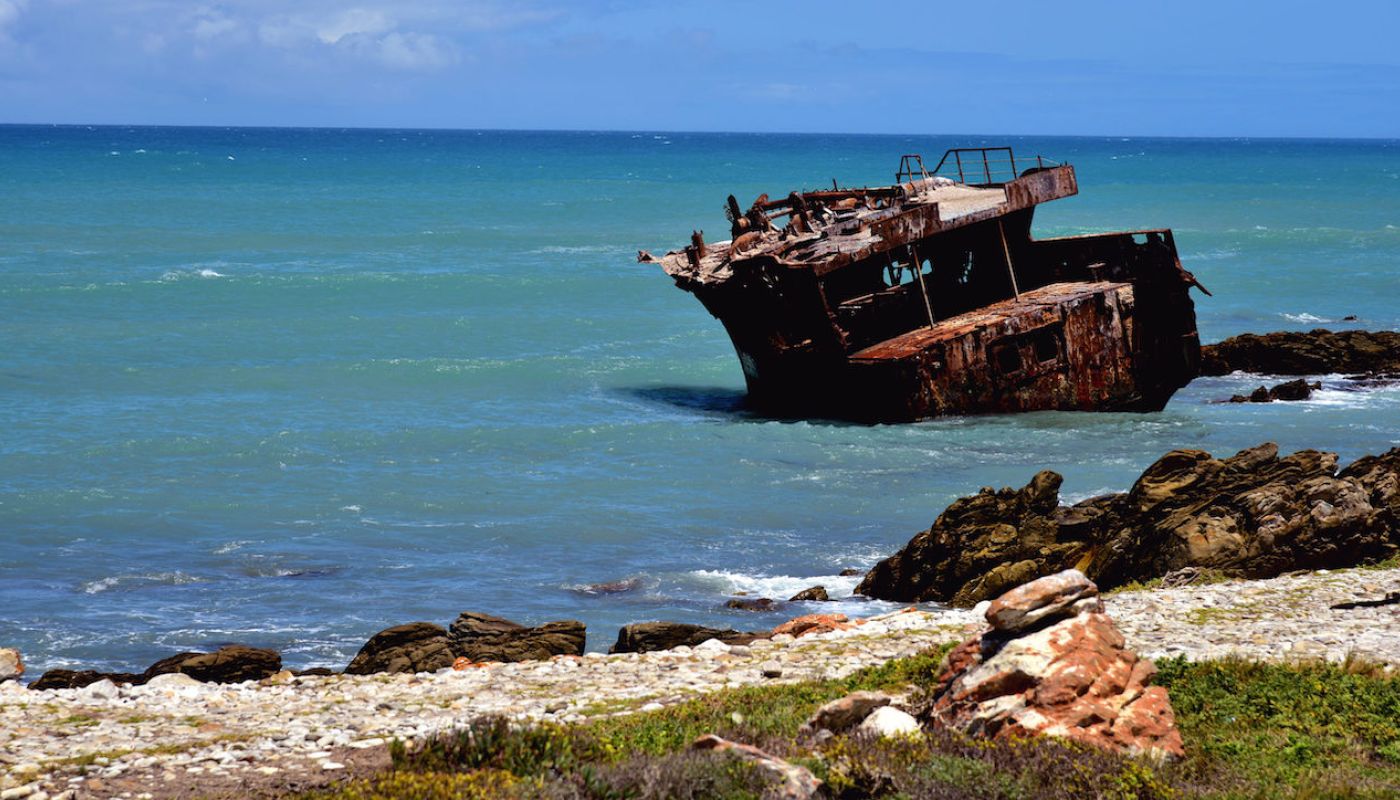
They point out that ‘if mining takes place in the targeted area, food security, the destruction of the environment, the inevitable job loss (and social cohesion breakdown), potential destruction of sensitive palaeontological and archaeological sites, and negative impact on tourism-related businesses are inevitable, as witnessed in similar situations elsewhere in South Africa’.
Jonathan de Thierry, the owner of Skipskop Wines, a member of the promotional body the Agulhas Wine Triangle, is a qualified geologist. He comments, ‘I do not believe any economic gold mineral potential exists on the farms Cienth Pty Ltd have applied for (completely wrong geology and age of rocks). Generally, where there is economic gold potential on a property you will see historic workings of gold in quartz veins over time with numerous adits [pathways into mines] and pits. This is not the case in our area. In the 1870s a gold mining company was listed in London based on an adit dug close to Fairfield Farm. This was an early example of a mining scam and when I accessed the adit in the mid 1990s and took samples of the vein they were chasing, the assay results were negative.’
Those who object to the prospect of mining in this area are urged to register as an interested and affected party to the application by emailing the new environment assessment practitioner, McDonald Mdluli of Lwethuma Environmental Consultants, at [email protected] or by sending a message to +27 79 242 1312.
7 October 2023 The other Cape in South African wine. A slightly shorter version of this article is published in the Financial Times.
As the world heats up, it is natural for wine producers to move towards the poles. In northern Europe wine grapes are being planted, and actually ripening, in all manner of previously unimaginable locations. In the southern hemisphere, Australia and New Zealand have nowhere left to go but in South America Patagonia is seeing more and more vines.
So what about the southern tip of Africa? The southernmost point of the African continent is not the famous Cape of Good Hope but Cape Agulhas about 100 miles to the east where the Atlantic meets the Indian Ocean. Because of the unpredictable currents and unforgiving rocky coastline here, it has long been notorious among sailors. There have been shipwrecks aplenty. In the 17th century one unscrupulous Cape Town racketeer, Olof Bergh, would have fires lit to mislead ships deliberately so that they ran aground and their cargo looted with his specially built raft.
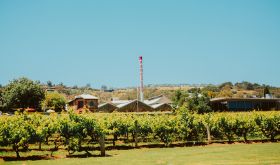
This is a wild, sparsely populated corner of Africa that looks not unlike the north coast of Scotland. High-profile South African wine writer Michael Fridjhon maintains that South Africa has been less affected by climate change than most wine regions because of cooling influences from Antarctica but this hasn’t stopped wine producers planting the vine here, where, thanks to almost constant ocean winds, there are some of the continent’s coolest conditions.
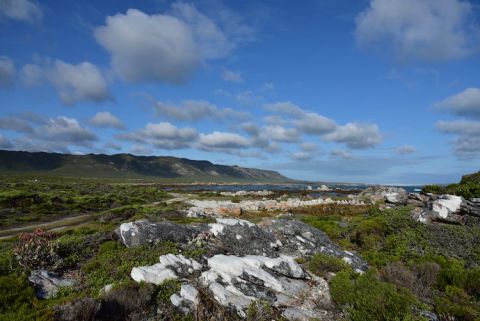
Wine – communion wine – was first made in the 19th century in the village of Elim, the prettiest in the region, by Moravian missionaries. The first vines of the modern era, a small trial block, went into the ground in 1996 on the Zoetendal estate, which has for the moment switched much of its focus to tourism. (The day I tasted a range of Cape Agulhas wines presented by their makers at the neighbouring Black Oystercatcher wine farm last May was Mother’s Day and Sean Petersen of Zoetendal had to dash back to get ready for a record lunch service.)
Those early vines thrived sufficiently to encourage more substantial, if still speculative, plantings. In 1997 buccaneering Cape wine producer Bruce Jack and vineyard owner Francis Pratt planted vines for The Berrio label and were followed a year later by local farmers the Human family for wines that would be labelled Black Oystercatcher. They were helped and encouraged by Abrie Bruwer of the much more established Springfield Estate in Robertson 50 miles over the mountains to the north, who would fly down and land his light aircraft on the airstrip in front of Black Oystercatcher, once the cattle grazing there had been chased off. Eventually, Cape Town flying clubs would combine a sortie to Agulhas with a wine-buying trip.

The very first Agulhas label, Land’s End, emerged in 2000, based on Zoetendal grapes. The grapes were shipped to Stellenbosch to be vinified and the label was owned by a syndicate of winemakers, a landowner and an accountant. Over the years ownership and winemaking location has changed but Land’s End wine, with its eye-catching picture of the red-and-white striped Cape Agulhas lighthouse, demonstrated that the windswept hinterland of the lighthouse can produce excellent Sauvignon Blanc. As Hannes Meyer, then winemaker at Lomond winery (he has since moved to Cape Point, producer of another cool-climate Sauvignon) told me, ‘Sauvignon Blanc from here is unique – thiol-driven [roughly, ‘smoky’]; not ripe, green tropical fruit but white stone fruit, maybe kiwi too; chalky and mineral with beautiful natural acidity.’
Meyer, with considerable experience of making wine in warmer Cape regions, was able to make this observation about the common practice of adding extra freshness to fermenting grapes: ‘In Stellenbosch we bought a pallet of tartaric acid every year, but we’ve never added one gram of acid here.’
Not that Agulhas wine production is without its challenges. According to Meyer, ‘it’s extreme winemaking because the weather varies so much. This year, 2023, has been the toughest ever – there’s been so much rain. But at least we can pick quite early and make great wine even at 13 to 13.5% alcohol.’ As one might expect in such a cool wine region, most Agulhas alcohol levels are modest by South African standards.
Nomenclature and the choice of appellation in the region is a bit confusing. Some producers use the district name Cape Agulhas – sometimes just Agulhas – while others use the name of the Elim ward within that district for wines whose grapes come from within its boundaries. The generic promotional body, founded in 2019 and now with 14 members (see below), is known as the Agulhas Wine Triangle. And some of these produce wines from grapes sourced a little further afield which have to be labelled Cape South Coast.
The Nieuwoudt family’s Cederberg estate is hundreds of miles north-west of Cape Agulhas yet so impressed was David Nieuwoudt by the quality of Sauvignon Blanc grown here that he established the Ghost Corner range of Cape Agulhas wines. And such is his winemaker Jean Nel’s belief in what he calls South African wine’s ‘best kept secret’ that Nel was even prepared to get up at 3 am to drive to Black Oystercatcher to show me his wines.
But, like an increasing number of Cape Agulhas wine producers, he has diversified into red wine production, specifically that of refined Syrah, wines very much more like Syrah in its northern Rhône home than anything from warmer parts of South Africa, or Australia, labelled Shiraz.
Among the 31 Cape Agulhas wines I was shown in South Africa last May, 20 were Sauvignon Blancs, one was Black Oystercatcher’s very winning White Pearl Sémillon/Sauvignon Blanc blend, seven were Syrahs and only one was a Chardonnay. I have not included in this tally the very different wines of Sijnn and Olivedale, which are grown one and half hours’ drive north-east of the other Cape Agulhas estates in a very different terroir on the Breede River. The climate there in Malgas is much drier – just 250 mm (10 in) of rain most years – with more complex, stonier soils. Sijnn was established in 2003 by Cape wine producer David Trafford and his then UK importer Simon Farr ‘in the middle of nowhere’ and produces exciting, ageworthy red and white blends quite unlike wines made anywhere else.
According to Sijnn’s estate manager Charla Bosman (no relation to the wine family of the same name), Malgas is cooler than Stellenbosch and Swartland but warmer than most of Agulhas. ‘We’re the extreme in this triangle.’
It would be remiss of me not to mention one other distinguishing feature of this haunting landscape. The Nuwerjaars Wetlands Special Management Area (SMA) comprises over 46,000 hectares (114,000 acres) on the Agulhas Plain that have been donated by 25 local farmers for conservation. Alien vegetation has been cleared and native species of flora and fauna encouraged. Buffalo and hippo have been reintroduced, and of the 1,850 plant species found here, many are unique to the area, as are some of the birds. Until the 1990s floods and wildfires were common but this is a fine example of farmers fighting the effects of climate change co-operatively. All of which should provide a long-term future for tourism – and for the region’s distinctively fine Sauvignon Blanc and Syrah.
UK and US importers of Agulhas wines
The Berrio
Bruce Jack Wines (UK), USA Wine West (US)
Black Oystercatcher
Not currently available in the UK or US
The Drift Estate
Bruce Jack Wines (UK), USA Wine West (US)
Fortes Family Wines
Mainly sold in Canada
Ghost Corner
Bibendum (UK), Regal Wine Imports (US)
The Giant Periwinkle
No representation yet
Land’s End
Vin Access Global (UK), South to South Wines (US)
Lomond
Hallgarten (UK), Cape Classics (US)
Olivedale
No representation yet
Sjinn
Raeburn Fine Wines (UK), Vine Street Imports (US)
Skipskop
Caviste (UK), no current US importer
Strandveld
Ellis of Richmond (UK), Truvino (US)
Trizanne Signature Wines
Off Piste Wines (UK), Vine Street Imports (US)
Zoetendal
No representation yet
For tasting notes, scores and suggested drinking dates see South Africa's coolest Sauvignon and Syrah. For stockists, many in Germany especially, see Wine-Searcher.com.