When I arrived in India for a few days recently I was puzzled by Indian consumers’ and producers’ attachment to powerful reds. J’Noon, a joint venture between Indian wine producer Fratelli and Jean-Charles Boisset of Napa Valley, a blockbuster if ever there was one, is regarded as the apogee of fine Indian wine. Surely in India’s sultry climate the refreshment of whites and rosés is needed? Or at least a lighter red such as a Pinot Noir (if a region cool enough to grow Pinot successfully could be found in India)?
When for the third night running I got back to my hotel room shivering from the aggressive air conditioning during dinner, the penny dropped. Wine in India is the, increasingly common, drink of the well off, and the well off are devoted to fiendish air-con. Perhaps they need those full-bodied reds to warm themselves up.
During my brief time in Delhi and Mumbai I was also told that many an Indian drinker believes that red wine is beneficial for their health. The World Health Organization may disagree but the burgeoning Indian wine trade is not minded to draw their customers’ attention to this.
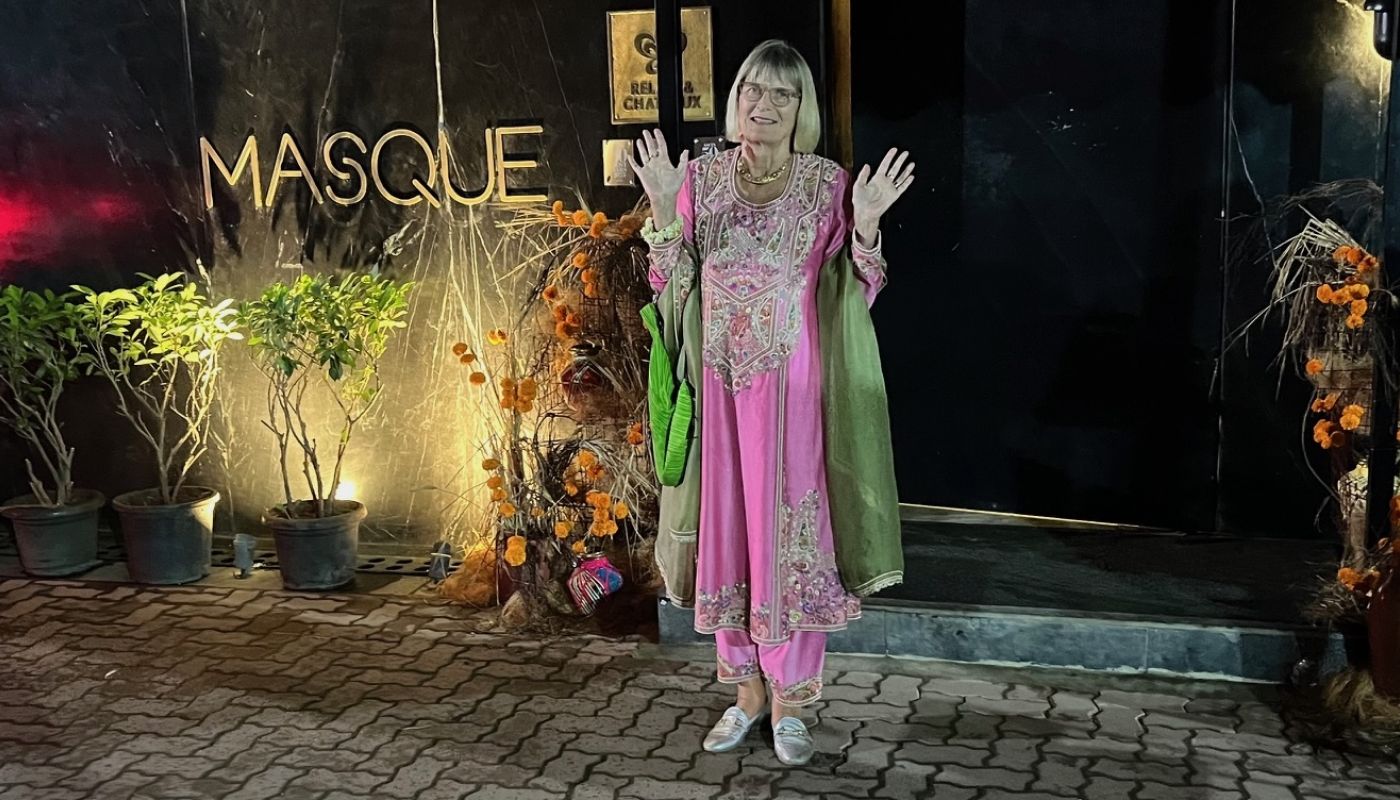
Despite punitive import duties of 150% by value, and hardly-encouraging regulations and taxes that differ state by state (some of which are dry), among the millions of affluent Indians, wine has steadily been replacing cocktails and the once-ubiquitous whisky as an aperitif. And the theory that India’s highly spiced food doesn’t go with wine has largely been abandoned. We certainly enjoyed a range of wines carrying nine of India’s most respected labels with the excellent, and indisputably Indian, cuisine of Masque restaurant in Mumbai’s old mill district, the fashionably grungy equivalent of East London or Brooklyn, at a special dinner organised by India’s one and only Master of Wine Sonal Holland. (Indian dress was mandatory, as you can see above.) The wines had improved considerably since my last visit in 2017.
Hridhay Mehra, Masque’s head sommelier, confirmed the cultural hurdles that wine has had to overcome in many sectors of Indian society. ‘It took ages for me to convince my parents that I drink for a living. I used to have to hide bottles of wine in my bedroom cupboard.’ A few days later, back in London, I was to meet a young Indian-born wine writer who emigrated to America with her parents as a teenager. Her mother, a keen wine drinker, still drinks it out of a cup rather than a more revealing glass, she told me.
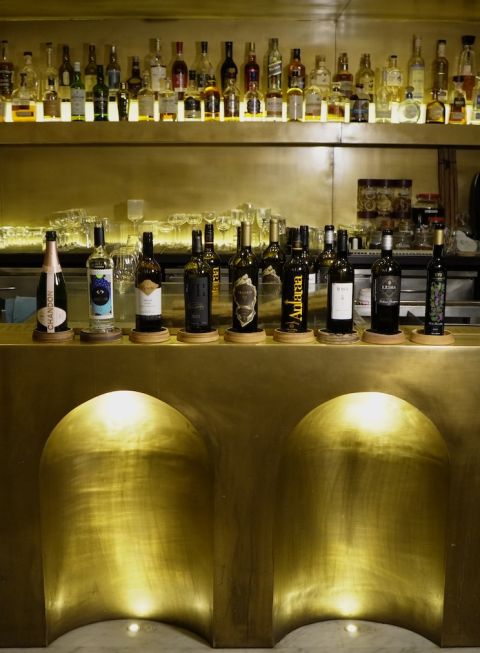
The Masque dinner, called a Navratna, a reference to 'the nine gems', by Holland, was the first time all these producers had met socially. Holland asked them each to provide one wine and found, perhaps inevitably, that most of them wanted to show a full-bodied red. (The line-up, with tasting notes here, is shown above.) A notable exception was the LVMH-owned sparkling-wine producer Chandon, which provided our sparkling rosé aperitif made in the same way as its stablemate in Champagne, Moët & Chandon. But even this definitively effervescent company has just launched a still red, Aurva Shiraz 2021 – under a screwcap.
Shiraz is the most-planted variety of wine grape in India and does better in the heartland of Indian viticulture, Nashik, a four-hour drive north-east of Mumbai, than Cabernet Sauvignon which can be difficult to ripen properly in Nashik. Solapur, seven hours south-east of Mumbai in southern Maharashtra where the nights are warmer, has proved a better bet. Chenin Blanc is the most popular grape for white wines.
There is now a Wine Growers of India association, encouraged by Ashwin Rodrigues, owner and chief winemaker of Good Earth Wine, who gained his winemaking experience in the Barossa Valley. He excitedly told me that the association now holds technical meetings ‘for winemakers not CEOs’ at which they serve each others’ wines blind and comment on them – all in aid of improving the quality of Indian wine overall.
He was seated at our table at this dinner and I heard him ask Ipsita Das, ex Uber managing director of Chandon, why she recently raised the price of her fizz quite substantially – to the equivalent of about €30 a bottle. ‘We thought India was ready for a premium wine’, she answered with a careful smile, before admitting, ‘it has been a tough journey’. As a fellow Indian wine producer trying to balance the books, Rodrigues expressed deep gratitude for her move, although a more cynical diner at our table observed, ‘Indians are still learning to drink sparkling water, let alone sparkling wine’.
Per-capita consumption of wine may have risen in recent years but it’s still not much more than two centilitres a year – although, as one wine professional pointed out, ‘if we all consumed wine, there’d be none left for anyone else in the world’. This seems unlikely, given the extreme poverty experienced by so many Indians but an IWSR report on prospects for alcoholic drinks identified India as the country with the greatest volume growth last year, and one of the few expected to grow in future.
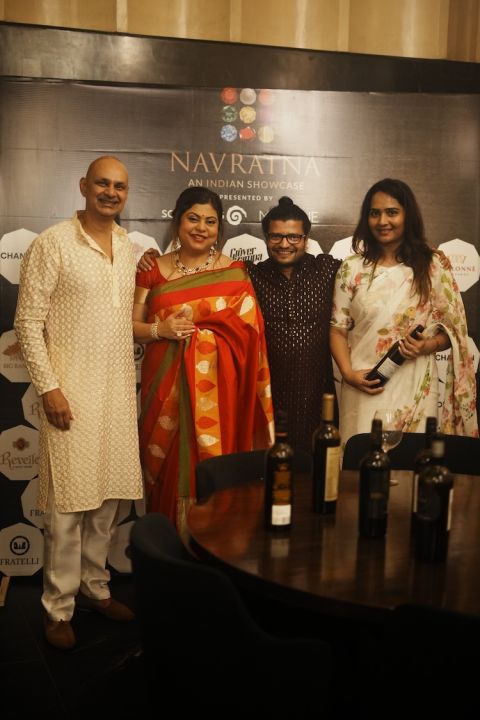
Partly because of those import taxes, 75% of wine sold in India is Indian and Rajeev Samant of Sula Vineyards (left in the picture above, with Sonal Holland, and Ashwin Rodrigues and Rajashree Ingle of the Wine Growers Association of India) has a 60% share of that 75%. Inspired by what he saw in California, Samant has been in the business 25 years. Countless Indians have had their first-ever taste of grape-based wine at Sula’s notably tourist-focused winery in Nashik, so Samant bears considerable responsibility for the prospects of the Indian wine market. Sula has become so ubiquitous that Samant has been developing other labels such as The Source and Rāsā (another full-bodied red).
But the really well-heeled drink imported wine. At another dinner I sat next to one wine lover who commutes between London and Mumbai and told me he always loads up at the Mayfair wine treasure trove Hedonism before travelling back to India and goes gamely and expensively through the red channel on arrival.
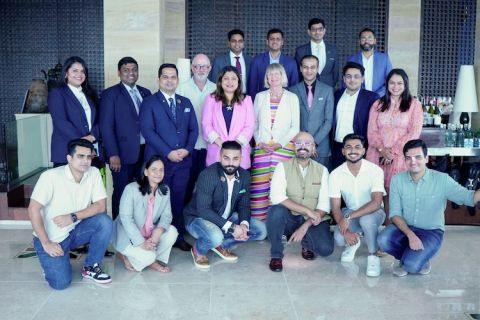
When Holland started out in wine 17 years ago there were very few Indian wine professionals but the Indian wine importers I met recently were admirably well educated and informed. Below is a group of them I met over lunch at Souk restaurant on top of the Taj Mahal Palace hotel in Mumbai. I was told that Italian reds, particularly from Tuscany, are currently popular with Indian consumers and that the reputation of Bordeaux has been harmed by too many poor-quality wines.
In another sign of the wine times in India, this month sees the establishment of the Sommeliers Association of India by Bordeaux-based Master of Wine hopeful Amrita Singh. There are apparently already 35 to 40 candidates for professional somm exams, and the first Indian qualified as a Master Sommelier in August. Kamal Malik MS currently works for a wine importer in the Maldives in the Indian Ocean.
The Indian sommeliers I met were unanimous that more somms are needed in their country, pointing out that there are probably a thousand bartenders for every wine waiter. Supply is hindered by the fact that even top hospitality schools are not allowed to serve alcohol to anyone under 25, which means virtually all their students.
There may be only 10 Indians resident in India who have reached the top, Diploma, level of Wine & Spirit Education Trust courses but early-evening wine tastings have become a popular leisure activity. Devati Mallick, a young woman who organises them, assured me that when Indians travel, as they increasingly do, they tend to become interested in wines from the regions they explore.
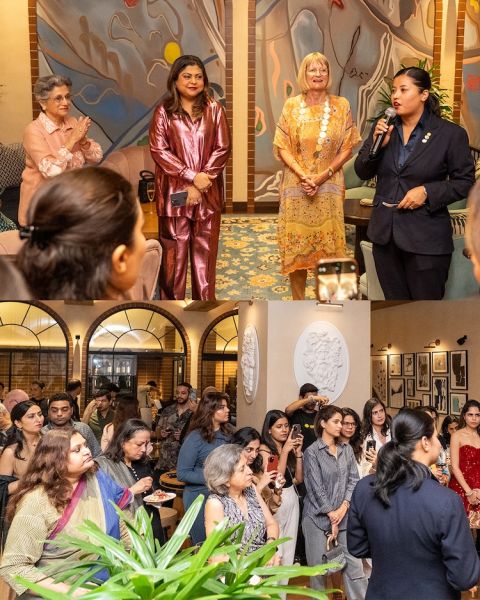
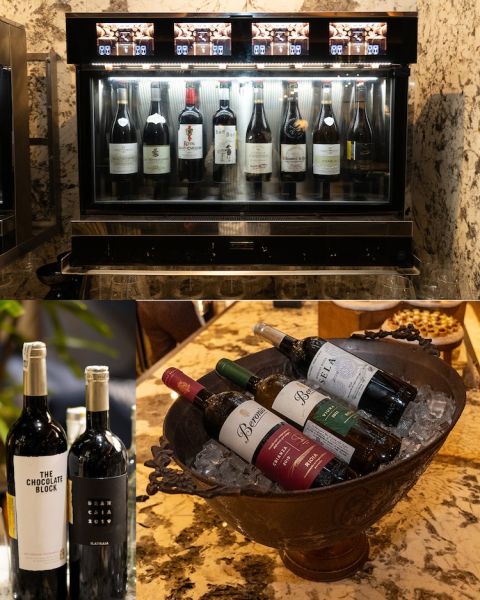
Susmita Bomzon (on the right above with, left to right, Reva Singh of Sommelier India, Holland and me, addressing a mainly female gathering during my stay) worked in Dubai before returning to her native India to set up the country’s first wine bar, Captain’s Cellar in the basement of the Taj Mahal hotel in New Delhi. Thanks to Enomatic wine dispenser cabinets, she offers 48 wines, Indian and imported, by the glass. According to Holland, who is not just India’s first Master of Wine but also organised last month’s Vinexpo wine-trade fair in Mumbai (where more than 5,000 visitors tasted 1,000 wines shown by 100 exhibitors and attended a series of masterclasses), ‘Fifteen years ago this [wine selection] would have been unthinkable’.
It’s no wonder that Australia, having been crippled by punitive tariffs imposed by China in 2020, decided to look to India for new export opportunities, concluding a trade agreement in 2022. This is one rapidly growing market that gives the world’s wine producers, concerned about shrinking sales elsewhere, some reason to be hopeful.
Some recommended Indian wines
Fizz
Chandon Brut NV 12.5%
Pink
Sula, The Source Rosé Grenache 2023 12.5%
Red
Good Earth, Antaraa Cabernet/Shiraz 2023 14%
Grover, Signet Amphora 2019 14%
Vallonné, Anokhee Grand Reserve Cabernet Sauvignon 2019 14.5%
Tasting notes, scores and suggested drinking dates in our 264,000-strong tasting notes database.