We are publishing this 42nd entry into our wine writing competition thanks to Matt Shaw, who tells us:
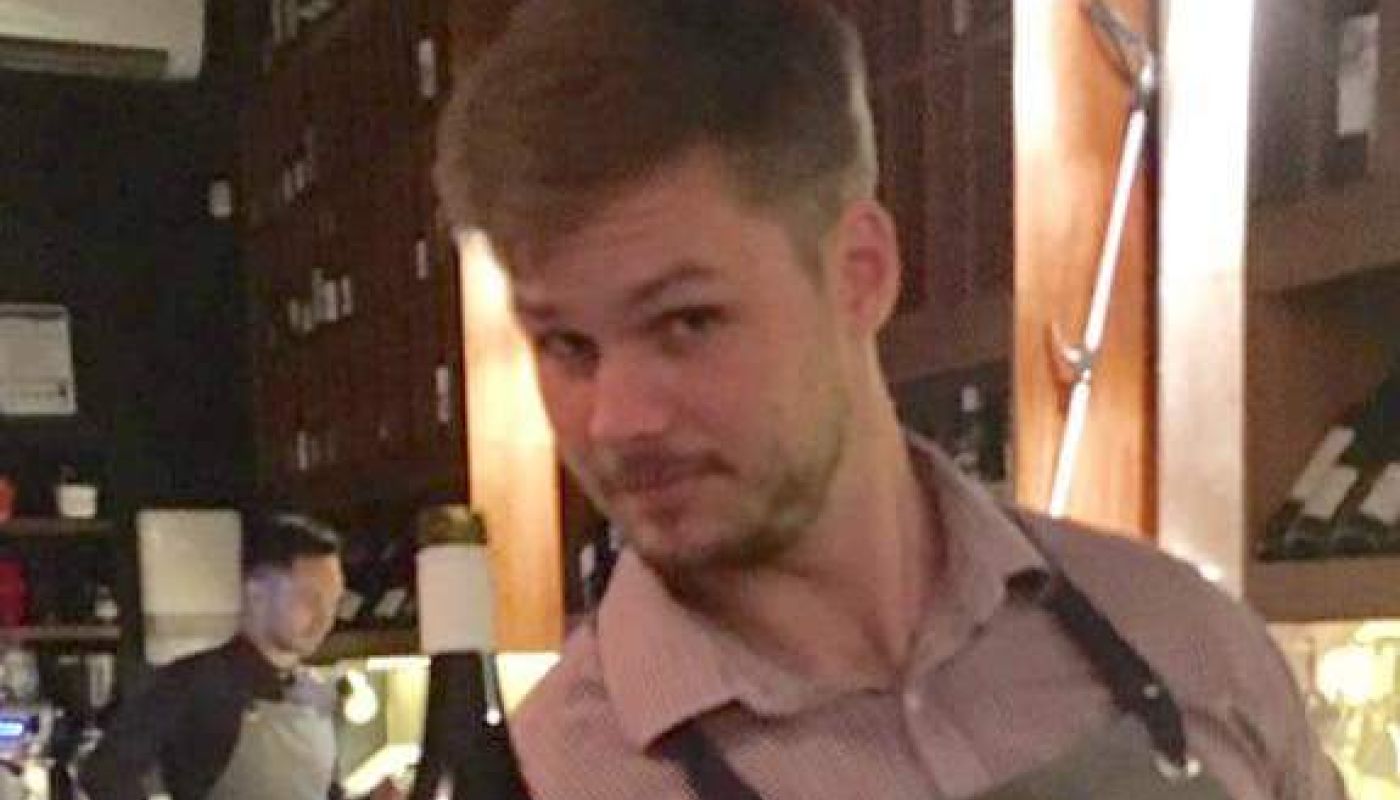
My name is Matt Shaw. I am 27. I am a sommelier working at a restaurant in Melbourne named Movida. I was born and raised in the UK but moved to Australia three years ago. The original plan was to work for a year on a working holiday visa then travel around Asia. Having always had an interest in food and wine, the natural work to look for was in restaurants. Needless to say I fell in love with wine and have chosen to make a career out of it. I have attained my WSET Level 3 and Court of Master Sommeliers Certified Level. I plan on tackling WSET Diploma in 2017. This is my first attempt at wine writing but it is something I have been meaning to try my hand at for a while.
UNICO ZELO – WAVING HARDEST

Following up on the great press that smaller artisan producers from Australia have received on these hallowed Purple Pages in recent months, there is one new-wave producer waving hardest. Emphatic boxes ticked include: unflinching dedication to promoting sustainability; using varieties best suited not only to their terroir and current climate but for that of the foreseeable future; accessible products, pricing and packaging; co-operative initiatives rewarding and empowering great growers; distilling their own spirits using indigenous botanicals with the priority being sustainability. The list goes on. The producer is Unico Zelo.
Brendan and Laura Carters (pictured below) have been making wine together under the label for six years, since they were just 20 and 19 respectively. Their manifesto is to make great wine for everyone using varieties suited to, and requiring the least intervention in, their vineyard and winery in the oft-sunbaked state of South Australia they call home. The varieties focused on: Fiano and Nero d'Avola.

Brendan's childhood was split between Australia and Campania, so when brainstorming white varieties that are drought- and heat-resistant, and can retain acidity in the sometimes scorching heat of South Australia, he didn't need to think too hard. 'Fiano is a great grape for Australia', Brendan says of the variety they have made their signature, with his own brand of boundless enthusiasm. 'It can be grown without much water, retains its acidity in the heat, expresses terroir well and is easy to pronounce!' Of Nero d'Avola vines he espouses its amazing ability to seal off its own stomata at over 36 ºC to drastically minimise water loss, going into a kind of developmental stasis. This means the vine avoids serious water stress and damage that other less hardy vines often succumb to in the heat. Perfect for South Australia, which is by no means a stranger to such temperatures.
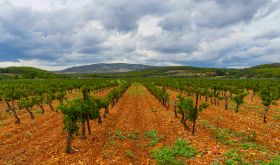
They source their fruit from all over South Australia, working very closely with growers using good vineyard practice, many organic, and all dry farmed. This is especially impressive and noble in the Riverland, the source of fruit for many a bulk wine. The importance of showing that ethical and sustainable dry farming of good-quality grapes can be done in what most people think is a Mad Max-esque scorched red wasteland can't be overestimated. Increasing temperatures and drought in the area (and most of the state) over the coming decades will (or at least should!) make irrigating ethically if not practically untenable.
Unico Zelo set an amazing example for others to follow. Their job of sourcing grapes is getting easier every year thanks to an extremely pleasing increase in growers focusing on drought-resistant varieties that can be dry farmed with little intervention. There are 55 Nero d'Avola vineyards in Australia now, with Fiano not far behind. It is worth noting that they are not alone in championing these varieties in Australia. Brad Hickey of Brash Higgins has been making great Nero d'Avola in McLaren Vale since 2011 and Chalmers (who first brought the varieties to the country, and whose nursery has supplied the rest of the country with cuttings) turn out valiant examples of both varieties.
Unico Zelo's symbiotic relationship with growers doesn't stop there. Using the impeccable example of the Produttori del Barbaresco co-operative in Piemonte (where they spent their honeymoon) they have started to give growers using good practice a fairer price for their grapes than they had been receiving from larger wine companies, to encourage and reward such practices.
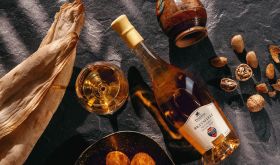
The wines themselves show the diversity of the terroir available in South Australia and how the varieties reflect them. River Sands Fiano 2016 from iron-rich sand on limestone soils in the Riverland is ripe, spicy and rich with a cleansing mineral element. Jade and Jasper Fiano 2016 from ancient sandy limestone, also from Riverland, is more textural, aromatic and spicy without sacrificing drinkability. Slate Farm Fiano 2016 from the Clare Valley's slaty terroir is different again, with a smoky flint character, salinity and crisper texture. Alluvium Fiano 2016 from Adelaide Hills is crisper still with long-lasting minerality and a lighter citrus profile. The River Nero d'Avola 2016 from the Riverland is elegant and aromatic with luscious fruit and spice. They also have a wonderfully named Truffle Hound Nebbiolo from the same vintage that focuses on the intensely aromatic nature of the variety to make a soft, crunchy and extremely pretty Nebbiolo.
All delicious, all distinct, all accessible, all retailing between AU$20 (£12.41, $15.15, €14.20) and AU$40. The Harvest wines are just as affordable and equally quaffable, turning out a crunchy and refreshing Blanc de Blanc, restrained and balanced Sauvignon Blanc, and juicy lush Shiraz.
It isn't only wine the Carters are taking their enigmatic approach to. In the corner of their winery in the Adelaide Hills (a facility which thankfully means that the truly awful proposed WET Tax Rebate changes discussed on this site will at least leave one new-wave gem unhurt), they have set up a distillery producing their own gin and amaro. Applewood Distillery is the name, a reference to the repurposed cool store for apples they are using. Brendan remarks that he sees the craft gin industry in Australia as 'less of a craze and more of a cultural realisation of what constitutes the Australian palate'. Brought up on a diet of 'lager and Vegemite compared to ale and Marmite' it is only natural that gin with its refreshing bright botanical deliciousness would appeal to Australians. Their gin is fresh and bright enough for a G&T but with enough depth and smoothness to warrant a Martini.
Their Okar and Red Okar products are styled on, but not imitating the flavour of, infamous Italian apertivos Aperol and Campari respectively. Both tipples are made using a noble, entirely appropriate and extremely on-trend focus on indigenous botanicals. To research the multitude of indigenous botanicals than can be harnessed from the Australian bush, the couple go and live with different indigenous communities for a week at a time. These communities show them how they use local ingredients, from foraging to processing – all again with the absolute focus of sustainable practice. This really sets them apart in the increasingly saturated craft spirits sector.
Okar uses Riberries (small orange-coloured berries used by some Aborigine communities as sweets) among other things to make a bittersweet, deep-orange Aperol homage. Red Okar ramps up the Riberry usage, alcohol and other botanicals to more closely represent a product to substitute for Campari. Not only are both drinks beautifully balanced, delightfully flavoured and and certainly unique, they tap into another Australian drinkers' obsession – Aperol spritz and Negronis. Australia has a deep affection for Italian food and drink, owing in part to a large population with Italian heritage, and never is that more prominent than with these classic cocktails. Brendan points out that these can now be enjoyed using all-Australian products utilising indigenous botanicals. Okar plus a King Valley Sparkling Glera (or Harvest Blanc de Blancs) for a Spritz. Red Okar, plus a sensational small-batch gin such as Melbourne Gin Company or Four Pillars – or of course their own Applewood gin – plus a craft vermouth like Maidenii from the Yarra Valley for a Negroni. Or swap out the gin for soda and we have an Australiano. Salute mate!
SPOUTING BOLLOCKS – A DEFENCE

You may have seen eminent food critic and broadcaster Jay Rayner's widely reported advice to restaurant-goers about ordering wine in a restaurant. While speaking at the Cheltenham Literature Festival, he recommended 'buying the cheapest bottle on the list' in protest at the 'bollocks spouted by wine connoisseurs [which] irritates him profoundly, [on] wine lists fraught with problems'. He goes so far as saying that if someone feels intimidated by a wine list they should 'buy the cheapest and tell them all to piss off'. As a professional 'bollock-spouter' (or 'sommelier' as we are sometimes called) in the business of creating these profoundly irritating list of wine options for my customers, I would like to spout some bollocks before people start telling me to piss off.
Let's start with Rayner's evident lack of appreciation of how wine lists are usually priced, rendering his words rather poor advice for customers. One of a sommelier's key responsibilities to their employer is to run a profitable (while hopefully high-quality) beverage programme. A benchmark for this is usually to keep cost of goods (or COGS) at 30% as a function of income from sales. This is what the owners of the business want. This means that if food COGS percentage, wage costs percentage and overheads percentage are kept in check, they can actually break even or – God forbid – run a profitable business. Notoriously difficult in this industry.
One of the most commonly used strategies to achieve this is to have the largest mark-up on the cheapest wines. The reason for this is fairly obvious. The cheapest wines are the most likely to be highest volume, thus by having the largest mark-up you can most easily improve your COGS percentage. Therefore suggesting buying the 'cheapest on the list' in protest as some sort of middle finger to restaurants, you will be paying the most inflated price possible.
I feel it's worth pointing out at this point that any bollock-spouter at any self-respecting restaurant would always try and have their lowest-priced wine to be as high quality as possible for the price. Our mandate isn't to trick people into having poor-quality, overpriced plonk. It's about identifying and providing well-priced entry-level wine that is still good quality at a more heavily marked-up price, not conning customers into candlelight robbery.
The added bonus of this pricing structure is that it allows flexibility in pricing other wines. You can afford to offer wines you love or think deserve showcasing but which are more expensive at wholesale price at a better relative cost to the customer, all while keeping your COGS percentage at the holy grail of 30%. It affords you the opportunity to have more unusual or interesting wines at a more reasonable mark-up. The aim of this is not to 'irritate profoundly' or 'intimidate' but to offer these options for those who want them.
As discussed, a certain number of customers (usually the majority) will want an entry-level wine on the list that is familiar and accessible. That is beyond fine. They get what they want and have a good experience – and COGS percentages look good, so the general manager and owners are content. However, a certain number of customers want something different. Something special. Something they can't find easily elsewhere – perhaps a less well-known variety, or an orange Georgian wine, or a no-added-sulphur Pinot Noir. These lesser-known (sorry, 'profoundly irritating' and 'intimidating') wines can enhance the experience for some diners in the same way that trying a new dish can. They are not there to intimidate any more than premium products in a department store. It is to offer choice. To criticise wine lists offering these options as intimidating is no more fair than it would be to criticise lists with easy to understand, accessible options as being boring. Both attitudes are remiss and vulgar.
Furthermore it is fundamental for a good wine list to reflect the philosophy of the restaurant, the chef's food and the atmosphere. If a menu is simple and rustic then the wine list should follow suit. But if a restaurant's food is aiming to surprise or wow you, is it 'bollocks' or 'intimidating' to want the drinks to do the same? Surely part of the thrill of going to restaurants, and certainly what lives longest in the memory for me personally, is to have my horizons broadened. Interaction with knowledgeable staff about ingredients or techniques on a menu that are unfamiliar, followed by good execution of the dish using those elements, can be the difference between a good experience and a great experience. Why should the experience with the wine list be any different? Trying an unfamiliar wine with the guidance or advice of knowledgeable staff, be it in terms of variety, provenance, viticulture or vinification, is for me (and many of my customers) capable of transforming an experience from good to unforgettable.
My advice to restaurant-goers therefore is somewhat different to Mr Rayner's. Although the cheapest on the list should still be relatively good value if the wine list is any good, to get the best relative value, talk to the staff. Any waiter or sommelier worth their trendy hospitality apron should be thankful and excited you are interested, while striving to do the exact opposite of intimidate you. They will have a mental shortlist of what excites them and what they would like to drink themselves, never irrespective of price. These will often be the the wines that are marked up less severely and represent the best deal and hopefully drinkability. If that sounds like a load of bollocks, please do tell me to piss off.