Diverse Origins: Viña Carmen’s Quijada Semillón
Instead of merely cataloguing diversity, we need to tell the histories in which diversity emerges—that is, acknowledge its lively and, thus, contaminated forms. Diversity is created in collaborative synergies; it is always becoming. - Anna Tsing
Chile, that long petal of the sea, is best known for bold reds. Yet this viticultura paradiso also produces world-class whites, including that noble wine of Bordeaux provenance, Semillón. Until recently, it was the most planted white grape in Chile, constituting 75% of the country's white wine. Today, that number has shrunk to 2.6%, with Semillón representing a mere 0.6% of Chile's total vineyards, many of which are old yet thriving.

Thanks to the efforts of passionate producers like Viña Carmen, Chile’s oldest winery (founded 1850), old vine Semillón is being preserved and revitalised. The varietal’s displacement began in the 1980s with the Chilean wine industry’s focus on success in the export market and its thirst for Chardonnay and Sauvignon Blanc. Knowing they had the terroir for producing premium wines, dramatic oenological improvements proved Chile’s potential, with $100 bottles appearing on overseas wine lists by the 1990s.
Meanwhile, domestic wine consumption had been in steady decline due to the political and economic instability of the dictatorship period (1973-1990). Despite being among the world’s top wine-producing nations, per capita consumption in Chile remains low at 19 liters/year. This is about half of other major wine-producing countries such as France, Portugal and Italy, and well behind neighbors Argentina and Brazil. Chile’s wine consumption used to be much higher, however, at 60 liters/year, Semillón constituting most of the whites.
The past ten to fifteen years has seen renewed interest, both locally and globally, in Chile’s heritage vineyards and wines. Old vine Cinsault, Carignan and País from the Maule and Itata valleys have been making waves on the red front, championed by organisations such as Vignadores del Carignan (VIGNO) and Movimiento de Viñateros Independientes (MOVI) . Old vine Semillón has been gaining ground thanks to the passionate efforts of an international group known as the Semillón Circle. Spanning France, Chile, Argentina, Australia and South Africa, the Circle’s mission is to preserve classic regional expressions of Semillón and the history contained in old vines.
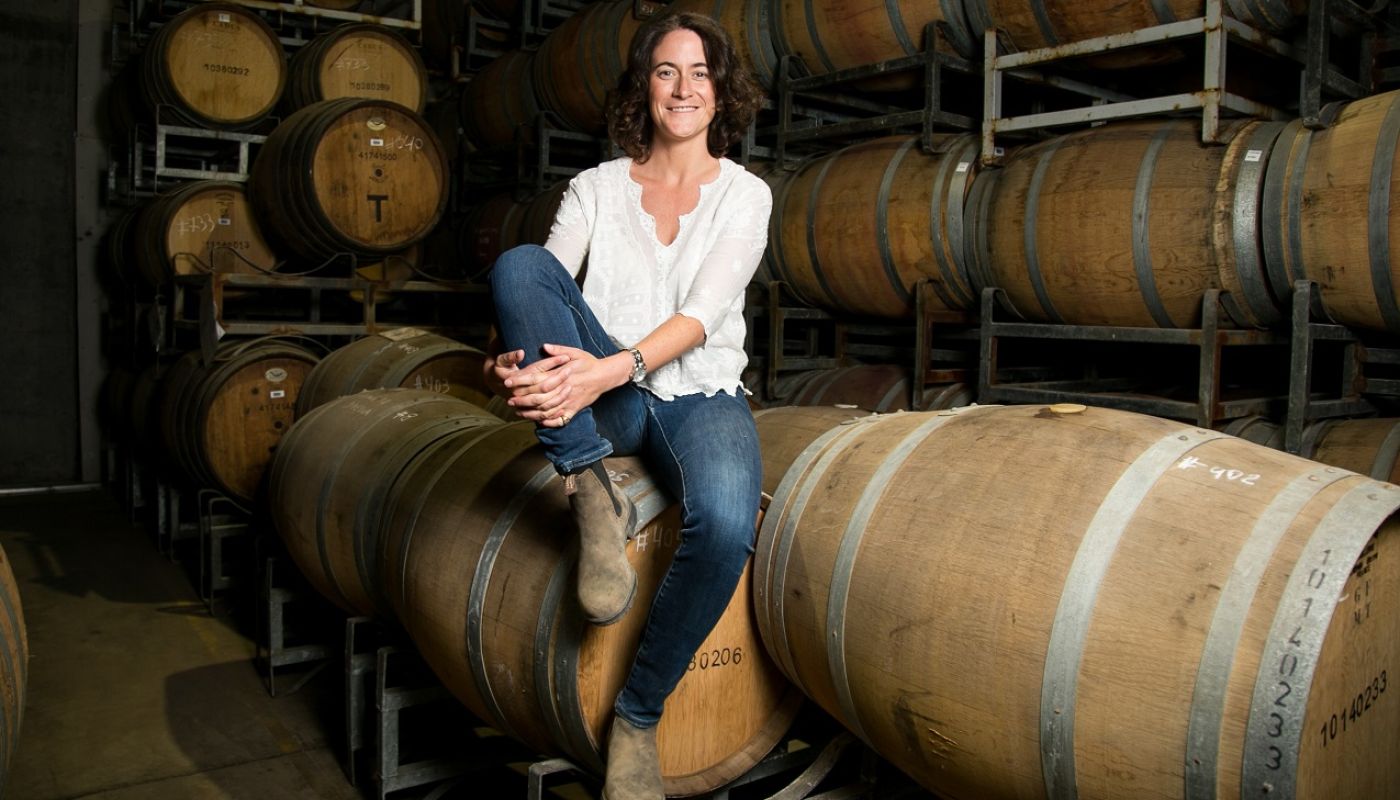
According to Emily Faulconer (pictured on her barrels at the top of the article), Viña Carmen’s head winemaker, the revaluation of Chile’s old vines and varietals points to Chilean winemaker’s international experience and openness to experimentation. French winemakers working in Chile who observed the untapped potential of the country’s heritage vineyards have been a driving force. Renewed appreciation for the old also reflects a broader process of sociocultural change where specificity, traditions and provenance have taken on greater meaning in response to the homogenising effects of globalisation.
Carmen’s ‘Diverse Origins’ Project
After exploring heritage vineyards up and down Chile, Viña Carmen launched their ‘Diversos Origines’ (DO) range in 2016. As Emily explains, Carmen DO was born from the ideal of strengthening ties with small, family-run vineyards in special corners of Chile. Working side-by-side and following traditional winegrowing practices, the aim is to craft wine’s that transmit and celebrate the history of particular people in particular places. The DO range consists of four old vine wines: a single vineyard, varietal Cinsault from Itata Valley (where Chilean viticulture began), a Carignan, Grenache and País blend from Maule and two Semillóns from the Quijada vineyard in the Apalta subregion of Colchagua. These old vineyards are living monuments to Chile’s social and oenological history, especially the French paradigm shift that occurred in the mid-19th century.
The French Paradigm and Chile’s Agrarian Reforms
Following the early colonial period, in which Criolla varieties such as País and Moscatel were cultivated in Chile’s central valleys, the mid-19th century saw the introduction of French varietals (primarily from Bordeaux), viticultural and winemaking techniques. Wine quality elevated quickly as French vines found themselves at home in Chile’s temperate valleys. It was common for vineyards to be planted to several varietals while being named after the protagonist. Many of Chile’s old Cabernet Sauvignon vineyards, for instance, were mixed with Cabernet Franc, Grand Vidure (Carmenere) and Cot, all of which were co-fermented as a field blend. The same goes for the old Semillón vineyards, which are typically interplanted with Sauvignon Blanc, Sauvignon Vert, Moscatel and Torontel.
Along with the incorporation of French varietals and winemaking techniques, Chile’s winescape gradually transformed as old colonial estates (haciendas) began to be subdivided into smaller agricultural plots. The changes accelerated significantly during Chile’s Agrarian Reforms, beginning in the 1950s. Prior to the 1973 coup d'état, around 59% of Chile's agricultural lands were redistributed to campesinos and farm syndicates.

Quijada family and Apalta terroir
It was in this changing sociopolitical context that Don Juan Quijada acquired a plot of land in Apalta, which he planted to Semillón in 1958. The Quijada family still tends the vineyard to this day, selling its grapes exclusively to Viña Carmen thanks to a trustful relationship and generous compensation.
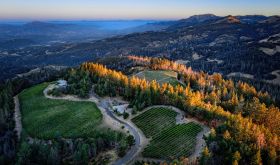
The horseshoe shaped Apalta Valley is in the intermediate depression of the Colchagua Valley, which lies about three hours south of Santiago. Framed by the hills of the cordillera (coastal range) to the south and the Tinguiririca River to the North, most of the valley is planted with vines, while native flora dwells on the hillsides.
The climate is typical Chilean-Mediterranean, marked by prolonged hot and dry summers, moderate intermediate seasons and cold valley winters. Rain is concentrated in July and August. Apalta is about a hundred kilometers from the Pacific, though the Tinguiririca River provides a significant cooling influence that allows slow, even ripening. Quijada vineyard’s soil profile is a mix of granitic and sandy loam that lend the Semillón distinct mineral aromas and salinity. Going deeper, the clay content increases, preserving the soil’s water and nutrient retention capacity. This unique combination of clay and granite soils creates wines with a terrific balance of elegance and concentration.
Quijada Viticulture
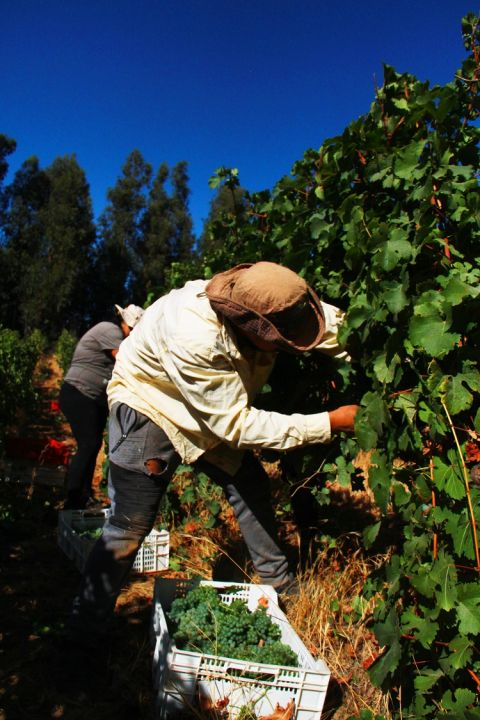
Although the Quijada vineyard is composed mainly of Semillón planted in 1958, a visual reading of the site suggests the presence of vines of various ages and a few other varietals. Avoiding herbicides, Quijada is tended in a traditional organic manner with a harrow to keep the weeds down. The only chemical used is sulfur, to prevent the spread of powdery mildew, the bane of winegrowers everywhere. Unlike some growers, the pruning and defoliation leftovers are not reincorporated into the vineyard. As good as composting can be, there’s a risk of returning pests and diseases back into vineyards in an unbroken cycle. The vines are hand-tended and harvested, practices that show through in the quality and poise of the wine.

Quijada Oenology and DO Wines
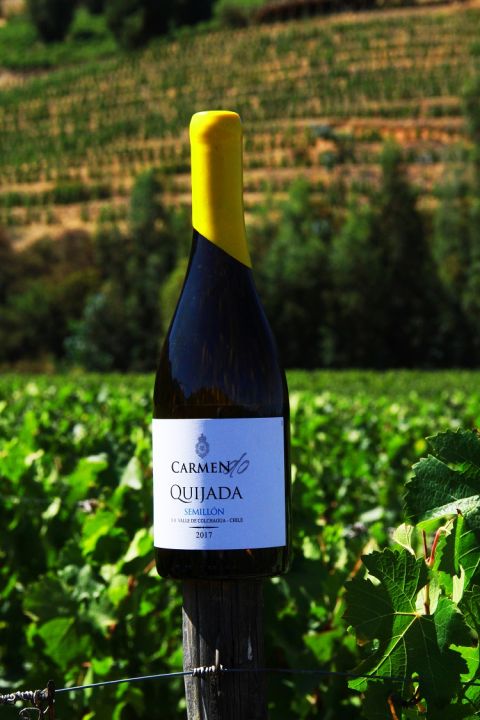
Following harvest, the grapes are put through a traditional vertical press directly into French oak barrels (20% new), where they undergo a native yeast fermentation. Carmen produces two distinct bottlings from the vineyard - Quijada and Florillón. The Quijada Semillón remains on its lees for twelve months before being bottled unfined and unfiltered. The wine emerges a bright golden yellow, with a somewhat austere nose of honey, white flowers, almonds and citrus aromas. On the palate, it is full-bodied with a round, creamy, Chardonnay-like texture that is offset by cleansing acidity. Some aging will certainly unveil and integrate layers of flavour and texture.
Florillón Semillón is made in the same manner as the Quijada, aside from a small portion that receives an additional six months aging in barrel under a layer of yeast or Flor. This method of ‘flor ageing’ is similar to the process used by the great Sherry Houses of Jerez. Apalta’s warm climate tends to produce dense, mouthfilling whites with a viscous texture. As Emily explains, the flor veil has a kind of liposuction effect on the weighty, oily component, making the wine more linear in the mouth. The intriguing result is a warm climate white that is much fresher, focused and mineral driven. Golden ore in the glass, Florillón is accented by aromas of peach, custard apple, citrus and almond. The palate is surprisingly vivacious, with a sharp edge of persistent freshness driving a long, clean finish.
A Future of Diverse Origins
Beyond grape varietals and individual wines, there is a deeper meaning in Chile’s heritage vines and viticultural traditions. The past thirty years have seen Chile actualise its potential as one of the world’s preeminent wine regions, with the volumes and value to prove it. Amidst the growth and modernisation of Chile’s wine industry, however, smaller growers have found it difficult to compete and showcase the qualities of specific vineyards and subregions. This is what Carmen’s Diverse Origins project and efforts by VIGNO and MOVI are all about. Naming their old vine Semillón after the Quijadas, a family that acquired this special plot in Apalta during Chile’s Agrarian Reforms, is a way of honoring history, collaboration and social justice. For some readers, the idea of single vineyard, sub-regional wines may not seem particularly revolutionary. In the historical context of Chile, however, this represents a paradigm shift. How many other unique old vineyards are hidden away in Chile’s remote valleys? ‘Many… some waiting to be discovered, some that are sold for peanuts and go into bulk wine,’ says Emily. Carmen’s Quijada Semillón and the DO initiative shows what is possible and only beginning as Chile moves forward while respecting its past.
Dr Chris Howard provided all the images with credits to Carmen.