Because Burgundy is virtually the only fine wine region whose whites and reds are about as important as each other, every new vintage that comes along tends to find itself characterised as 'a white wine vintage' or 'a red wine vintage' – at least when it bumps into those most likely to buy it. Having just resurfaced from total immersion in the thousands of samples of 2007 burgundy (both colours) hawked around the London tasting rooms over the last three weeks, I can report that the view of the common burgundy-buying man with a loud voice is that 2007 is a white burgundy vintage. My view of this fascinating vintage is considerably less red and white.
'Surprising' was the dominant adjective I heard in Burgundy last November from those who made it. By the end of May 2007, Burgundy's growers were convinced they had another 2003 on their hands – a year that would break all records for how early it had to be picked. April had been quite extraordinarily warm.'We were euphoric in April', reported Sylvie Esmonin of Gevrey-Chambertin. 'We sat out in the sun, cafés opened their terraces.' The flowering was difficult, extended and resulted in very uneven grapes, but was earlier than anyone could remember. The vegetation galloped ahead of itself and growers cancelled any travel plans they might have made for August in the expectation of picking even earlier than in the heatwave year of 2003. Looking ahead, some of them deliberately took steps to slow down the ripening process by making sure yields were not too low and the sugar-factories we call leaves not too numerous.
As it turned out, this was not so clever. June to August turned out to be, in the words again of Sylvie Esmonin 'complicated'. This is polite. In November 2008 she looked drained, and admitted, 'I said about '07, I hope '08 will be less stressful, but in fact it was worse'. 'Stressful' was also the word invoked by early-bottler Anne Gros of Vosne-Romanée to describe the 2007 growing season. The reason for all this stress was a summer that Bernard Dugat-Py of Gevrey-Chambertin called détestable. The problem was that these very precocious vines were then subjected to three months of cool, damp weather – not the usual warm summer punctuated by storms that kickstart the ripening process, but a slow, steady drizzle – perfect conditions for the development of the fungal diseases to which vines are so inconveniently prone.
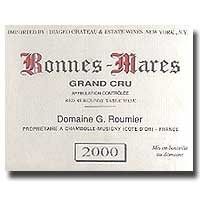
Mildew and rot threatened throughout the summer, and vineyards needed far more attention far more frequently than usual. The season was particularly demanding for the many Burgundy growers now dedicated to organic methods (even if 2008 was an even greater challenge). Although as Fred Mugnier of Chambolle-Musigny pointed out, the sort of very early rot that affected the vines in 2007 is at least vanquishable, with an enormous amount of effort, in contrast to rampant rot in very warm weather at the end of the growing season. According to his neighbour Christophe Roumier, 2007's was 'the worst rot I've ever seen but it helped that it was quite cool so it was not as disastrous as it could have been.' Nevertheless, Roumier's 2007 harvest, which yielded 25% less volume than 2006, actually took three days longer because of all the sorting that had to be done.
What saved the harvest, particularly for the more rot-prone red Pinot Noir grapes, was the north wind that began to blow on 22 August and dried out the grapes, followed by fine, dry conditions for the harvest towards the end of August and early September. Some growers, particularly those whose yields were just too high, were panicked by the threat of rot into picking before the grapes had developed enough phenolic ripeness to counterbalance the acidity that remained in the grapes after the long, cool summer. And even the most reputable growers found themselves picking relatively early. For example, 2007 was the first year that Armand Rousseau ever picked in August other than in 2003 although, as Jeremy Seysses of Domaine Dujac pointed out, in fact the wines of 2007 turned out to be 'the diametrical opposite of those made in 2003, having low tannins and high acids'. He had never seen a vintage like it in his experience of the family domaine in Morey-St-Denis, which dates from 1994.
For Laurent Ponsot above the village of Morey, however, 'the charm of 2007 is the balance. You don't notice the tannins but they're there. I consider it a great vintage for us.' Certainly Ponsot's 2007s tasted exceptionally ripe to me – and apparently about half the cuvées are more than 14% alcohol – a truly exceptional ripeness level even if not one that was uncomfortably obvious on the palate. 'In August I bought sugar [to add to the grapes to boost eventual alcohol levels] but I never used it in the end. It's the mice who are eating it now.' Ponsot picked most of his grapes between 10 and 20 September, but waited until 4 October to pick his highly successful white Aligoté in the Monts Luisants vineyard – unusually late for 2007.
This was a year which in general saw red Pinot grapes being picked before the (mainly Chardonnay) whites, for the reds were under greatest disease pressure – and many of the whites still had uncomfortably high acidity levels. Indeed, some of the white 2007s still taste just too tart and hollow. A high acid level is an attribute in a young white burgundy, but only so long as there is real substance and flavour as well. As winemaker Eric Rémy, who has now taken over from Pierre Morey at the biodynamic Domaine Leflaive in Puligny-Montrachet put it, '2007 was an illogical vintage. We harvested quite early (1-7 Sep) but chaptalised because we felt that they were not going to develop any further'. Many makers of both reds and whites added a little sugar to their fermentation vats in 2007, so-called chaptalisation and legal in Burgundy so long as acid is not added to the same vat (allowing plenty of scope for 'creative' winemaking and book-keeping in less scrupulous cellars).
But if 2007 was a nightmare in the vineyard, then at least in the cellar those who had worked hard in the vineyard found it delightfully easy to vinify. Aubert de Villaine of the iconic Domaine de la Romanée-Conti was the first to make this point to me, adding with some satisfaction that each of his red grands crus is particularly expressive of its terroir, and aérien (another French word that is difficult to translate: sort of a cross between ethereal and the opposite of earthbound).
Certainly the 2007 reds are not big, muscular wines and the best were made with a gentle hand. Now that the all-important, softening malolactic fermentations are over (they were particularly slow and late because the portion of malic acid is high in 2007, and early 2008 was especially cool), the best reds have very pretty textures. Since last summer they have been tasting better and better and, with gentle tannins and acid levels that are not exceptionally aggressive, they are already a delight to taste. Acid levels in some reds even seemed a bit low to my palate, and some producers deliberately used more whole bunches than usual in an attempt to retain acidity, but the much longer growing season than usual seems to have built fresh, expressive flavours in the best of them.
The most frequently cited similar vintage is 2000, although, as Sylvain Cathiard of Vosne-Romanée (whose 2007s are particularly sumptuous) maintains, the fruit is a little fresher in general than in 2000. For Christophe Roumier they are more precise than the 2000s, which were also initially underestimated and have been so friendly over the last few years.
The successful whites, of which there are many, from some lovely classical Chablis down to the heavy hitters of the Mâconnais, have great purity, a streak of citrus refinement and tend to be much racier than the 2006s and 2005s. As with the less entrancing whites, some reds are just a bit too scrawny on the mid palate. But the best reds have great charm – the sort of fruity, fine-boned, early-drinking perfumed charm that red burgundy alone can provide.
Next week I will report on some of the exciting newer producers to emerge in Burgundy.
See tasting notes and scores on hundreds of 2007 burgundies, the first tranche published here.