
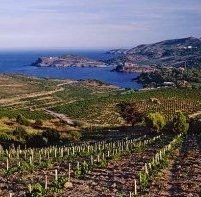
For wine consumers, especially those who like hand-crafted, highly individual wines that express the place where they were grown and are sensibly priced, the Languedoc-Roussillon is the perfect playground. For wine producers there, however, life is far from playful. Sales are unjustifiably sluggish, while costs continue to escalate. Vineyard land costs are some of the lowest in France, which has encouraged an influx of ambitious newcomers from the rest of France and all over the world, so that there are hundreds of fine wines available. But for the consumer, this is a confusing region with no track record of making great wine, which has kept prices arguably lower than they deserve to be. There are just so many wines available, mostly in small quantities and from domaines too modest to have developed an efficient distribution system, that these gems are largely undiscovered. Within France, they suffer for having no established reputation while too many foreign importers prefer to concentrate on their well-travelled routes to Bordeaux, Burgundy and the Rhône.
The picture is obscured by the fact that, try as the authorities might – and they have injected a huge amount of resources and effort into trying to restructure the nomenclature of the region, now under the umbrella term Sud de France, chosen to appeal to the US market – there is no clear hierarchy of names. The best domaines may sell some of their best wines as lowly Vin de Pays simply because they are made from grape varieties not embraced by the local Appellation Contrôlée regulations. And then for every superb example of one of the principal appellations – from west to east, Côtes du Roussillon, Fitou, Corbières, Minervois, St-Chinian, Faugères, Languedoc (previously Coteaux du Languedoc) – there are dozens if not hundreds of lacklustre examples in mass distribution, almost invariably from one of the wine co-operatives that still dominate production in the region.
Among the co-ops there has been a trend towards amalgamation, and there are some notable exceptions such as the astute Mont Tauch group of co-ops around Fitou, but in general the co-op managements have been far more concerned with local politics and the distribution of subsidies than with refining and finding a real market for their produce. Along with much-revived Sicily and Puglia in southern Italy, this is the region that European agricultural policy has most obviously been grappling with over the past few decades, so embarrassingly inconvenient have been their wine surpluses.
One of the most visible changes in the landscape of the Languedoc-Roussillon has been the dramatic reduction in area devoted to the vine, thanks to payments given to those prepared to grub up vineyards. Many of these have been on the unprepossessing plain in the immediate hinterland of the Mediterranean coast, but the payments available have also encouraged some older vignerons in the sweep of exceptional terrain on hillier land about 30 km inland to pull out some of France's oldest vines. This is regrettable, especially since in theory no new planting rights are granted in this region of over-production, although no visitor would believe this when they see the hectares of tiny green shoots emerging from (rabbit)-protective tubes.
The strength of the euro has provided yet another brake on sales of Languedoc-Roussillon wine. The Hampshire importer Stone Vine & Sun, for example, has long championed some of the region's more interesting wines, but at a recent tasting of their latest imports at the smart Sud de France showroom in the heart of London's prime shopping district (which must be quite a drain on the region's resources), the wines seemed noticeably, and not justifiably, more expensive than before.
Perhaps those who are doing best financially from selling Languedoc wine are those top-quality producers who have worked out a way of selling direct to the final consumer. There is no shortage of northern Europeans who have established themselves on small domaines and are increasingly selling via their own website or to just a handful of committed importers who are personal friends. Obvious examples of this genre are Ch Mansenoble in Corbières, Les Clos Perdus, also mainly in Corbières, and Domaine Gayda north of Limoux, run by an Anglo-South African team.
The region may have its structural problems but the wines could hardly be more de nos jours. A delightfully wide range of grape varieties thrive here, and many of them – such as Syrah, Grenache of all three colours, Mourvèdre and old stumps of Carignan – are highly fashionable. Among white wine grapes, the region can offer a panoply of really distinctive varieties such as Bourboulenc, Carignan Blanc, Clairette, Macabeu, Marsanne, Picpoul, Rolle/Vermentino, Roussanne, Viognier and even Terret, which each have their own particular favourite areas and deliver flavours quite unlike regulation Chardonnay and Sauvignon Blanc (both of which can produce very respectable wines in the Languedoc). Indeed, just about the only varieties that do not thrive there are Riesling and the ubiquitous Cabernet Sauvignon. The pioneering Mas de Daumas Gassac's special all-Cabernet 2007 Cuvée Emile Peynaud named after their original Bordeaux consultant is a fine wine by any measure, however – as well it might be at nearly £100 a bottle, truly the exception that proves the rule about the modest prices asked for some top-quality wines from this extensive stretch of southern France.
Roussillon, between Corbières and the Spanish border, has undergone the most extraordinary vinous transformation in recent years. Having been dedicated to producing strong, sweet wines such as Rivesaltes, it now makes a fascinating array of dry table wines, both red and white, from ancient vines whose flavours are concentrated by the low rainfall here in this, the sunniest corner of France. Even in the wetter, more Atlantic-influenced far west of the Languedoc, rain rarely ruins a crop since winds tend to dry the grapes naturally immediately after a shower. This is a part of France truly blessed by nature. It's just a shame that it is paying for man's excesses and deficiencies.
SOME FAVOURITE SOUTHERN PRODUCERS
Domaine de l'Aigle, Château d'Anglès, Domaine d'Aupilhac, Léon Barral, Bertrand Bergé, Borie de Maurel, Clos d'Amandaie, Clos des Augustins, Clos Centeilles, Les Clos Perdus, Clos du Gravillas, La Combe Blanche, Domaine d'Emile et Rose, Château Étienne La Dournie, Domaine des Enfants, Ermitage du Pic St Loup, Domaine Gayda, La Forge (from Gérard Bertrand), Domaine Gauby, Domaine du Grand Crès, Grange des Pères, Hecht et Bannier, Domaine de l'Hortus, Château L'Hospitalet, Mansenoble, Mas des Dames, Mas de Daumas Gassac, Mas de l'Ecriture, Matassa, Thierry Navarre, Château de la Négly, Château d'Or et des Gueules, La Pèira, Peyre Rose, Olivier Pithon, Les Quatre Pilas, Le Roc des Anges, St-Daumary, Domaine du Soleilla, Le Soula, Treloar, Villa Serra.
See tasting notes on more than 200 current releases, tasting notes on Dom de la Bouysse and Les Clos Perdus, and see here for members' comments on the forum.
France's best-kept secret
• 5 min read
This is a longer version of an article also published in the Financial Times.


Choose your plan
Member
$135
/year
Ideal for wine enthusiasts
- Access 296,561 wine reviews & 16,125 articles
- Access The Oxford Companion to Wine & The World Atlas of Wine
- Access askJancis, our AI wine assistant


Inner Circle
$249
/year
Ideal for collectors
Everything in “Member”, plus:
- Early access to the latest wine reviews, 48 hours in advance
- Early access to the latest articles, 48 hours in advance
Professional
$299
/year
For individual wine professionals
- Access 296,561 wine reviews & 16,125 articles
- Access The Oxford Companion to Wine & The World Atlas of Wine
- Access askJancis, our AI wine assistant
- Early access to the latest wine reviews & articles, 48 hours in advance
- Commercial use of up to 25 wine reviews & scores for marketing
Business
$399
/year
For companies in the wine trade
Everything in “Professional”, plus:
- Commercial use of up to 250 wine reviews & scores for marketing
- Access to submit wines for review
- Offer memberships to your employees and manage them from a single place
- API access available for an additional fee
More Free for all

Free for all
The joy of a roadside diner, by Charlie Geoghegan. Photo by Jason Lowe. There’s this old building by the side...

Free for all
The first transatlantic joint venture Opus One involved icons of 20th century wine. A version of this article is published...

Free for all
Breaking news! The Old Vine Registry is breaking records, barriers and new ground. And now, The Old Vine Registry seal...

Free for all
Twenty-seven Chardonnay ‘icons’ from around the world served up to 18 accredited tasters. A version of this article is published...
More from JancisRobinson.com
Tasting articles
Proof that South Africa remains one of the most rewarding countries for wine. Above, Chris Keets (left) of Weather Report...
Tasting articles
The combination of historic vineyards, high elevation, volcanic soils and organic viticulture make this little-known AVA stand out. Above, Lasseter...
Tasting articles
Temptingly fresh and approachable wines from a heatwave year. Sottimano produced one of the most ageworthy wines of the vintage...
Tasting articles
Wines from vintage 2022 and earlier that prove Barbaresco’s ageability. The late releases of Barbaresco 2022 put to bed two...
Tasting articles
25 ways to keep refreshed despite the heat. Last week Europe experienced its worst June heatwave on record; this week...
Wines of the week
A Vinho Verde white made with the exactitude of a former chemist and the soul of a vine whisperer. From...
Tasting articles
A vertical tasting takes Jancis back to the groundbreaking beginning of this emblematic California red. Left to right in a...

Don't quote me
Forest terroir is as real, and as consequential, as vineyard terroir. Above, Tony Bish in the Tronçais forest in central...