
For wine consumers, especially those who like hand-crafted, highly individual wines that express the place where they were grown and are sensibly priced, the Languedoc-Roussillon is the perfect playground. For wine producers there, however, life is far from playful. Sales are unjustifiably sluggish, while costs continue to escalate. Vineyard land costs are some of the lowest in France, which has encouraged an influx of ambitious newcomers from the rest of France and all over the world, so that there are hundreds of fine wines available. But for the consumer, this is a confusing region with no track record of making great wine, which has kept prices arguably lower than they deserve to be. There are just so many wines available, mostly in small quantities and from domaines too modest to have developed an efficient distribution system, that these gems are largely undiscovered. Within France, they suffer for having no established reputation while too many foreign importers prefer to concentrate on their well-travelled routes to Bordeaux, Burgundy and the Rhône.
The picture is obscured by the fact that, try as the authorities might – and they have injected a huge amount of resources and effort into trying to restructure the nomenclature of the region, now under the umbrella term Sud de France, chosen to appeal to the US market – there is no clear hierarchy of names. The best domaines may sell some of their best wines as lowly Vin de Pays simply because they are made from grape varieties not embraced by the local Appellation Contrôlée regulations. And then for every superb example of one of the principal appellations – from west to east, Côtes du Roussillon, Fitou, Corbières, Minervois, St-Chinian, Faugères, Languedoc (previously Coteaux du Languedoc) – there are dozens if not hundreds of lacklustre examples in mass distribution, almost invariably from one of the wine co-operatives that still dominate production in the region.
Among the co-ops there has been a trend towards amalgamation, and there are some notable exceptions such as the astute Mont Tauch group of co-ops around Fitou, but in general the co-op managements have been far more concerned with local politics and the distribution of subsidies than with refining and finding a real market for their produce. Along with much-revived Sicily and Puglia in southern Italy, this is the region that European agricultural policy has most obviously been grappling with over the past few decades, so embarrassingly inconvenient have been their wine surpluses.
One of the most visible changes in the landscape of the Languedoc-Roussillon has been the dramatic reduction in area devoted to the vine, thanks to payments given to those prepared to grub up vineyards. Many of these have been on the unprepossessing plain in the immediate hinterland of the Mediterranean coast, but the payments available have also encouraged some older vignerons in the sweep of exceptional terrain on hillier land about 30 km inland to pull out some of France's oldest vines. This is regrettable, especially since in theory no new planting rights are granted in this region of over-production, although no visitor would believe this when they see the hectares of tiny green shoots emerging from (rabbit)-protective tubes.
The strength of the euro has provided yet another brake on sales of Languedoc-Roussillon wine. The Hampshire importer Stone Vine & Sun, for example, has long championed some of the region's more interesting wines, but at a recent tasting of their latest imports at the smart Sud de France showroom in the heart of London's prime shopping district (which must be quite a drain on the region's resources), the wines seemed noticeably, and not justifiably, more expensive than before.
Perhaps those who are doing best financially from selling Languedoc wine are those top-quality producers who have worked out a way of selling direct to the final consumer. There is no shortage of northern Europeans who have established themselves on small domaines and are increasingly selling via their own website or to just a handful of committed importers who are personal friends. Obvious examples of this genre are Ch Mansenoble in Corbières, Les Clos Perdus, also mainly in Corbières, and Domaine Gayda north of Limoux, run by an Anglo-South African team.
The region may have its structural problems but the wines could hardly be more de nos jours. A delightfully wide range of grape varieties thrive here, and many of them – such as Syrah, Grenache of all three colours, Mourvèdre and old stumps of Carignan – are highly fashionable. Among white wine grapes, the region can offer a panoply of really distinctive varieties such as Bourboulenc, Carignan Blanc, Clairette, Macabeu, Marsanne, Picpoul, Rolle/Vermentino, Roussanne, Viognier and even Terret, which each have their own particular favourite areas and deliver flavours quite unlike regulation Chardonnay and Sauvignon Blanc (both of which can produce very respectable wines in the Languedoc). Indeed, just about the only varieties that do not thrive there are Riesling and the ubiquitous Cabernet Sauvignon. The pioneering Mas de Daumas Gassac's special all-Cabernet 2007 Cuvée Emile Peynaud named after their original Bordeaux consultant is a fine wine by any measure, however – as well it might be at nearly £100 a bottle, truly the exception that proves the rule about the modest prices asked for some top-quality wines from this extensive stretch of southern France.
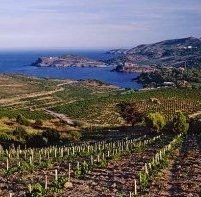
Roussillon, between Corbières and the Spanish border, has undergone the most extraordinary vinous transformation in recent years. Having been dedicated to producing strong, sweet wines such as Rivesaltes, it now makes a fascinating array of dry table wines, both red and white, from ancient vines whose flavours are concentrated by the low rainfall here in this, the sunniest corner of France. Even in the wetter, more Atlantic-influenced far west of the Languedoc, rain rarely ruins a crop since winds tend to dry the grapes naturally immediately after a shower. This is a part of France truly blessed by nature. It's just a shame that it is paying for man's excesses and deficiencies.
SOME FAVOURITE SOUTHERN PRODUCERS
Domaine de l'Aigle, Château d'Anglès, Domaine d'Aupilhac, Léon Barral, Bertrand Bergé, Borie de Maurel, Clos d'Amandaie, Clos des Augustins, Clos Centeilles, Les Clos Perdus, Clos du Gravillas, La Combe Blanche, Domaine d'Emile et Rose, Château Étienne La Dournie, Domaine des Enfants, Ermitage du Pic St Loup, Domaine Gayda, La Forge (from Gérard Bertrand), Domaine Gauby, Domaine du Grand Crès, Grange des Pères, Hecht et Bannier, Domaine de l'Hortus, Château L'Hospitalet, Mansenoble, Mas des Dames, Mas de Daumas Gassac, Mas de l'Ecriture, Matassa, Thierry Navarre, Château de la Négly, Château d'Or et des Gueules, La Pèira, Peyre Rose, Olivier Pithon, Les Quatre Pilas, Le Roc des Anges, St-Daumary, Domaine du Soleilla, Le Soula, Treloar, Villa Serra.
See tasting notes on more than 200 current releases, tasting notes on Dom de la Bouysse and Les Clos Perdus, and see here for members' comments on the forum.
France's best-kept secret
• 5 min read
This is a longer version of an article also published in the Financial Times.


选择方案
会员
$135
/year
适合葡萄酒爱好者
- 存取 296,561 条葡萄酒点评 & 16,125 篇文章
- 存取《牛津葡萄酒指南》及《世界葡萄酒地图集》
- Access askJancis, our AI wine assistant


核心会员
$249
/year
适合收藏家
Everything in “Member”, plus:
- Early access to the latest wine reviews, 48 hours in advance
- Early access to the latest articles, 48 hours in advance
专业版
$299
/year
供个人葡萄酒专业人士使用
- 存取 296,561 条葡萄酒点评 & 16,125 篇文章
- 存取《牛津葡萄酒指南》及《世界葡萄酒地图集》
- Access askJancis, our AI wine assistant
- 提前 48 小时获取最新葡萄酒点评与文章
- 可将最多 25 条葡萄酒点评与评分 用于市场宣传(商业用途)
商务版
$399
/year
供葡萄酒行业企业使用
Everything in “Professional”, plus:
- 可将最多 250 条葡萄酒点评与评分 用于市场宣传(商业用途)
- Access to submit wines for review
- Offer memberships to your employees and manage them from a single place
- API access available for an additional fee
More Free for all

Free for all
路边餐馆的乐趣,作者:查理·吉奥根 (Charlie Geoghegan)。照片由杰森·洛 (Jason Lowe) 拍摄。...

Free for all
首个跨大西洋合资企业作品一号 (Opus One) 涉及20世纪葡萄酒界的标志性人物。本文的一个版本发表于《金融时报》(Financial...

Free for all
突发新闻!老藤登记处 (The Old Vine Registry) 正在打破记录、突破障碍并开辟新天地。现在,老藤登记处标识正式推出。...

Free for all
从世界各地挑选 27 款霞多丽 (Chardonnay) "标志性"酒款,呈献给 18 位认证品鉴师……本文的一个版本发表于金融时报 。另见...
More from JancisRobinson.com

Tasting articles
证明南非仍然是最值得探索的葡萄酒国家之一。上图为天气报告 (Weather Report) 的克里斯·基特 (Chris Keets)(左...

Tasting articles
历史悠久的葡萄园、高海拔、火山土壤和有机种植的结合使这个鲜为人知的 AVA 脱颖而出。上图为 拉塞特酒庄 (Lasseter Winery)...

Tasting articles
来自热浪年份的诱人清新且易饮的葡萄酒。索蒂马诺 (Sottimano) 从科塔 (Cottà) 特级园(如上图所示...
Tasting articles
来自 2022 年份及更早年份的葡萄酒证明了巴巴莱斯科的陈年潜力。 巴巴莱斯科 2022 年份的晚期发布打破了两个误解—...
Tasting articles
25种在炎热中保持清爽的方式。 上周欧洲经历了有记录以来最严重的6月热浪;本周,美国东海岸各城市将打破高温记录。在这种炎热中喝什么?水...
Wines of the week
一款由前化学家以精确态度和葡萄藤语者灵魂酿造的绿酒 (Vinho Verde) 白葡萄酒。售价 23 美元起,22 英镑起。上图为拉莫斯...
Tasting articles
一场垂直品鉴将詹西斯 (Jancis) 带回这款标志性加州红葡萄酒开创性的起点。在伦敦帕尔摩尔街 67 号 (67 Pall Mall...

Don't quote me
遮蔽葡萄藤并提供酒桶的森林风土与葡萄园及其葡萄酒相互关联。上图为托尼·比什 (Tony Bish) 在 法国中部的特龙赛 (Tronçais...