21 February 2019 Tam goes Mád about Hungary's signature grape variety at Wines of Hungary's tasting in London to celebrate Furmint February, and does some Furmint food pairing as well.
Much as we don’t like to think of ourselves as stuck in a rut, when it comes to grape varieties most of us – trade and civilians alike – tend to stick rather unimaginatively to a bucket of about 15 varieties.
These varieties, often dubbed ‘noble’ or ‘classic’, are the ones we learn to pronounce correctly and recognise blind. They are the ones we feel safe to buy; we hold them up as benchmarks of what wine should taste like; and winemakers round the world try to imitate their French (or Italian) styles in order to win applause. Of course obscure, autochthonous and indigenous varieties have received much attention in the last 10 years. It would be deeply untrendy not to have a pet favourite Petite Arvine or Trousseau in your pocket. But they're still, unofficially, the lesser grapes. Chablis is surely grander than Carricante.
So when a variety with truly noble bearing but without membership of the inner circle is poured into our wine glasses, we fumble for words, not knowing whether to praise it for doing so well despite its peasant heritage or whether to be cautious because of its peasant heritage. Often we dig out the family tree, determined to find a royal connection in its past that might justify our admiration. Furmint is one such grape.
We could validate it by comparing it with Riesling, its ability to span the gamut of bone dry to lusciously sweet while holding on to its razor-sharp acidity; or with Chenin, as full of flavour and structure at 11.5% as it is at 15.5%; or with Chardonnay, turning out stainless-steel-fermented, youthful crispness as easily as oak-fermented, barrel-aged richness. It’s all those things. But it’s none of those grapes.
Furmint is unique, distinctive, with a flavour profile quite unlike any other grape variety I have ever tasted. It has distracting, playful beauty; a wild, gypsy-like character; and the formidable bone structure and posture of an aristocrat.
Wine Grapes notes that although the etymology of Furmint is unknown, it is related to Gouais Blanc, which is probably one of its parents (making it half-sibling to Chardonnay and Riesling among 80 others), and it is related to Hárslevelű, which is most likely the offspring of Furmint.
The birthplace of this variety is north-eastern Hungary, in Tokaj, where a document dating back to 1571 first mentioned ‘the genuine Tokaji Aszú grape’ in the Hétszőlő vineyard. In 1611 the name Furmint was recorded for a vine growing in a vineyard 20 km north of the village of Tokaj. Today there are about 4,000 ha (9,800 acres) planted in Hungary, most of which are planted in the Tokaj region.
It is rarely found outside of Central Europe, with just 9 ha (22 acres) in eastern Austria, about 700 ha (1,700 acres) in Slovenia and 420 ha (1, 040 acres) in Croatia where, in the latter two countries it is known as Šipon.
Until relatively recently, the traditional style of Hungarian Furmint has been sweet, more often than not blended with Hárslevelű. It ripens late, is prone to botrytis, retains high acidity and builds lots of sugars – in short, a gift to the gods of dessert wine. But around the turn of this century, dry, varietal Furmints started appearing and gaining traction.
Producers quickly saw the potential. This is a grape that not only makes a high-quality wine at all sweetness levels but can be used to make good sparkling wine. It responds, Chardonnay-like, to winemaking techniques such as lees ageing, bâtonnage, malolactic conversion (full or partial), skin contact, fermentation and ageing in barrel, and blending with other varieties. It also ages very well.
But despite its 500-year history in Hungary, Furmint, as a dry wine, has some pioneering to do. The vineyard classification of Tokaj, one of the oldest in the world, graded vineyards in the early 1700s on soil, sun exposure and potential to develop botrytis. The question as to whether these first, second and third growth categories are relevant to dry wines today is one that will, at some point in the near future, need to be tackled. This becomes particularly relevant in the light of Caroline Gilby MW’s statement that Furmint has a particularly sensitive ability to transmit terroir. What may be first-class terroir for Tokaj Aszú may not be first-class terroir for a dry Furmint varietal. The higher, cooler vineyards (and parcels of vineyards) that aren't affected by the botrytis prized for the sweet wines might well turn out to make the finest dry wines.
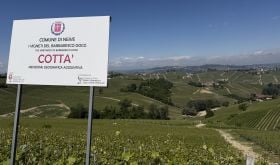
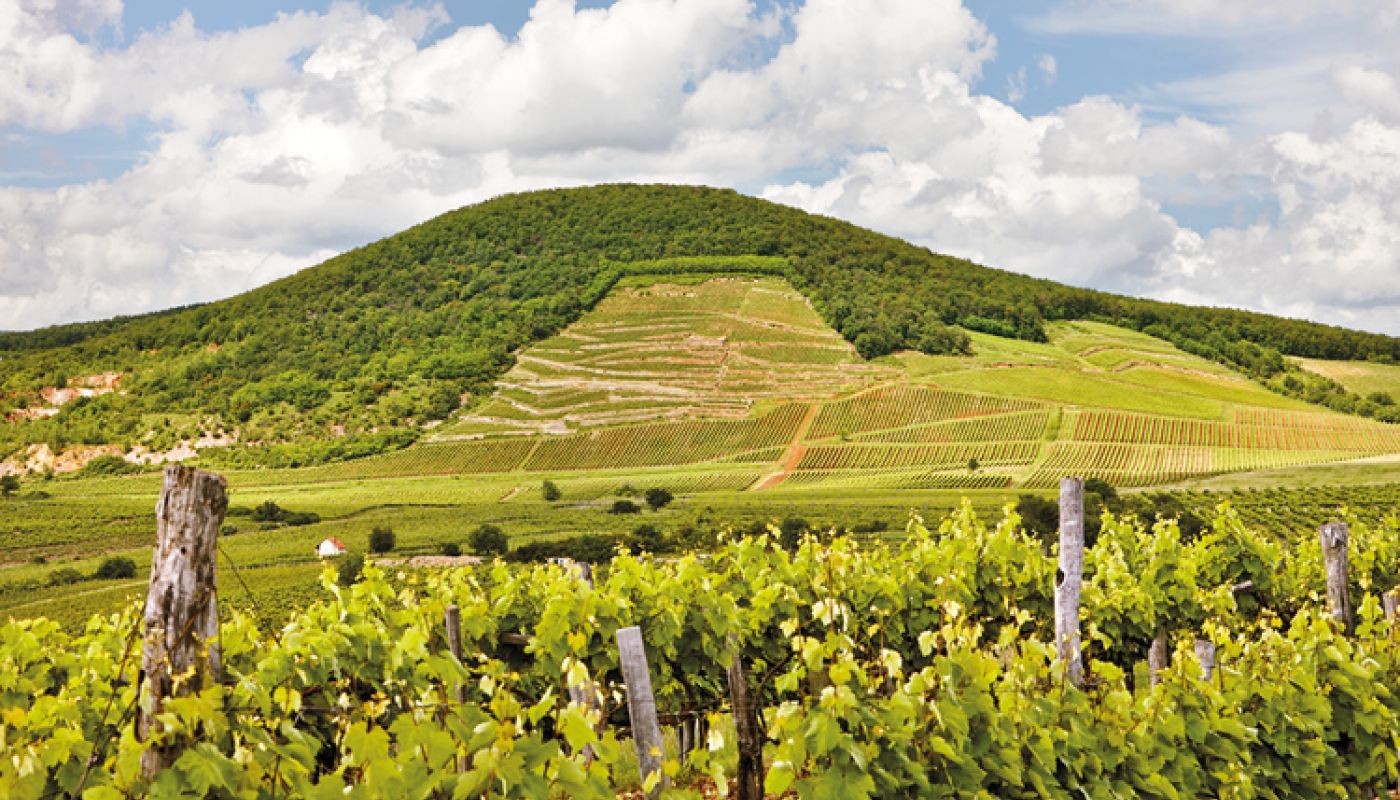
Having said that, what Hungary does not need to do is prove that its dry Furmint, especially from the stony, volcanic soils of Tokaj pictured below, is capable of producing fine, layered, astonishingly complex and ageworthy whites. They speak for themselves.

The 70 tasting notes below are grouped by alphabetically listed producer.
ÁRVAY FAMILY
János Árvay was born in Rátka and didn’t plan on being a winemaker, but he and his wife received 450 vines in the Meggyes vineyard from his father-in-law. That eventually grew into a 17-ha (42-acre) estate across five vineyards. His first job was with the state wine company, and then at Disznókő, but now he runs the family estate with his wife and two children, Angelika and Szabolcs, who are very involved with the winemaking and day-to-day running of the estate.

Only 536 bottles. RS 1.3 g/l, TA 7.3 g/l.
A whiff of cigarette...
Istenhegy (meaning Hill of God) is the vineyard, in Rátka...
BALASSA
A small property owned by consultant viticulturalist István Balassa. He has 7 ha (17 acres) over 10 sites.
Smells of fresh Amalfi lemons – I could happily be drenched in...
Incredible nose – it smells like a bakery in the early morning...
BARTA

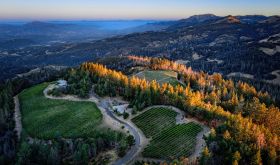
Károly Barta is an economist who, with no background in wine, decided to establish a winery. With advice from Ervin Demeter (see below), he bought an abandoned vineyard, covered in black locust trees, on the Király Hill. This was once the prized, historic Öreg Király (‘old king’) vineyard, pictured top right and also below, covered in snow. The highest, steepest vineyard in Tokaj, it was abandoned after phylloxera swept through the region, being too hard to work for too little return. Barta cleared it, planted vines in 2004 and the first harvest was in 2006. The family owns 8 ha (20 acres) on volcanic soils, farmed organically, and the wines are made with minimal intervention. His winemaker is the young and very gifted Vivien Ujvari. She qualified as an oenologist in Budapest and trained in Napa as a winemaker’s assistant for a year, then toured New Zealand and Australia. She started working for Grof Degenfeld back in Hungary in 2013, before joining Barta in 2015.

Fermented with wild yeast, one-third in barrel and two-thirds in...
Slow fermentation with wild yeast and spent a total of nine...
Botrytised Furmint grapes grown on the Öreg Király vineyard...
Medium gold. Heady, tropical-waxy flowers, papaya dripping with...
BODROG BORMŰHELYA
5-ha (12-acre) estate near the Bodrog River started by friends János Hajduz and Krisztián Farkas in 2007, when they were fresh out of university. They have several parcels of land, each with distinct terroir, and they make four single-vineyard wines. 20,000 bottles a year.
Fermented with wild yeasts in used, local-oak barrels; regular...
Wild yeast fermentation. Six months in old barrels and then in...
BUDAHÁZY
Started in 2000 by the Budaházy family with 3 ha (7.5 acres) around Mád split into nine parcels across three vineyards (Szent Tamás, Nyúlászóés Kishegy). They do not use herbicides and pesticides. They harvest grapes for dry wines in the early stage of ripening, the wines ferment spontaneously and age on lees until bottling. Annual production in 2017 was around 10,000 bottles, most of which are sold abroad. Winemaker is Ákos Szolokai.
From a premier cru vineyard, just 600 bottles. Not certified but...
100% Furmint.
Very pale. Elderflower honey and something that...
A wine that tastes like oranges and apricots poaching in...
DEMETERVIN

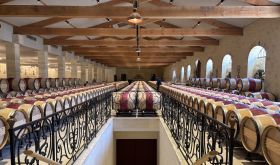
Endre Demeter has 8 ha (20 acres) and one of the oldest, deepest cellars in the village of Mád, a multi-level labyrinth system over 300 m (985 ft) long and 17 m (56 ft) deep. Although the estate dates back to the 17th century, father and son team, Ervin (pictured above) and Endre Demeter, have been making wine there since 2003. They are certified organic and their gobelet-trained vines are all tended by hand. 15,000 bottles a year.
Water white. Great purity. Essence of apple and then a flinty...
57 is the parcel number in the Úrágya vineyard, at the top of...
DISZNÓKŐ

Disznókő has been going since the early 1700s but was purchased by AXA Millésimes in the 1992. Unusually for Tokaj, it is a large single vineyard of 104 ha (256 acres) and every wine they produce comes from this vineyard.
Stainless-steel fermentation. Slightly nutty and herbal. Very...
80% Furmint, 20% Hárslevelű. Barrel aged, a mix of old and new. ...
Smells of golden currants and jasmine tea leaves. Delicate...
Jasmine honey and frangipani. Quite delicate, despite the...
Aszú grapes 100% Furmint, macerated in base wine and must ...
DOBOGÓ
Their website explains that Dobogó literally means 'clippity clop', the sounds that horses' hooves make on the paved streets of the little town of Tokaj. 'This is what we found out when we bought the winery, an abandoned house dating back to 1869 with underneath it a magical cellar’. Currently owned by Izabella Zwack and winemaker Attila Domokos, the winery was bought in 1995 by the Zwack family, a big alcohol producer and distributor, most notably of Hungary's famous liqueur, Unicum. Izabella spent some time abroad with Vanya Cullen, which has influenced the way she works. The vineyards are farmed on organic principles, ‘a green philosophy’.
Fruit from 35-year-old vineyards in Betsek and Szent Tamás in...
A five-hectare, single-vineyard wine – just 850 bottles. Sulphur...
FÜLEKY

Founded in 1998 with 25 ha of vineyards, with four single vineyards. They make about 10,000 bottles of estate-grown wines and 35,000 bottles in all. Their entry-level wines (made with bought-in grapes) were not shown. The winemaker is György Brezovcsik, above.
Beautiful nose – sweetly golden, Cape gooseberries and lime...
One sniff and it's Christmas cake and saffron and clementines...
GÁBOR OROSZ
An estate with 17 ha (42 acres) of vineyards, although only 11 ha (27 acres) are currently under vine. Very diverse soils. They grow Furmint, Hárslevelű and Yellow Muscat. Very clever labels depicting vineyard maps and highlighting the relevant vineyards that go into each wine.
Screwcap (unusual in this tasting). 50% stainless steel, 50% old...
10% new Hungarian oak.
Dusty slate nose. All rocks on the nose...
GIZELLA
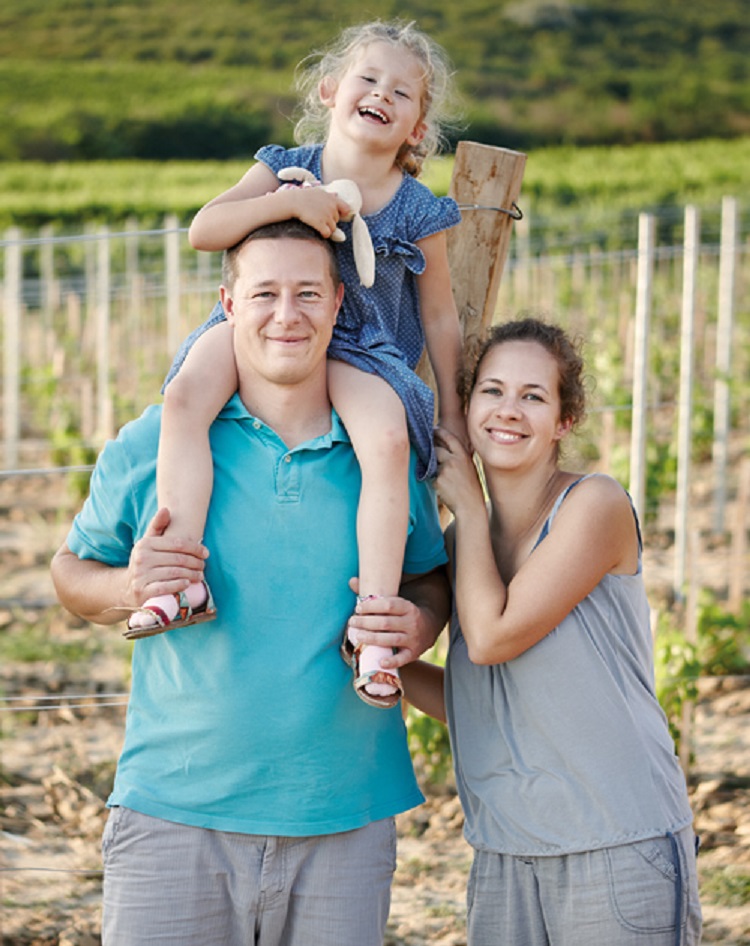
László Szilágyi took over the wine estate in 2004 and named it after his grandmother.
Furmint with a small amount of Hárslevelű. This is their...
From the Mád region. 1,300 bottles. 60% barrel fermented.
Straw...
40% vinified in Hungarian oak, mainly old. 448 bottles.
Smells...
Single vineyard. This is the first time he’s made this as a wine...
GRAND TOKAJI
This state-owned company is responsible for 40% of the region’s total wine production. They have 70 ha (173 acres) of vineyards, and buy grapes from 1,400 growers (about 1,150 ha/2,845 acres of vineyards).
50% fermented in oak, 50% in stainless steel.
This is the first...
Fermented in new Hungarian oak and aged for six months.
Tastes...
HÉTSZŐLŐ
First established in 1502, Hétszőlő has been through a series of owners but last changed hands in 2009 when it was bought by Michel Reybier of Ch Cos d'Estournel fame. They started to make dry wines under the new ownership, judging that their high-elevation vineyards which had very low botrytis might be better suited to dry wines. The soils are heavy loess over volcanic rock. Certified organic.
Vinified in stainless steel. No malo, lees ageing for six months...
From the top of the slope, south facing, 300 m elevation. In...
HOLDVÖLGY
Holdvölgy is Hungarian for Valley of the Moon. Pascal Demko's French mother asked him to find vines in Tokaj as a birthday present for her Tokaj-native husband. His search resulted in Demko getting so excited about the potential of the region that he now has 25 ha (62 acres) of vines in the commune of Mád. This very ambitious estate has built an impressive modern winery above 2 km (1.25 miles) of cellars dating back to 1866. The vines are managed and harvested by hand. They use small steel tanks to separately vinify 22 different parcels across 7 vineyard crus. Only wild yeasts are used, the dry wines are fermented and aged mainly in steel with some used oak, while the sweet wines are aged in a mix of French and Hungarian oak. The winemaker is Tamás Gincsai.
Furmint, Hárslevelű, Kabar.
Apple blossom. Clean and straight...
From single vineyard Király. 100% dry Furmint.
Punky, vibrant...
JULIET VICTOR
This is the 18-ha (45-acre) Mád estate belonging to József Váradi, the founder and CEO of Wizz Air –‘Juliet Victor’ being the call sign for letters J and V in the NATO radiotelephony alphabet widely used in the aviation industry.
TA 6.8 g/l, dry extract 20.1 g/l, RS 2.1 g/l. A blend of...
Single vineyard. TA 6.8 g/l, dry extract 19.6 g/l, RS 1.4 g/l.
S...
Single vineyard. TA 6.8 g/l, dry extract 20.1 g/l, RS 1.4 g/l...
KARDOS
Gábor Kardos grew up in a winegrowing family who also ran a small wine bar in Mád. He learnt how to make wine from his father, and took over the winemaking in 2008 when they decided to bottle their own wines. His father is responsible for the viticulture.
Three months in tank.
Oranges and oolong tea. Strangely perfumed...
Not quite as bone dry as their entry-level Furmint. Sweet fennel...
KOLONICS
A tiny 3-ha estate in the smallest wine region of Hungary.
On volcanic soil.
Smells of bay leaf and cherries. Very very dry...
Smells of sugar snap peas. Minty, chewy, herbal. Folded sharply...
Smoky, and smelling just a little bit like the green-iron of...
KOVÁCS NIMRÓD
30 ha (75 acres) of sustainably farmed vineyards producing nine varieties of grapes (some international).
Fermented in steel tanks and barrels, and aged in 225- and 500...
LENKEY

10.4 ha (26 acres) made up of eight vineyards and 15 plots in Mád and Bodrogkeresztúr. Géza Lenkey’s father bought the vineyards in 1999 but passed away two years later, and Géza (pictured above) had to take over. They have not used herbicides or insecticides since 2005. They were certified organic in 2015. Minimal intervention in the winery: no inoculated yeasts, no added sugar, no acid adjustments. They believe in lengthy ageing in both barrel and bottle before release.
Spends 39 months in barrel and ‘a long time’ in bottle.
Low-key...
Smells unmistakably like golden, ripe Cape gooseberries. Smells...
2006 was their most rigorous green harvest ever – they picked in...
MÁD HILL
Smoky! And bitter orange peel. Powerful wine with jagged...
Dried orange peel. Again, very firm, very oaky, slightly austere...
PATRICIUS

The 85 ha (210 acre) estate is owned by Dezső Kékessy and his daughter Katinka Kékessy. Their eight vineyards across five villages are premier cru and they grow Furmint, Hárslevelű, Sárga Muskotály, Zéta and Kövérszőlő. Their Furmint vineyards have been organic since 2015, with the other vineyards uncertified but farmed with minimal use of chemicals. Their winery is designed to move grapes and juice around by gravity flow, they use selected, neutral yeasts, and never chaptalise.
Entry level, vinified in stainless-steel tanks.
Bright and light...
From a selection of vineyards, aged and fermented in barrel, mix...
ROYAL TOKAJI
Co-founded in 1990 by Peter Vinding-Diers and Hugh Johnson as a joint venture with about 60 growers to revive the glory of Tokaj, the company now farms 112 ha of its own vineyards.
Half stainless steel and half Hungarian oak, 10-15% new. Bottled...
100% barrel fermentation and élevage. They work with clean must...
Single vineyard, 100% Furmint, ‘premier cru’ classification...
75% Furmint, 25% Hárslevelü.
Cold sample which may be why it...
SANZON
Elfin, wiry and with a quick, wide smile, Erika Rácz grew up in the Tokaj region but left to study economics and law and to work abroad in IT. In 2014, thanks to inheriting a tiny vineyard from her parents, she came back and founded Sanzon with her husband. Today they farm 3.8 ha (9 acres) organically on the volcanic soils of Tokaj-Hegyalia, making just 5,000 bottles of wine a year from three grape varieties.
100% Furmint, cold fermentation in stainless steel. Three months...
100% Furmint from vineyards with rich limestone soil. Six months...
100% Furmint. A single vineyard on volcanic rock.
Rich and...
SZENT TAMÁS
Established by two Hungarian businessmen and István Szepsy Jr (18th-generation winemaker and son of Hungary's famous winemaker István Szepsy Sr), with Szepsy in charge of winemaking and day-to-day management. They have vineyards in 11 villages and over 15 ha.
Bay-leaf scented and herbal green on the palate. Lean and dry...
One of the best vintages recently for dry wines. High...
100% Furmint from the region of Mád, vineyard Percze. Fermented...
100% Furmint. Region Tállya, vineyard Dongó. Fermented and aged...
One of the driest and warmest vintages in the last decade with...
70% Furmint, 25% Hárslevelű, 5% Muscat Blanc á Petit Grains.
Hone...
SZEPSY
István Szepsy must be Hungary’s most iconic winemaker. Born in 1951, with a family winemaking legacy that goes back over 500 years, his CV includes the Mád state co-operative, Royal Tokaji Wine Company and Királyudvar Winery. He established his own wine estate in 1988, which he ran alongside his full-time jobs until 2005, when he resigned from Királyudvar and Szepsy became his sole focus. Today the estate has 63 ha (156 acres) of vineyard on premium sites and produces 50,000 bottles a year.
Blend of three vineyards. Not totally organic. But natural yeast...
Úrágya means ‘where the sun goes to bed’. Just released. 100%...
Furmint and Hárslevelű blend. Szamorodni sweet wines are also...
ZSIRAI

Sisters Petra and Kata took over the six-year-old wine estate from their father when he died in 2011. They were 24 and 21 years old. Today they have 13 ha (32 acres) in nine vineyards. All their wines are made from estate-grown grapes. They use only manure for fertilising, strictly limit the use of chemicals in the vineyard, and ferment in barrel with ambient yeasts.
Minty on the nose, and then super-fresh and invigorating – like...
Vineyard selection. Spontaneous ferment, barrel-aged Hungarian...