Old buildings may charm restaurant customers but often present major challenges for the restaurateur and their team.
In the British hospitality business these old buildings manifest themselves in often glamorous hotels and in pubs which continue to be transformed into exciting restaurants with modern menus. But pubs come with particular physical disadvantages.
The biggest, and most common, is the absence of a large kitchen. When the majority of public houses were built, before 1914, there was no need for such a thing. The food on offer to the public was minimal and the publican’s family had to be substantially catered for only once a week, on Sundays after the pubs had closed.
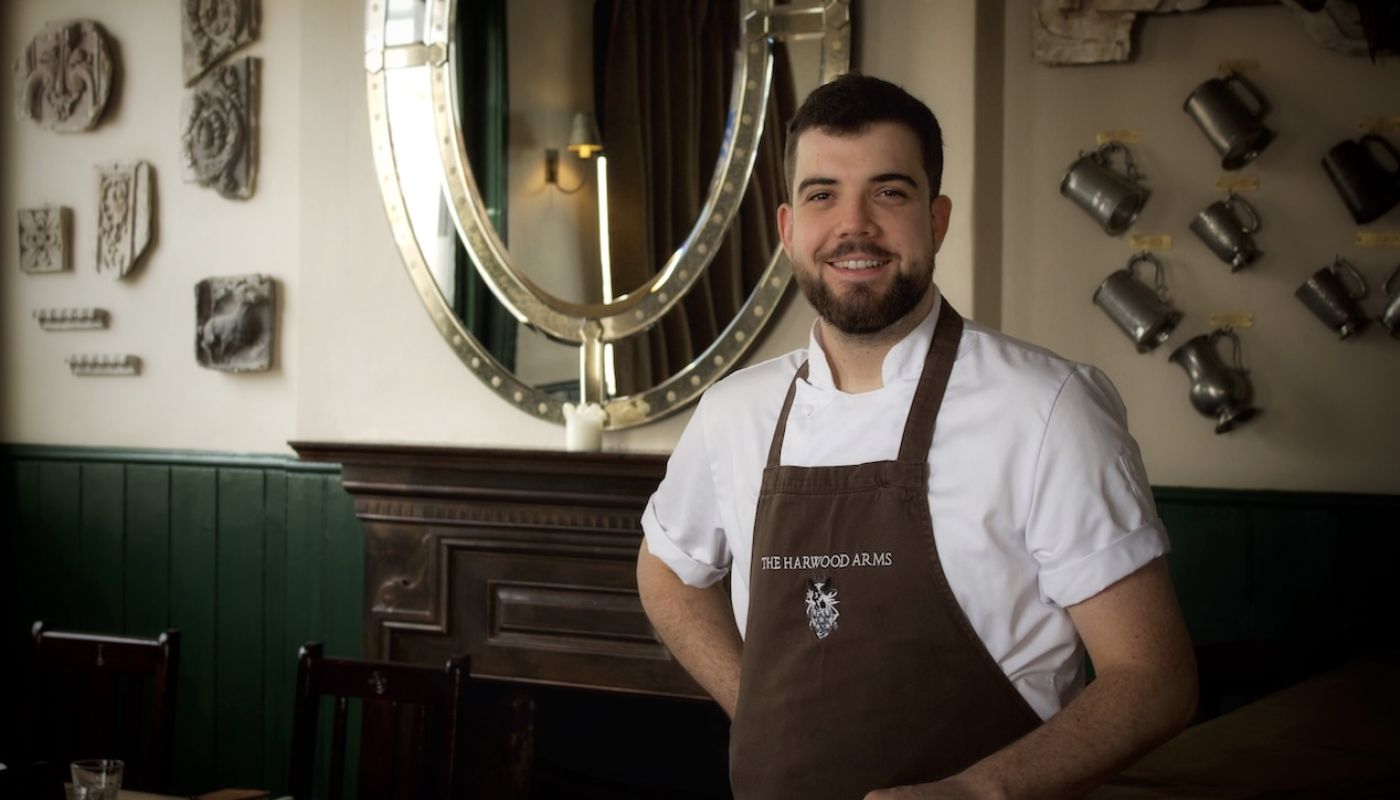
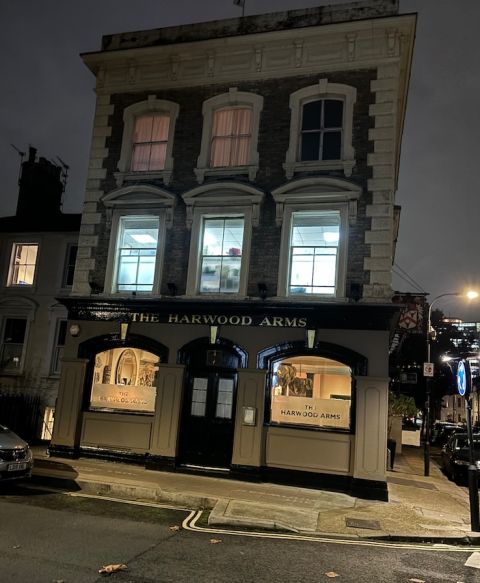
Take, as a striking example of the challenges inherent in the conversion of a pub into a restaurant that serves great food, The Harwood Arms in Fulham, west London. Built as a ‘beer house’ in 1866, The Harwood Arms began a transformation in 2009 under the cooking talents of Brett Graham of The Ledbury in partnership with Mike Robinson. Three years ago the talented Josh Cutress joined as head chef to form a dynamic, bearded trio.
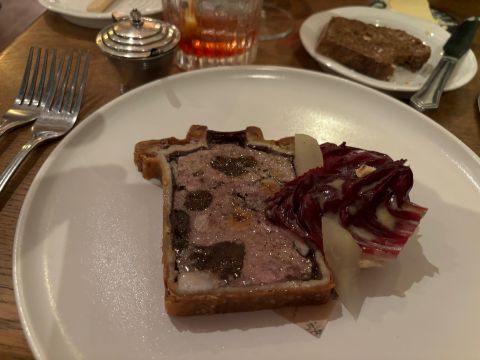
Today it is still serving excellent food in welcoming surroundings. My first course, a game terrine enhanced by sliced prunes, crunchy pastry and a rich jelly was given almost superfluous pungency by a tomato chutney served in the sweetest little serving pot.
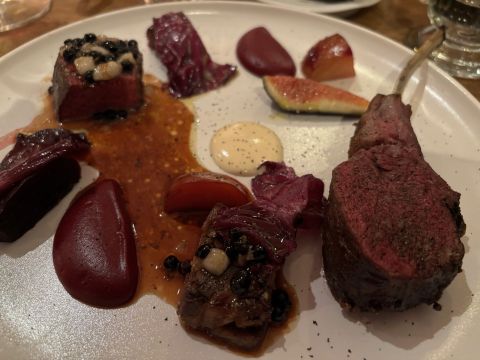
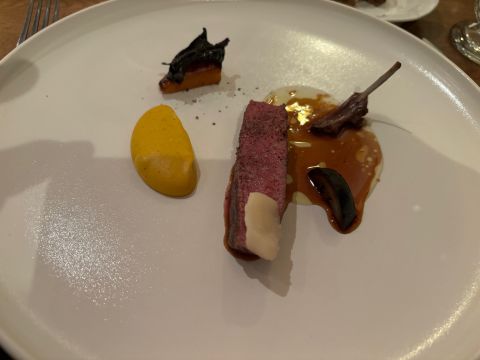
A main course of three different cuts of Dorset sika deer was rich, its richness however somewhat blunted by the cabbage, beetroot and figs. What was rich was the ‘light’ dish Cutress sent us between courses: the dish of hare – a small rib and a larger cut from the fillet – shown below. I cannot resist hare but I find a little goes a long way. Here, it went as far as to negate any notion of a dessert.
We also enjoyed most of a bottle of elegant Pistus 2020 Etna Rosso from I Custodi delle Vigne dell’Etna (£86). I paid a bill of £231.12 for two courses each, without coffee. Service here is charged at a mere 8% which was apparently a staff decision when menu prices were increased earlier in the year.
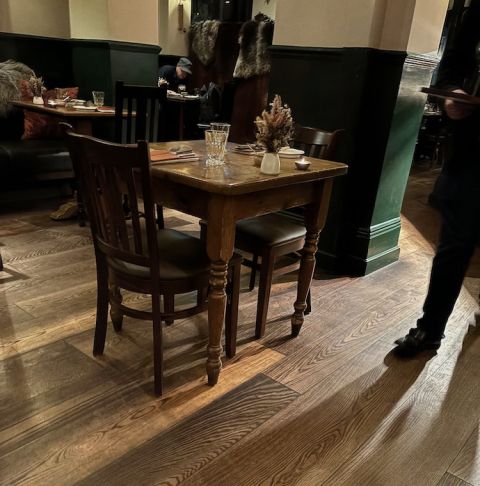
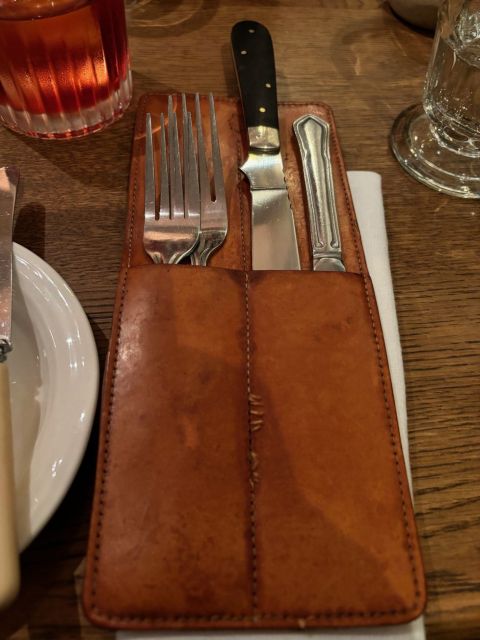
The price did not include the pleasure of spending a couple of hours here. As my photos reveal, the one above of a nearby table, the one below of the leather case for each diner’s cutlery, this restaurant is extremely well looked after. The taps on the bar sparkle. All the interior wood is heavily polished and the whole seems to shine. The clever leather case was apparently designed and made by Paradise Row during the restaurant’s closure due to COVID and was conceived by a thoughtful management looking for something to do.
But not everything is quite so straightforward, as the kitchen that produces such excellent food is located on the first floor, as you can see from the dramatic contrast in lighting in the photo below. This has the singular advantage of allowing the chefs in the summer months only a small walk to the vegetable garden on the flat roof one floor above (see Harwood Arms – from roof to table). But that apart, this is a physical arrangement that makes transporting the food somewhat of a challenge.
Aleksandra Pancewicz, the restaurant’s general manager, responded thoughtfully to my questions about logistics. ‘Firstly, the main challenge is the fact that we need to use the food lift to transport every plate of food. The building is incredibly old, with small staircases and doorways, so running the food on trays to the restaurant is not an option for us. We can only fit a maximum of six main-course plates in the food lift at any time. All sections in the kitchen have to be constantly in communication with each other. A couple of examples: We can't have the pastry section try to send a table their desserts at the same time as six main courses for example, as there simply isn't enough space and it would impact the quality of the food. We also need to take into consideration the time it takes to unload a lift downstairs, especially when it is full. Smaller tables of two frequently have to be grouped together, and sections have to ensure that they are ready with different tables at the same time to adjust to the lift capacity.’
All of this, I imagined, must lead to higher staff costs? ‘The cost of an extra person downstairs is probably the only one, but this actually works very well for us because we've managed to create a role for someone who also polishes all our glasses and cutlery. The commis waiter also helps us serve the food, following up with trays and sauces, so it really helps the service run smoothly. The lift maintenance is a small cost in all of this.’
More successful pubs-turned-restaurants farther afield
Overcoming such difficulties on a day-to-day basis has not prevented the team at The Harwood Arms from serving such high-quality food over the years, an achievement matched by several other committed chefs in even older pubs throughout the UK. I reached out to three top chefs cooking in buildings originally constructed as pubs for their thoughts.
From Nicola Tickle, wife of Kevin, the chef at Heft in Grange-over-Sands, Cumbria:
Our original building dates back to the 17th century and was a coaching inn in a small village which had three other inns. We're the only remaining one, thankfully! The restaurant as it stands now was formerly a stables and blacksmith, meaning the front part, where the bar is housed, is in what would have been where the family lived and worked. At some point in the mid 1970s the restaurant was created and an area created at the rear of the building (which sits by a solid slate rock face) to house our kitchen area. This was done by using dynamite to blast away rock. Because of this, we've been quite lucky! Although when we arrived our current kitchen was five smaller rooms that housed boilers/washers/stuff so we've made it all one space rather than leaving smaller rooms which you rightly say would be a challenge. It's the thing we're most glad we did as it was a big financial commitment but it's given us a pleasant space to work and, most importantly, grow.
From Dave Wall of The Unruly Pig Woodbridge, Suffolk:
Indeed, the kitchens in pubs can be somewhat of a challenge. Our kitchen is certainly far from grand; however it is bigger than plenty a pub kitchen that I’ve seen. We are also blessed to have a converted barn to the exterior which we use as a prep kitchen and store for equipment and dried goods, so again we are luckier than many (although this is a common feature in a pub restaurant kitchen setup).
We have spent a little money on improving the layout of our kitchen, including the removal of an original six-foot-square chimney stack that was disused and boxed in, creating a strange shape to our room. However we still have a large structural pillar slap-bang in the centre of the room, which is somewhat of a pain, but you learn to adapt, of course. We have also improved our drainage and pipework so that we could reposition the pot-wash – which is probably far bigger a deal than it sounds as it improved the flow and dynamics of where our chefs work to cook and plate up. All critical little nuances that contribute toward better logistics.
One of the biggest challenges for me personally was adapting how to write a menu and create dishes that could be delivered ergonomically and efficiently. Much of my background before coming to The Unruly Pig was in large classical French restaurants where we had plenty of space, cooking equipment and chefs. There were constantly lots of pans on the stove simmering away with stocks, sauces, multiple ovens full of braises, stews, roasting meats and baking breads. Naively I came into the Pig and tried cooking in exactly the same way, without taking into account how much more limited our cooking space and potential output was, with only a few of us in the kitchen back in those days. We could only install minimal cooking appliances due to having a very small local substation with limited electrical power, and not being on mains gas. The joys of countryside cooking! It took a good few years of struggling to finally realise that I was going to have to adapt. I stripped down the size of the menu, simplified the dishes and made sure that the prep that was required for them was achievable with the equipment and manpower that we had available. Achieving this actually ended up improving our end-product, as we were no longer stretching ourselves so thinly and rushing jobs to make way for the next one. Less is more, as they say!
From Stephen Harris at The Sportsman in Seasalter, Kent:
The kitchen at the Sportsman was horrible but we ripped everything out. It was full of deep-fat fryers and microwaves. The structure of the kitchen was a problem as it was across two rooms and not ideal for a professional kitchen. I still dream of having a purpose-built kitchen but I don’t think it will ever happen. We make the best of it and it is, at least, not too small.
The Harwood Arms Walham Grove, London SW6 1QP 44; tel: +44 (0)20 7386 1847
Heft Newton in Cartmel, Grange over Sands, Cumbria, LA11 6JH
The Unruly Pig Orford Road, Bromeswell, Nr Woodbridge, Suffolk, IP12 2PU; tel: +44 (0)1394 460310
The Sportsman Faversham Road, Seasalter, Whitstable, Kent CT5 4BP; tel: +44 (0)1227 273370
Every Sunday, Nick writes about restaurants. To stay abreast of his reviews, sign up for our weekly newsletter.