Carol Kaufmann writes Carol Kaufmann’s mission to learn more about wine and find a vocabulary equal to that glass of Gevrey is ongoing. She has sold wine, written about wine, conducts educational wine tastings, and is currently a Diploma candidate at the WSET school in London. She lives in Alexandria, Virginia.
Wines That Bind
A very long journey can be distilled into a single instant. In this case, one sip of wine.
I grew up in a nuclear family of four, with beloved adoptive parents who only sipped iced tea, rarely spoke at the dinner table, and found happiness at home in the rolling Kentucky countryside with no next-door neighbors.
I began looking for my birthmother when I was 25. Though deciding to search took years, getting her name took about two weeks. Turns out, she’d put her information in my adoption records, making a judge’s decision to open the sealed record easy. Meeting a birth parent is revelatory in ways no one can anticipate. Yes, I had her eyes, hair, and gestures—even the same perfume preference—but we were also alike in another way, revealed by my newly discovered relatives’ favorite sport.
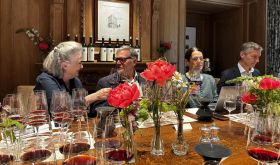
It happened during family beach week, an annual gathering in northern Florida with a sprawling clan that included a welcoming step-dad, half- and step-siblings, various in-laws, nieces, and nephews. Keeping up with this big, boisterous, funny family, whose clever zingers meant affection, tested my fitness. You see, unlike other families’ holiday traditions of touch football games, beach-combing and lollygagging, or binging favorite movies, we taste wine.
Wine, I found, bonds. The first time I met the whole family, someone put a glass of Cakebread Chardonnay in my hand. As a 20-something early careerist on the U.S. East Coast who didn’t know much about wine—except that grapes were good, beer wasn’t, and bourbon made for rough mornings—I typically chose the big, readily available California Chardonnays. I didn’t mind the oak influence, and especially liked the butter notes. Sipping the Cakebread, I felt seen. While “big,” this Chard was something more—layered, fruit driven, cared for. The new family also went for red Californians, mostly Cabernet Sauvignons, but Merlots were also plentiful. Sauvignon Blancs had exploded onto the world stage—thank you Kiwis—so we had those, too. And I also recall a certain clan loyalty to Fumé Blanc from Napa.
We organized structured wine tastings, a group activity that welcomed all, regardless of athletic prowess, creative talents, or way with words. They let us experience something together, something sensory without right or wrong, win or lose, that required only focus on immediate sensations. To make the ritual more fun, we tasted the selections blind, using brown paper grocery bags—or we simply closed our eyes while the designated pourer did the honors. Mostly, we tasted a mix of wine samples and graded them from 1 to 6, 1 being the highest honor in a 6-bottle flight. As we become more (loosely speaking) sophisticated, we chose themes. We grouped varietals—Chardonnays, certainly; and Cabs with their berry-basket assault and rich veins of vanilla and chocolate were also a frequent choice. Petit Verdot made appearances, along with Rieslings nominated by the German branch of the family. Once, after I married, we sent my husband and step sister-in-law to choose the wines. Their strategy: Only buy bottles with animals on the labels—it’s not a selection criterion I can in good conscience recommend—and came back with lots of change. Eventually we began using legitimate descriptors: Pineapple, vanilla, butter, blackberry pie, and CINNAMON! joined our own non-WSET-approved terms, like brick house, animal musk, cough syrup, pure grain alcohol, stick, or simply, mud.
One year, my birthmother was sampling French wines and brought out a little something from Burgundy, though I couldn’t decipher the label at the time. It tasted like nothing that had ever crossed my lips. The flavors were not singular sensations, but episodes. The initial sip was subtle, not at all the explosion of fruit I knew so well, but a rose slowly opening with the intensity of all those raspberries I used to pick right off the vine in childhood summer patches. Also, strawberries. And cherries. Then it turned into something else entirely. A funk from old-weathered barn wood and the aroma of tobacco being stripped—both clear and familiar to this Kentucky country girl. I also smelled irises, a distinct fresh aroma that’s so subtle it’s hard to grasp. Then spices from a pumpkin pie wafted forward, as did a note of brown sugar that burst like a star. I didn’t know what was happening.
I don’t recall the vintage, but the wine must have been from the late 90s. I know it was a Burgundy, from Gevrey-Chambertin—a Pinot Noir so powerful it sang. “This?” I thought, “This is also what wine can be? How?” How does one sip keep delivering so long after first contact? I didn’t have the words to write. Though I still shudder at overwrought wine descriptions that smack of rarified air and equally haute pretensions, perhaps a different vocabulary was in order. I needed a whole new language.
I glanced at my mother, sharer of genes, and her face reflected exactly what I was feeling—surprise, confusion and exasperation at the lack of words, total happiness. I realized she was mirroring my thoughts before she even spoke. Could a taste for wine be in the blood?
The science is a bit shaky on this question, though there are hints that it can. But I don’t need a research study to confirm the power of genetics—nor the awe-inspiring power of wine. Gravitating towards people who are light of heart and never take themselves too seriously is absolutely in the blood. I can tell you what else is inherited: the compulsion to dive into the unknown, and seek out others who want to take the journey with you. Wine, tasted with family, old or new, blood or chosen—can be that entrée, that sly usher who guides us right to a place we’ve always belonged.
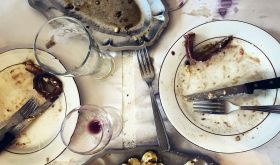
Image by Constantine Johnny via Getty Images.