There’s this old building by the side of the road outside Bordeaux, about halfway between the city and the vines. It’s not much to look at: a two-storey farmhouse, long and rectangular, surrounded by fields. I’ve probably passed it hundreds of times in the decade or so that Bordeaux has been a part of my life, and I never once gave it a second thought. Until today.
Almost every time I’ve passed it, it’s been shuttered up, with no signs of life at all. The exterior is all tired-looking limestone, sooty and scruffy. Above the ground-floor windows are these tatty fabric awnings: most letters of the word ‘RESTAURANT’ are spelled out on one; an almost-complete phone number on another. A beaten-up plastic sign for a German beer brand juts out towards the road, a rare enough sight on the outskirts of French wine country. If I had noticed these details before, I’d written them off – here once stood some bog-standard bistro, long since closed. Whatever used to happen here hadn’t happened for quite some time.
But looks can be deceiving. This is an eatery, alright, and it is very much open for business.
The way in is around the back. We step past three or four men smoking beside a metal trough of water. Whether they’re customers or staff or locals just passing the time is unclear and unimportant. There’s a volley of bonjours and in we go.
Barely past twelve and the place is already packed. Everyone’s mid-conversation and then suddenly, and just for a second, it all goes deathly quiet, before almost immediately going back to how it was. We’re not made to feel unwelcome, but it’s not exactly open-arms, either. It’s apparent that we’re not from around here. We’re treated with some suspicion, perhaps a feeling that the natural order has been slightly upended. Also, not for nothing: we’re three men and a woman; there are not currently a lot of women eating in here.
There is a woman running the front of house, though. ‘Running’ being the operative word: Madame exists only in a state of motion, having things to do and no time to stop and chat. She tells us, in passing but with authority, to sit down over there.
The dining room is generic and unremarkable. It has the feel of a lived-in kitchen in a rental house: cheap materials, no-frills workmanship, everything working and largely in the right place; just a little weathered and worn. The wallpaper has an unsettling texture to it, the sort of wallpaper that squidges and farts if you touch it. It’s herringbone in off-white, though it quite likely was white-white at one point. The tiles on the floor are a rusty, muddy, sandy sort of colour, a vague neither-here-nor-there shade that’s unlikely to show up much dirt. It’s a floor to cover a multitude of sins. There are tables and there are chairs.
Madame has directed us to a little annex, away from the main room, a little quieter. We’ve got a marble-effect tabletop though the structural integrity of the table itself is more akin to a decent cardboard box. Our placemats, as far as I can tell, are literally just A3 sheets of plain white paper. There’s minimalist, there’s unfussy, and then there’s whatever this is. It is not without its charm. The cutlery is the stuff of student accommodation: a collection of mismatched knives and forks built up over time. Do things have to be deliberate to be considered eclectic? There are little plastic salt and pepper shakers, the kind that people leave behind in Airbnb cupboards, and they’re clearly there to be used. (Try asking for plus de sel, s’il vous plaît in most restaurants around Bordeaux and see what happens.) Completing the table-scape are our stubby, stocky wine glasses, because it is taken as read that you will be having wine. Wine, in fact, is an inextricable part of the set menu: a load-bearing wall.
I say ‘set menu’; it’s a blackboard. But this is no East London-type affectation, and to be honest it’s not so much a menu as it is a statement of intent. An FYI. This is what we have; this is what you’ll be having.
The first course involves a certain degree of free will, however. The board says entrées aux choix, which for today takes the form of a self-service salad bar. Personally, I swore off salad bars years ago because the Dublin supermarket I worked in had one and there was an unconfirmed but persistent rumour that one particular customer had a penchant for scooping out egg mayo with his bare hands. These days, I’ve softened my position somewhat – and just in time, too. Today’s selection is not exactly setting the world on fire but it’s not bad. There’s spiced beetroot, sliced herby tomatoes and rounds of cucumber to bring some freshness and crunch. Slices of ham give it a continental-breakfast-in-a-budget-hotel vibe. There’s potato salad and couscous and little foil wraps of butter for the bread back at the table.
Sitting down with our salads and we’re confronted with a carafe of wine, red, of indeterminate origin. No château name, no appellation, no nothing. If we were to analyse it, we’d probably say it’s thin with a little too much acid and slightly rough tannins. It’s been served a little too cold, too, which isn’t doing it any favours. It’s an awful thing to pair with an all-you-can-eat buffet of raw vegetables and other sundry salads, actually. But we’re getting to know each other and laughing and arguing and discussing how our morning has gone and what we want to be when we grow up and what we’ll be doing this weekend and next month and more. The wine does not come into it. It is not trying to be anything it’s not; it’s not trying to be anything at all, really: it just is what it is. And it’s perfect.
The main course is steak, billed on the blackboard as faux filet, or sirloin. Done right, a good steak-frites might just be my favourite meal. It’s so basic that there’s nowhere to hide, no room for error. On balance I probably wouldn’t have ordered a steak in this place if given the choice. But the blackboard has spoken, there is no choice, and here we go. When our dishes arrive, the signs aren’t good. Each of us has been given a slightly different cut, from the looks of it: varying sizes, shapes, thicknesses.
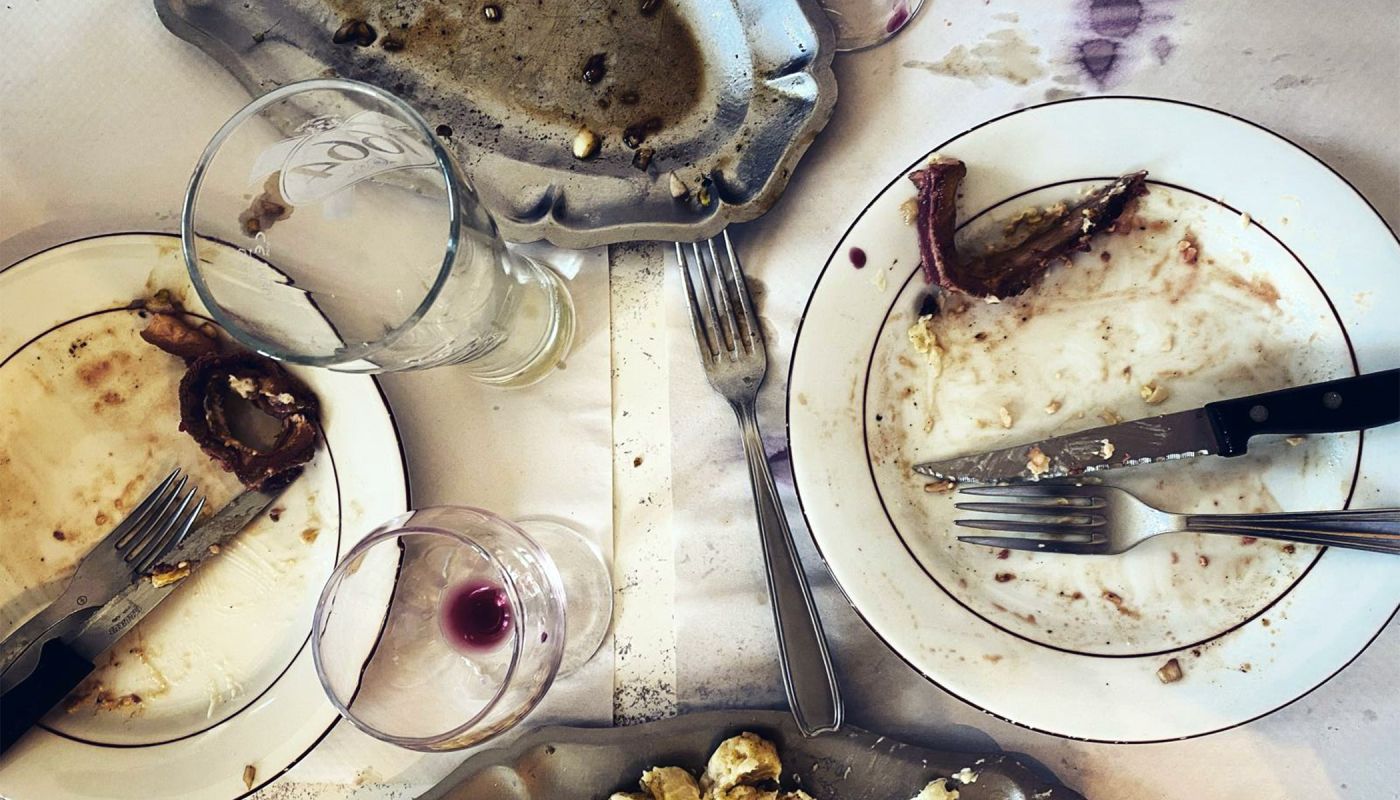
But you know what? Aesthetics aside, there’s nothing wrong with these steaks. In fact, they’re great. There’s also a family-style platter of cauliflower cheese (the blackboard’s gratin chou-fleur béchamel has a nicer ring to it). We dig in and quickly there’s only circumstantial evidence left: placemats stained with grease, wine, water, shallots, crumbs. Then there’s cheese and dessert and coffee and the whole thing clocks in at €15.50 each.
Full, we de-crumb ourselves and step into the bar area to pay at the counter. The bar is from another era, and it’s got a surprising buzz to it. This is the tail end of the lunchtime rush now, and you’d imagine that these people have places to be. And yet all around us are men standing at the bar, leaning, loitering, chattering, conspiring. Smoking inside. Drinking wine and pastis and beer and coffee. Just for this moment, laws of time, physics and public health don’t apply. There’s nothing other than the lovely dregs, those precious last moments of this midday pause.
This is not just another Bordeaux restaurant. It is what you might call a routier – a roadside diner catering specifically to the working classes, notably to truck drivers. I should say that there are routiers and there are Routiers. The latter, officially La Chaîne des Relais Routiers, is a sort of blue-collar Michelin Guide. What we have here is a small ‘r’ routier, not part of any official grouping but spiritually in the same vein.
Bills are paid, jackets and hats put on, goodbyes exchanged. It’ll be back to the grindstone, to pruning vines and racking barrels and scrubbing tanks and hauling pallets and all the other harsh, exhausting, unforgiving, unglamorous jobs that keep the Bordeaux show on the road. Inside the restaurant, there are tables to be cleared, placemats thrown out, surfaces wiped clean, shutters shuttered.
And then in an hour’s time, people will drive past, gawp or peer absentmindedly out the window, maybe wonder what that old building is, maybe not give it a second thought.
Charlie Geoghegan is a writer, editor and marketer from Dublin. He lives in London, where he is senior copywriter at Berry Bros & Rudd. In 2025 he was a finalist in the 67 Pall Mall Global Wine Communicator Award for Short-Form Writing.