Volcanic Wine Awards | The Jancis Robinson Story

WWC25 – Chardonnay … uncanceled, by Allison Wallace

Friday 18 July 2025 • 1 min read
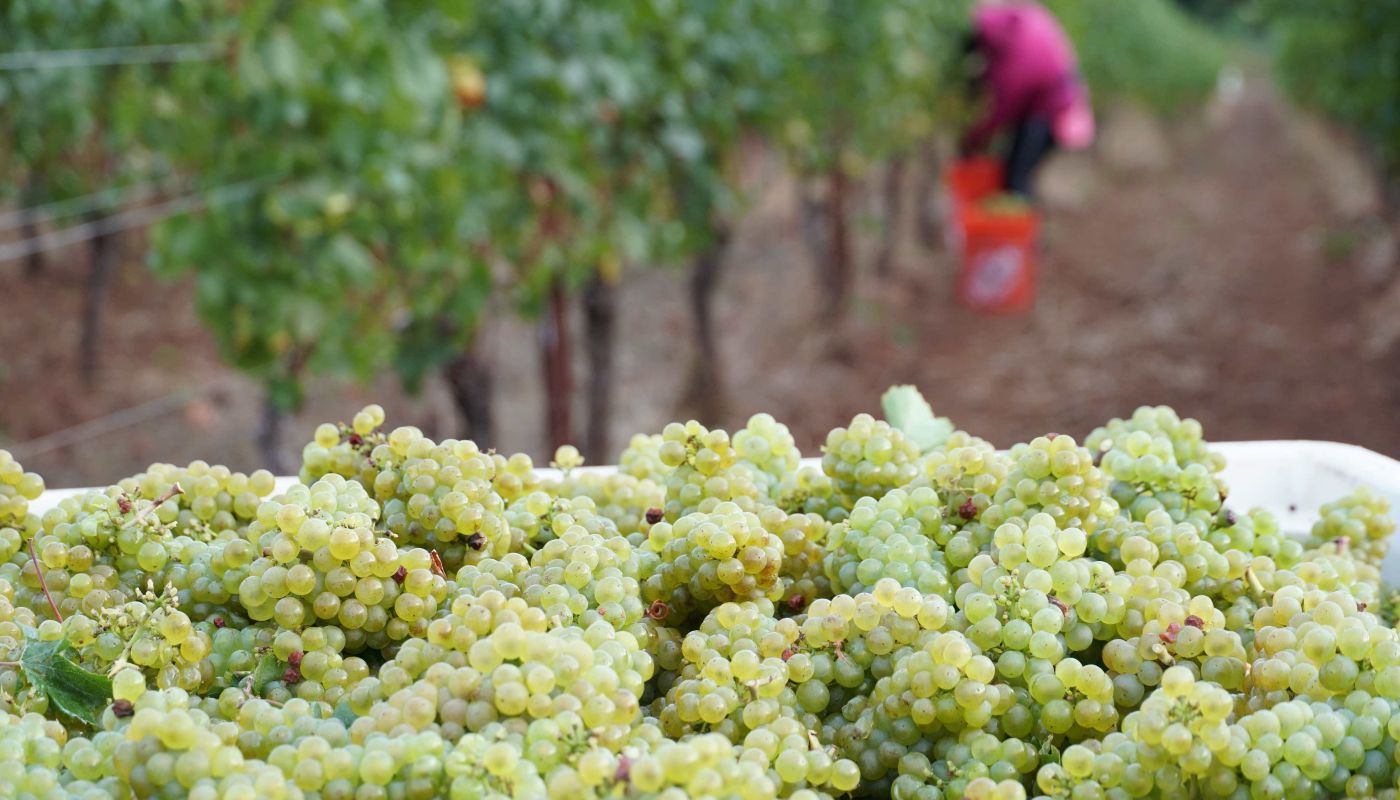
Just harvested Chardonnay grapes in Oregon's Willamette Valley (Allison Wallace)

In this entry to our 2025 wine writing competition, wine blogger Allison Wallace writes a spirited defence of Chardonnay. See this guide to our competition.

Allison Wallace writes Allison Wallace is the co-author of AdVINEtures, an award-winning wine and travel blog that recently celebrated its 10th anniversary. With visits to over 85 countries, she pairs a global palate with formal training, holding WSET Level 2 and Canadian Wine Scholar (CWS) designations. Her storytelling blends deep wine knowledge with a passion for place, capturing the people and regions behind the glass.

Chardonnay … uncanceled 

I’ve never understood the ABC crowd. Anything But Chardonnay? I used to think they were joking. But no—there it was on T-shirts, in tasting rooms, whispered with dramatic disdain at wine bars by people who otherwise seemed reasonable.

Apparently, somewhere along the way, Chardonnay became the scapegoat for a generation of over-oaked excess. A grape held hostage by its own popularity. I missed the memo. While others recoiled at the mere mention of it, I was falling deeply in love with its many guises—steely and precise, lush and creamy, structured and sparkling.

To me, Chardonnay was always a prism, not a punching bag.

I’ve adored its lean, limestone-laced elegance in Chablis. I’ve marveled at the quiet power of a well-aged Meursault or Puligny-Montrachet. I’ve cheered on the renaissance in California, where restraint and texture have redefined the grape in regions like Sta. Rita Hills, Sonoma Coast, and the Santa Cruz Mountains. And don’t even get me started on Margaret River or the surprises coming out of Oregon, where volcanic soils and native ferments give Chardonnay a verve all its own.

This grape is the ultimate shapeshifter—not because it lacks character, but because it’s so utterly responsive. It listens. It absorbs. It reflects. Site, soil, climate, hand—all leave their fingerprint, and I find that riveting.

So, I never joined the ABC chorus. In fact, I’ve made it a bit of a personal mission to convert its members.

It’s not hard. You start with a Chablis: mineral, linear, bracing. No butter. No toast. Just cold stones and lemon zest. Or perhaps a single-vineyard bottling from a cool-climate site, fermented with native yeasts and raised in neutral barrels. I pour, I wait, I smile.

The look on their face is always the same: surprise, then curiosity, then conversion.
“This is Chardonnay?” they ask.
Yes. Yes, it is.

Because that’s the thing—most people who claim to hate Chardonnay have only met one version of it. Usually the loudest. Chardonnay is not a monologue, it’s a conversation, and it deserves to be heard in full.

For me, it’s also a benchmark. If I want to understand a winemaker’s vision, I ask for their Chardonnay. Do they ferment in steel or oak? Do they stir the lees? Pick early or let it ripen? Chardonnay lays it all bare. It rewards intention and punishes shortcuts. It can be a minimalist’s dream or a maximalist’s playground. And it never hides.

That kind of honesty is rare in wine. And it's why, more than any other grape, Chardonnay continues to teach me something new every year.

It has taught me to look beyond assumptions. To trust my palate over trends. To listen more closely to nuance. To embrace the spectrum instead of insisting on a single point.

Today, Chardonnay remains the bottle I bring when I want to challenge expectations—gently, persuasively. It’s the wine I serve to skeptics, to friends who “don’t like white wine,” to anyone ready to rediscover the joy of being surprised.

This is my ode to a grape that never needed defending—but I’ll happily defend it anyway.

To Chardonnay: the endlessly expressive, unfairly maligned, gloriously complex grape I’ve loved from the start.

And to every ABCer I’ve ever converted: You’re welcome.

The photo, captioned 'just harvested Chardonnay grapes in Oregon's Willamette Valley', is the author's own.

Become a member to continue reading
Member
$135
/year
Save over 15% annually
Ideal for wine enthusiasts
  • Access 287,762 wine reviews & 15,857 articles
  • Access The Oxford Companion to Wine & The World Atlas of Wine
Inner Circle
$249
/year
 
Ideal for collectors
  • Access 287,762 wine reviews & 15,857 articles
  • Access The Oxford Companion to Wine & The World Atlas of Wine
  • Early access to the latest wine reviews & articles, 48 hours in advance
Professional
$299
/year
For individual wine professionals
  • Access 287,762 wine reviews & 15,857 articles
  • Access The Oxford Companion to Wine & The World Atlas of Wine
  • Early access to the latest wine reviews & articles, 48 hours in advance
  • Commercial use of up to 25 wine reviews & scores for marketing
Business
$399
/year
For companies in the wine trade
  • Access 287,762 wine reviews & 15,857 articles
  • Access The Oxford Companion to Wine & The World Atlas of Wine
  • Early access to the latest wine reviews & articles, 48 hours in advance
  • Commercial use of up to 250 wine reviews & scores for marketing
Pay with
Visa logo Mastercard logo American Express logo Logo for more payment options
Join our newsletter

Get the latest from Jancis and her team of leading wine experts.

By subscribing you agree with our Privacy Policy and provide consent to receive updates from our company.

More Free for all

Meursault in the snow - Jon Wyand
Free for all Everything we’ve published on this challenging vintage. Find all our published wine reviews here. Above, the town of Meursault in...
View over vineyards of Madeira sea in background
Free for all But how long will Madeira, one of the great fortified wines, survive tourist development on this extraordinary Atlantic island? A...
2brouettes in Richbourg,Vosne-Romanee
Free for all Information about UK merchants offering 2024 burgundy en primeur. Above, a pair of ‘brouettes’ for burning prunings, seen in the...
cacao in the wild
Free for all De-alcoholised wine is a poor substitute for the real thing. But there are one or two palatable alternatives. A version...

More from JancisRobinson.com

Francesco Intorcia
Inside information Perpetuo, Ambrato, Altogrado – these ancient styles offer Marsala a way to reclaim its identity as one of Sicily’s vinous...
La Campana in Seville
Nick on restaurants Three more reasons to head to this charming city in southern Spain. As we left Confitería La Campana, which first...
Ch Telmont vineyards and Wine news in 5 logo
Wine news in 5 Plus, Telmont becomes Champagne’s first Regenerative Organic Certified producer, Argentina repeals wine regulations and the EU rules on de-alcoholised wine...
São Vicente Madeira vineyards
Tasting articles Wines from this extraordinary Portuguese island in the middle of the Atlantic, varying from five to 155 years old. The...
The Chase vineyard of Ministry of Clouds
Wines of the week A perfectly ordinary extraordinary wine. From €19.60, £28.33, $19.99 (direct from the US importer, K&L Wines). A few months ago...
flowering Pinot Meunier vine
Tasting articles Once a bit player, Pinot Meunier is increasingly taking a starring role in English wines. Above, a Pinot Meunier vine...
Opus prep at 67
Tasting articles Quite a vertical! In London in November 2025, presented by Opus’s long-standing winemaker. Opus One is the wine world’s seminal...
Doug Tunnell, owner of Brick House Vineyard credit Cheryl Juetten
Tasting articles Save water, drink these wines from the Deep Roots Coalition, a group of producers who eschew irrigation. Among them is...
Wine inspiration delivered directly to your inbox, weekly
Our weekly newsletter is free for all
By subscribing you're confirming that you agree with our Terms and Conditions.