Lebanese wine producers have been and still are experiencing extreme long-term difficulty. Long before the terrible explosion in the port of Beirut in August 2020, in October 2019, the Lebanese pound collapsed. All bank deposits in the country were frozen. The Lebanese have since found themselves unable to access their own money. Imagine how awful that must be.
Then came the blast, still a political hot potato, that caused an even more severe financial, economic and liquidity crisis and the complete collapse of the government and normal workings of the country. Schools were closed for two years and have only recently reopened. And this is all against a background of continuing conflict and the influx of an estimated 1.7 million refugees, the great majority from neighbouring Syria.
Etienne Debbane, chairman of the most ambitious new winery in Lebanon, Ixsir, was in London recently and explained how severe the repercussions are for the Lebanese wine industry. Absolutely everything other than grapes and labels has to be imported and yet today one euro costs the equivalent of six euros in Lebanese pounds. Since July 2021 there have been shortages of electricity and spare parts, for instance.
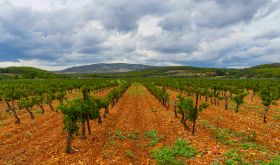
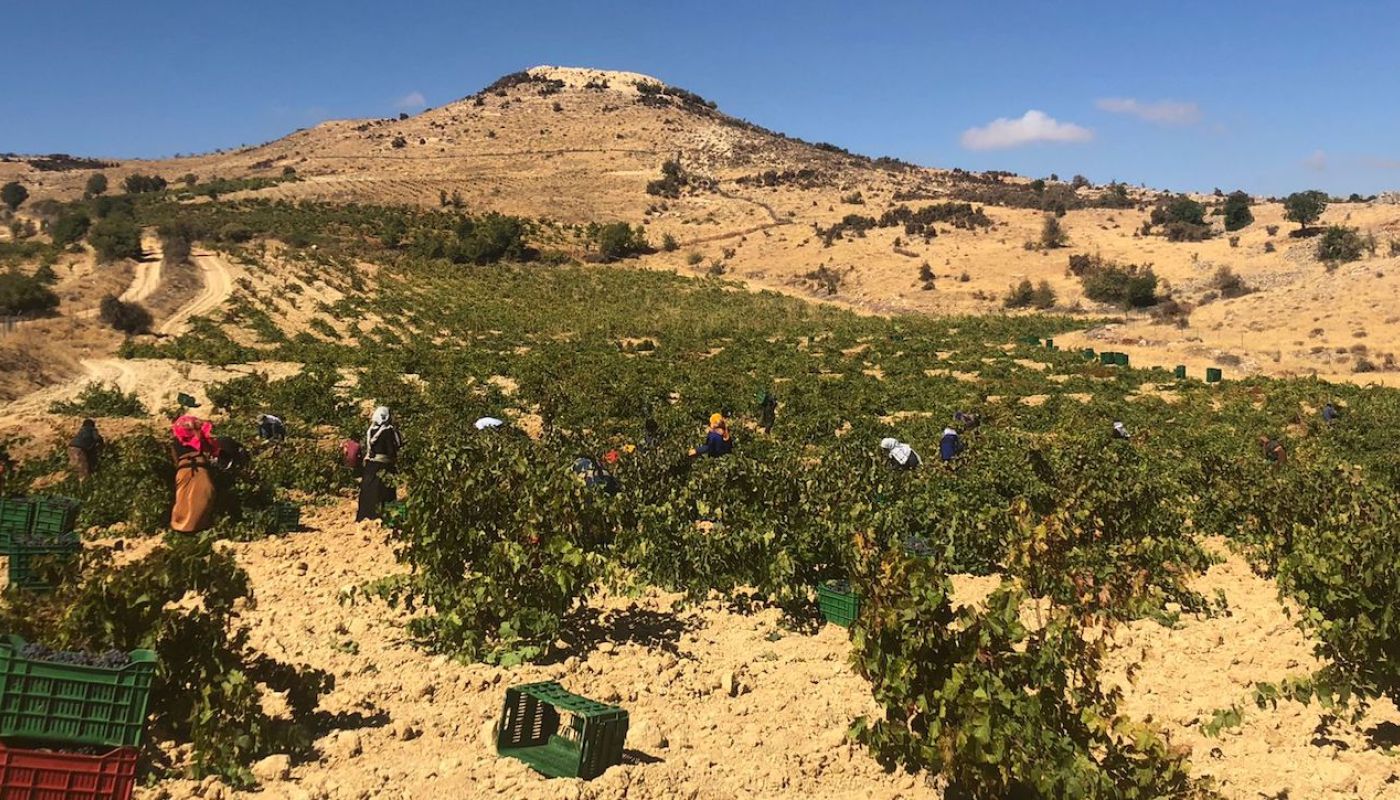
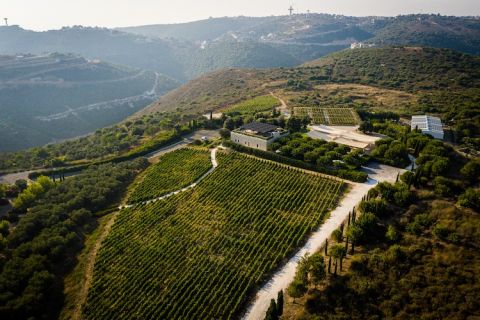
Ixsir, in which Carlos Ghosn, the ex-chairman of Renault-Nissan-Mitsubishi who fled Japan for Lebanon in a musical-instrument case last year, has a substantial interest, has been in a particularly difficult position. Instead of being located in the inland plateau of the Bekaa Valley, where vineyard labour has long been based, or even sourcing their grapes there, they took the decision back in the late 1990s to return to the ancient terroirs of Lebanon, sometimes replanting village vineyards that had disappeared in Ottoman times. The result is that their vineyards, acquired from 2004, are widely dispersed (up to 150 km/90 miles apart), difficult-to-work sites in the mountains at elevations that range from 400 to 1,800 m (1,300 to 5,900 ft; this vineyard they claim is the highest in the northern hemisphere) in six different locations.
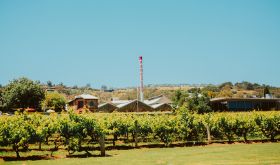
They also decided to locate their state-of-the-art eco-winery, whose first commercial vintage was released in 2008, underneath the 17th-century stone house shown below, inland from the port of Batroun well north of Beirut.
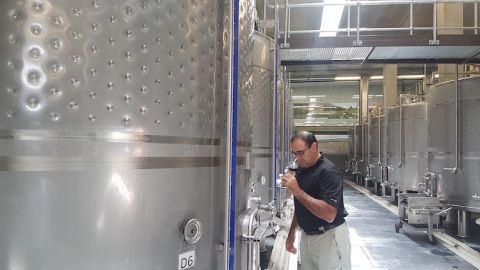
‘It’s been really difficult to harvest’, sighed Debbane. ‘Labour was very difficult because it was impossible to move people from Bekaa to the mountains. We were saved by our refrigerated trucks which could at least keep the grapes cool, provided we had power. We had to send fuel to the trucks to keep the cooling going but we never seemed to be able to co-ordinate people and trucks. Sometimes there were hours between picking and arrival at the winery.’
Because there is zero financing in Lebanon itself, wine producers have applied to the international development agency USAID, one of whose aims is to create jobs in the agriculture sector.
Small wineries particularly are suffering but few business people in Lebanon are thriving. The exceptions perhaps are those in the hospitality business. The Lebanese pound has lost so much value that the country seems incredibly cheap to the European tourists who have been flocking there. The flow of American and Arab visitors has dried up but Ixsir’s restaurant and tourism arm is in much demand. ‘Our restaurant may seem cheap to foreign visitors, but we don’t want that to be its chief asset. We Lebanese don’t want to lose the joie de vivre which is our secret, and doesn’t exist with our neighbours.’
I certainly remember from my two very different visits to Lebanon, in 1970 and 1980, just how indomitably hedonistic the Lebanese seemed. (I also remember the delicious food – and a lot of heavy gold jewellery.)
‘The only way Lebanese wineries can survive’, explained Debbane, ‘is to export. To sell in Lebanon we have to subsidise it all. For Lebanese consumers, a bottle even of entry-level wine costs six times what it did two years ago.’ Despite the damage to the port, it is still possible to ship wine out of Lebanon but producers there, as everywhere else, have been hit by the worldwide shortage of containers. Ixsir have therefore established a European distribution hub in Holland, and have another distributor in New Jersey.
According to Debbane it is the Lebanese middle class who are suffering most. Those in the working class are no strangers to hardship but the middle class that emerged over the last 15 years or so never used to worry about feeding and educating their families. Today some are forced to skip meals and can no longer afford medicine, insurance, hospitals and so on. Prior to the crisis most of them sent their children to private schools, widely seen as much superior to the public schools. Today they no longer have this option.
Things are different for the well off. ‘Rich people who have assets abroad find Lebanon very cheap now. They used to import fine wine in their luggage – not any more!’ Debbane should know, as he owns a fine-wine company in Beirut, importing a host of the most sought-after names in wine. He started Enoteca when the civil war ended in 1992. ‘We thought Lebanon was reborn and there was lots of interest in the country culturally then.’ Ixsir’s most expensive wine, called EL, is inspired by one of Enoteca’s agencies, Spain’s first-growth counterpart Vega Sicilia Unico; it’s a blend of three venerable vintages – but is not as good as the original, it has to be said.
He laments Lebanon’s current status as ‘a pawn between Syria and the West on one side and Iran on other’ but observes that the country has not – so far – been as badly hit by COVID as some. About a third of the population has so far been vaccinated apparently, according to this source.
Debbane is well connected in the French wine business and seems to travel there frequently. His first trip to Bordeaux was when he was an agronomist selling vine-growers a fungicide to treat downy mildew, and he subsequently became hooked by fine wine. His first venture was a winery in Egypt, then called Obelisk and since sold to his Egyptian partner, where his winemaking consultant was the late Denis Dubourdieu of Bordeaux. At Ixsir that role has been taken by active consultant Hubert de Boüard of Ch Angélus in St-Émilion.
As if Lebanese winemakers didn’t have enough problems, the 2021 grape harvest was especially difficult, and much reduced. Particularly hot winds meant that all the grapes ripened at the same time, two weeks earlier than usual, though spread over an extremely extended period for Ixsir: from 12 August to 2 October when it’s more usually from 20 August to 12 October.
Lebanon’s two biggest wine producers are Kefraya and Ksara. Domaine de Tourelles is the oldest and Ixsir is already about the same size as the best-known outside Lebanon, Chateau Musar. It sounds as though we should be actively supporting Lebanon’s producers by buying their wine.
See more than 230 Lebanese tasting notes in our database and another 18 articles tagged Lebanon.
All images courtesy of Ixsir.