Mariann Fischer Boel, European Commissioner for Agriculture and Rural Development made the following statement today, signalling her determination to sort out Europe’s wine surplus – at last!:
Today the European Commission will adopt plans for a root-and-branch reform of the European Union’s wine sector. This promises to be one of the most emotionally charged and controversial of all the agricultural reforms the EU has undertaken since 2003. These changes have made today’s Common Agricultural Policy unrecognisable from the system which attracted such criticism across the world during the 1980s. But while we have made enormous progress, our work is not yet complete.
My starting point for wine reform is my belief that European wines are the best in the world. They are internationally renowned for their quality and their association with centuries of tradition and the beautiful landscapes which produce them. Our wine sector has a huge potential to be developed and we need to use this potential actively.
Yet despite the fantastic expertise and hard work that have brought such recognition for European wines, the sector faces severe problems. The EU is witnessing a slow but steady fall in consumption. In those EU countries where people are discovering the joys of wine drinking, our rivals in the 'New World' are taking a disproportionate share of the market.
While EU exports continue to rise slowly, exports from the southern hemisphere have exploded. It may not be too long before Europe becomes a net wine importer, an idea that would have been unthinkable a few years ago.
Europe is producing too much wine for which there is no market. Excess production is forecast to reach up to 15 percent of total output by 2011 unless we make urgent changes. Stocks are already the equivalent of one year’s production and winegrowers face downward pressure on their incomes.
The EU’s 'crisis distillation' measure was supposed to be for exceptional circumstances. Regrettably, it has now become a regular tool of market management and is even being used for so-called 'quality' wine. This is an unsustainable – some might say crazy – way to spend taxpayers’ money.
Today we are paying huge sums – around half a billion euros a year – to distil wine, store it, and in some cases turn it into bioethanol for use in cars and factories. I am not advocating cutting the annual wine budget of about €1.2 billion. But we must spend it more intelligently.
Our Communication presents a number of options, but comes out firmly in favour of a fundamental reform. The status quo is simply unsustainable. Total liberalisation would cause untold short-term disruption to the sector and would be rejected out-of-hand by the producer countries. Instead we need an approach based on restoring market balance and improving competitiveness.
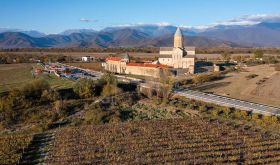
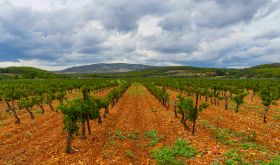
Under our concept, we would make available up to €2.4 billion over five years as an incentive for the least competitive producers to stop producing and grub up their vineyards. It would be entirely the vine growers’ own decision and we believe the incentive could encourage as much as 400,000 hectares to be ‘grubbed up’ from the current EU vineyard area of 3.4 million hectares.
The existing system of planting rights would be extended until 2013, giving the least competitive an incentive to sell their rights to those who want to continue. These producers could then focus on competitiveness. Areas formerly covered by vines would become eligible for the non-trade distorting agricultural payment introduced in 2003 for other sectors. This would be linked to the respect of environmental conditions and leave farmers free to grow what they want on the freed-up land.
My preference would be to abolish the current system of by-product distillation, potable alcohol distillation, support for the private storage of wine, aid for the use of wine must and the infamous crisis distillation. Some of the budget could be put into national envelopes to allow Member States to take measures best-suited to their local situations, mainly for crisis management, restructuring, and the like. Likewise, some money could be transferred to our Rural Development budget and earmarked to help finance generous early retirement schemes and environmental programmes to preserve the unique fabric of wine-producing areas.
And the need for reform goes much further than simple market management. Our producers are hamstrung by rigid rules on wine-making practices, which hinder their ability to compete with the dynamic producers in the New World.
Likewise, our system of wine labelling is overcomplicated, confuses consumers and provides very little flexibility for our producers to label their wines as they wish. For example, a table wine without a recognised Geographical Indication may not be labelled with the grape variety and vintage. We need a simpler and clearer labelling system, we need to consider adopting the internationally-accepted wine-making practices of the International Organisation of Vine and Wine (OIV), and we need to allow those who so wish to produce ‘New World style’ wines.
We must make greater efforts to market our wines in an increasingly competitive marketplace. As things stand, the EU spends just €14 million annually on promotion and marketing.
Above all, we need to be bold and creative. That is why I am launching this debate on the future of our wine sector.
Everyone involved – growers, winemakers, retailers, exporters, importers, consumers and politicians – must contribute to the debate on how to make sure Europe’s wine sector regains its strength and remains the best and most successful in the world.
Only after a thorough debate will the Commission come back with legislative proposals, later this year or early next.
This is a great opportunity – we must not waste it.
Re Europe’s agriculture minister urges Europe to make New World style wines, I hope that Europe doesn't resort to making dumbed down Esperanto wines to compete with Australia and California. I don't mind the varietal type on the label, but how difficult would it be to get the word out that Burgundy is "the" Pinot Noir and Bordeaux is "the" Cabernet/Merlot blend so misrepresented by bottles that display Cab/Merlot. The unwashed public is awash in bad wine and they are buying it because it is prevalent. They confuse quality with prevalence. Maybe I should just let them suffer in ignorance.
What is really sad is that the situation has become so bad that the government is advising the people who make the wines for their living what kinds of wines might sell.
Honestly, given the track records of governments venturing into the area of consumer taste, can anyone really imagine that this will make things better?!
Michael Sarro, European Wine Imports, OH:
Re Europe’s agriculture minister urges Europe to make New World style wines, I hope that Europe doesn't resort to making dumbed down Esperanto wines to compete with Australia and California. I don't mind the varietal type on the label, but how difficult would it be to get the word out that Burgundy is "the" Pinot Noir and Bordeaux is "the" Cabernet/Merlot blend so misrepresented by bottles that display Cab/Merlot. The unwashed public is awash in bad wine and they are buying it because it is prevalent. They confuse quality with prevalence. Maybe I should just let them suffer in ignorance.
Emily K Bell, St Helena, CA:
This is a sad moment in Europe's history. Sacrificing the individual personalities of the world's great wine regions will not solve the surplus problem. With wine consumption growing in the US, as well as emerging markets, the focus should be on innovative marketing, not obliterating centuries of tradition.
Jon Roach, UK:
In response to the two initial comments above, I would like to suggest that such debate is long overdue. I do not believe that Ms Bell's comments reflect the content of the commissioner's statement. The low grade wine market in Europe is in a woeful state and while consumption of wine as a whole is growing, this does not apply evenly across the board. Nowhere does the Commissioner suggest Europe abandon its traditional wine making practices.
Steve Dutton, Germany:
What is really sad is that the situation has become so bad that the government is advising the people who make the wines for their living what kinds of wines might sell.
Honestly, given the track records of governments venturing into the area of consumer taste, can anyone really imagine that this will make things better?!
Rodrigo Mainardi, São Paulo:
I’d like to add that I have seen during Vinisud [southern French] producers trying hard to make their wines look modern. A very crowded stand was from a producer called Vignobles Dom Brial (I haven’t tasted the wines). If you click in this link, I bet you’d be surprised – or not!