It seems like decades now that the French in general and Bordeaux wine producers in particular have been bemoaning the fact that they find it so difficult to communicate with media and consumers. They have some great wines, goes the argument, but the average wine drinker and wine commentator just doesn't understand them. Not like those dastardly New World wine producers, goes the undercurrent, who somehow have mastered the dark arts of communication.
Well I have a very simple suggestion for a way in which the French could impress wine enthusiasts everywhere. It is not at all expensive either – much, much less so than the generic advertising campaigns that have eaten up almost criminal amounts of the monies levied on impoverished vignerons all over France to keep their generic promotional bodies in existence.
My idea involves harnessing an attribute that the French have in spades and putting it to work improving the image of French wines. In academic institutions in general, and in the universities of Bordeaux and Montpellier in particular, are dozens of researchers working at the cutting edge of wine science. Montpellier has for decades been the cradle of viticultural research. Bordeaux's Faculty of Oenology has given us the likes of the late Professor Émile Peynaud, father of modern winemaking; the Ribéreau-Gayon father and son duo whose work is known to generations of cellar professionals; the world's most famous winemaking consultant Michel Rolland; the godfather of modern white winemaking Denis Dubourdieu; head honcho at Château Margaux Paul Pontallier, whose academic thesis was on barrel ageing, etc etc.
These individuals and their successors have an extraordinary wealth of knowledge about the detail of wine. Today's wine consumers and commentators are more interested than they ever have been by the minutiae of wine science. Why not use France's wine academics to spread some of their knowledge more widely, thereby enhancing the image of French wine as a whole?
Of course it would need a little bit of planning. No point in unleashing a nerdy, uncommunicative, introvert scientist with zero communication skills and suggesting they give a lecture on some exceptionally arcane bit of research that seems to have no relevance to wine drinkers. But there are dozens of topics that must be studied in French academic institutions about which ordinary wine enthusiasts and wine writers are curious: grape varieties and their relationships, terroir and its influence, grape physiology and how it affects the taste of wine, yeasts and their effects, extraction and tannin management techniques, the role of oxygen, all manner of aspects of élevage such as various oak types and other materials, how wine ages, different stoppers... I could go on, but really I would like scientists to go on, to share more of their knowledge with us.
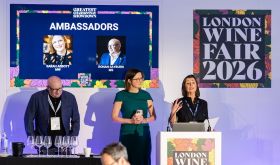
That this process does not have to be dull, and that it can enhance the reputation of the wine industry represented, was demonstrated to a group of us British wine professionals last June when Con Simos, an amiable chap who fulfils a sort of ambassadorial role for Australia's leading wine academic body, the Australian Wine Research Institute, flew to London to teach us all how to taste. I exaggerate slightly, of course, but only slightly. See Wine faults – delicious!
In Australia, important factors in improving wine quality have been the systematic elimination of technical faults and the establishment of an academy of wine judges, teams of highly trained tasters who can perform predictably and consistently at the all-important wine shows designed to reward Australia's better wines, and to steer winemaking trends. (It is probably largely because of the show system that Australia has been able to react so fast to consumer demand such as that for less oaky, less alcoholic Chardonnays.) The AWRI prides itself on being particularly close to the wine industry and its specific needs and so has developed a systematic four-day Advanced Wine Assessment Course (AWAC), designed to churn out reliable wine tasters and improve the tasting abilities of those working in the industry. It usefully teaches individuals about their own personal sensitivities and, perhaps even more usefully, insensitivities. And it also, en passant, makes a useful contribution to the coffers of the AWRI, which charges handsomely for these courses in Australia.
In London, 30 of us were given a complimentary, compressed, one-day version of this course. It was designed to demonstrate some of the more common wine faults (plus at least two, Indole and Chlorocresol, of which I had never previously heard). Perhaps more relevantly to those of us who are not professional winemakers, it was designed to improve our consistency. We were served a range of whites and a range of reds blind but made up of random duplicates which served to demonstrate just how influential a wine's position in a line-up can be.
You can argue at some length over whether Australian wine academe has spent too much time eliminating faults and not enough encouraging individuality. But no participant in that AWAC exercise left with anything other than an enhanced respect for Australian wine and wine science.
Similarly, when the AWRI published the results of its survey into the effects of different stoppers on wine ageing, the whole Australian wine industry benefited from the reflected glory of a study that continues to be one of the very few in the public domain to give us an academically respectable and impartial, albeit rather dated nowadays, view of the relative performance of natural cork, synthetic cork and screwcaps.
I am sure that within the labs and lecture theatres of many other academic institutions, at Davis, Fresno and especially in France, there lurks all manner of fascinating wine expertise that those of us who love wine would be terrifically impressed by. I urge wine researchers to share more of their knowledge with us. Denis Dubourdieu (pictured at a tasting in London last year) is one of the few French wine academics to travel widely and to present a human face for advanced vintelligence – and I suspect he does that mainly because as a wine grower as well (Chx Reynon, Doisy Daëne, etc), he needs to travel to sell his own wines. I would like to see a more systematic, and effective, approach to encouraging professional academics to explain wine to us.