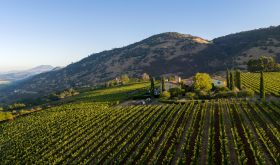
On my last trip to California, I was given a lift by Screaming Eagle’s vivacious vineyard manager Annie Favia. She had already told me with some pride that she also made her own range of wines, Favia Wines, presumably advised by her winemaker husband Andy Erickson, who happens to be the winemaker at Screaming Eagle.
This sounded a pretty tempting background for a label that was new to me so I asked whether there was any chance of tasting them or reading any reviews of them. Annie looked almost shocked, and explained that she had never sent out samples of them. “I wouldn’t dream of letting someone taste my wines unless I was there to tell them about them,” she explained, “and anyway we seem to be able to sell everything without reviews anyway.”
I probably looked a bit shocked at that point too. The idea that I could taste a wine only with its maker at my elbow fills me with dismay, not to say incredulity. If I adopted this approach I couldn’t possibly sustain my current tasting average of several hundreds of wines a week. It would be a physical impossibility to ship myself to the makers or to invite the makers over my doorstep in London in time for their (five minute?) rendezvous with me.
Public relations people are always contacting me to tell me Winemaker So-and-so is in town next week and would love to “meet”, which this curmudgeon generally takes as a euphemism for “subject you to a sales pitch”. In fact one California winemaker proposed such a meeting at a particularly busy time for me and the only possible gap in my diary on the relevant day was at lunchtime. I suggested that perhaps we looked at his wines over lunch (being married to a restaurant critic I am not short of free meals, I hasten to add). He was horrified and cancelled the meeting altogether. Showing me how his wines went with food was not at all what he had in mind. I realised that he had been intending to subject me to death by PowerPoint.
Public relations people are always contacting me to tell me Winemaker So-and-so is in town next week and would love to “meet”, which this curmudgeon generally takes as a euphemism for “subject you to a sales pitch”. In fact one California winemaker proposed such a meeting at a particularly busy time for me and the only possible gap in my diary on the relevant day was at lunchtime. I suggested that perhaps we looked at his wines over lunch (being married to a restaurant critic I am not short of free meals, I hasten to add). He was horrified and cancelled the meeting altogether. Showing me how his wines went with food was not at all what he had in mind. I realised that he had been intending to subject me to death by PowerPoint.
But that’s the wine writer’s view. I can easily see things from a winemaker’s point of view and well understand why Annie feels the way she does. I told this story to Tim Finn of Neudorf in Nelson, one of New Zealand’s most admired winemakers, although one who is distinctly off the beaten track. “I know the feeling,” he said. “You want to tell the story behind this particular wine. The reason it turned out that way is that such and such happened and it’s far more interesting if people who are going to write about it know that. You feel they may overlook certain characteristics if they don’t know the background story. We’ve had experiences of reading reviews and thinking ‘they got it so wrong; if only they’d known this…’ If you’re directed to look for something in a wine you’re more likely to find it, so there is value in pointing out for example the difference between two wines. It may be there but they may miss it otherwise. We send our wines out all over the place and they miss the point generally.”
That ‘they’ may well include me, but of course the wine consumer rarely knows the story of how the wines he or she buys and drinks were made, so one could argue that wine writers, or at least those who style themselves wine critics, should taste wines without any inside information so as to experience them as similarly as possible to their readers.
I sympathise with wine producers and the difficulties involved in managing their reputations. If you’re small, new and can anyway sell every bottle you make like Annie Favia, then you can probably afford to ignore any sort of publicity or public relations activity. But well over 95% of wine producers around the world find themselves clamouring for attention in an increasingly overcrowded global wine market (as I will be reporting in my final Ronda report this Saturday) and have to dream up ever more artful ways of putting themselves on the map. Wine publicists are a relatively new breed and I have to confess that my heart sinks whenever certain names arrive in my inbox, spreading “news” of dubious quality. I rather bless outfits as small as, say, Favia Wines and Neudorf who couldn’t possibly afford professional public relations.
As communications have become global – not least scores which can be understood by anyone of any nationality – wine reviews have become ever more important in the all-important business of selling, the necessary corollary of making, wine. It is hardly surprising then that the Maryland inn where Robert Parker meets favoured makers and importers of wine is so widely regarded as Mecca by the wine trade. Nor that wine writers like me sometimes feel as though we are single-handedly keeping the courier companies in business.
Perhaps it’s because this website makes me so easy to contact, but I cannot keep track of the number of wine producers who email me out of the blue assuring me that they would love me to evaluate their wines. I fully understand their eagerness to make some sort of impression but experience has taught me that most of them welcome an honest opinion only if it is a favourable one.
Unfortunately, it is almost impossible to keep track of all the wines that are commercially available for my readers, let alone those that are completely new or have never been exported, however much I sympathise with their makers. Without care, and some polite but firm responses, it would be all too easy to find myself providing a free consultation service for producers rather than information for consumers. There must be a trick to making an unknown wine sound irresistible, as sometimes the stories do capture my imagination and I ask to taste something even though my readers may find it very difficult to track down, but in practice the great majority of wines made today are A N Other Something rather than desperately distinctive. (And you would not believe how many bottles arrive on my doorstep entirely unsolicited and without any accompanying clues as to who sent them, how to contact their producer, background details or likely price – but that is another, deeply frustrating, story.)
Perhaps it’s because this website makes me so easy to contact, but I cannot keep track of the number of wine producers who email me out of the blue assuring me that they would love me to evaluate their wines. I fully understand their eagerness to make some sort of impression but experience has taught me that most of them welcome an honest opinion only if it is a favourable one.
Unfortunately, it is almost impossible to keep track of all the wines that are commercially available for my readers, let alone those that are completely new or have never been exported, however much I sympathise with their makers. Without care, and some polite but firm responses, it would be all too easy to find myself providing a free consultation service for producers rather than information for consumers. There must be a trick to making an unknown wine sound irresistible, as sometimes the stories do capture my imagination and I ask to taste something even though my readers may find it very difficult to track down, but in practice the great majority of wines made today are A N Other Something rather than desperately distinctive. (And you would not believe how many bottles arrive on my doorstep entirely unsolicited and without any accompanying clues as to who sent them, how to contact their producer, background details or likely price – but that is another, deeply frustrating, story.)
If it’s difficult for newcomers to wine to make a splash, however, old hands have their problems too – or at least the thoughtful ones do. After all, reputations can be lost much faster than they are won. I take it as an excellent sign when I meet wine producers who genuinely worry about their wines. Last December during my visit to Domaine des Comtes Lafon in Meursault, Dominique Lafon, while showing me his delightful 2006s, was fretting about the extent to which his wines from the heavily touted 2005 vintage were closing up. He had already mentioned this possibility when I had tasted them a year earlier but you could see him frowning as we tasted a few. “2005 is my best vintage ever, but they’re so tight and tough now. People really will have to keep them a long time.” I loved his frank, satin-textured, floral-scented Meursault Clos de la Barre 2005, but he was most worried about his Meursault Charmes 2005, which last December didn’t yield much on the nose at all. “Don’t worry,” I said. “I’m sure it’ll open out again.” He shook his head and gave a deep sigh, plunging his nose desperately into the glass again. “But people expect so much of you.”
Now that’s the sort of problem that comes with fame and a certain size. Perhaps Annie Favia is right to keep her wines about her as closely as she does her daughters.