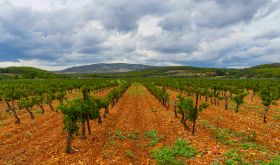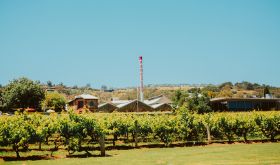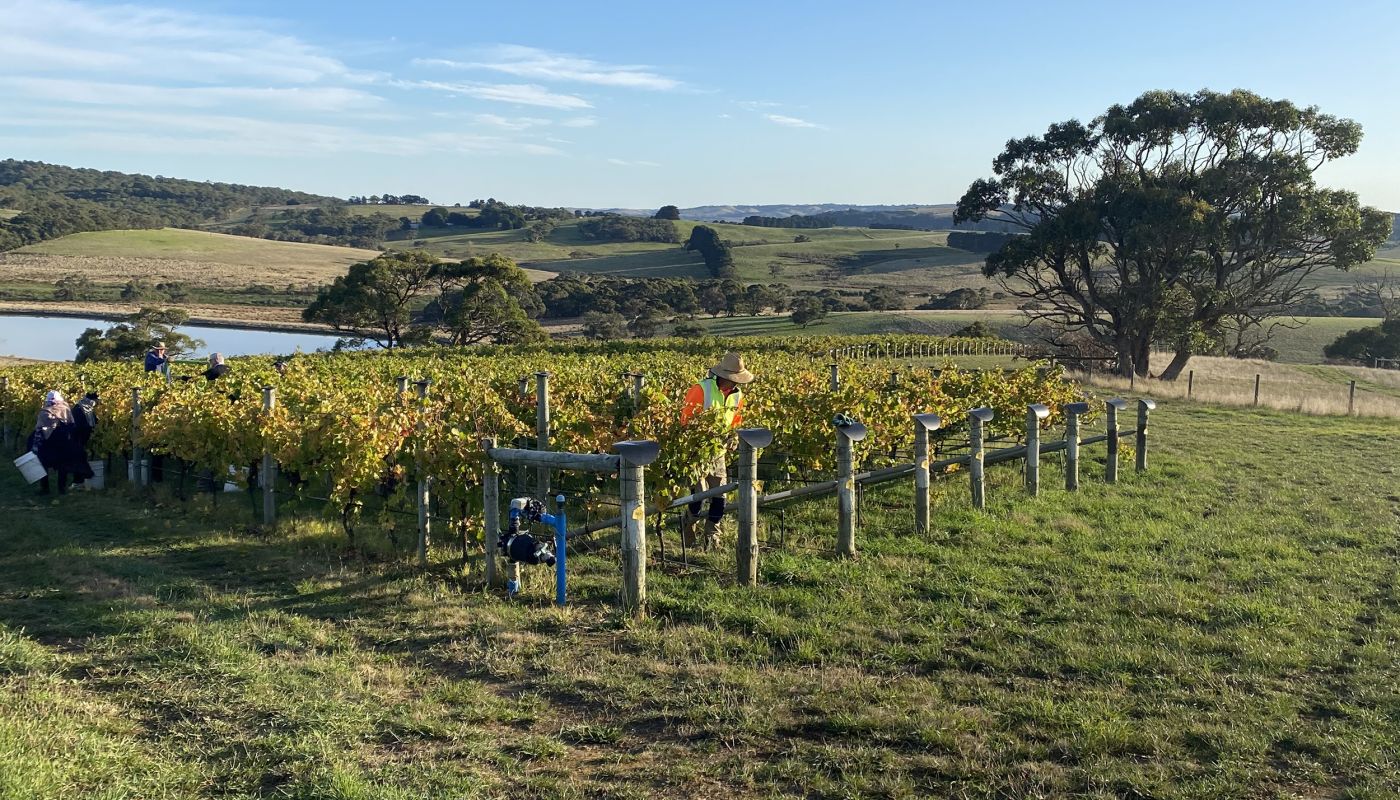
It is 11 April and we have yet to begin the harvest for all but a young block of Foggy Hill Pinot Noir that was harvested on 5 April.
In an average year we would have harvested all three of our vineyards by 11 April.
After 54 diverse vintages, none the same as any other, I do expect the unexpected but 2023 is destined to be the latest of those 54.
193 days ago, the first stirrings of the vine buds in our three distinguished sites initiated a season of anxiety. After a winter of above-average rainfall, the soil profile was saturated and cold as the buds tentatively began their new season’s journey in mid September, two to three weeks later than average.
The die was well and truly cast for a late harvest after the spring months’ (September, October and November) day temperatures were 1.3 °C (2.34 °F) colder than average, inhibiting the growth of the new shoots after their late emergence. Consistent with budburst, flowering was attenuated and 2–3 weeks late.
The culprit is SAM again! The weather engine of the south coast of Australia is SAM (Southern Annular Modulation) and it has remained in positive mode throughout the spring and summer of the 2023 growing season. Positive SAM means the weather systems arriving from the west are crossing the Great Southern Ocean to the south of the Australian continent, delivering cool Antarctic air onto the southern coast. The 2023 growing season is now the fourth in a row of SAM being positive.
The cool winds of the front edge of the slow easterly-moving high-pressure systems have consistently blown into our vineyards from the south-east, inhibiting the flowering process and delaying berry development. The result is a small, late crop. Given the lateness of the season and the low ripening temperatures, a small crop is better than a large one.
At the end of March, The Tiers had accumulated 999 °C growing degree days (GDD [see climate classification for an explanation]) for the six-month growing season, 3.6% below the average of 1036 GDD. For the same period Foggy Hill had accumulated 1115 GDD, 6.6% below the average of 1194 GDD. Whalebone Vineyard at Wrattonbully had accumulated 1261 GDD, 6.5% below the average of 1348 GDD.
These percentage differences may not seem great but in marginal ripening climates they seriously threaten grape maturity, especially when the ripening is delayed into the cool end of autumn as in vintage 2023.
Another peculiarity of this late and cool season is that we are harvesting all three vineyards at the same moment. Normally the Pinot Noir from Foggy Hill is harvested in mid March, followed by Chardonnay from the Tiers Vineyard at the end of March, then finally Cabernet Sauvignon from the Whalebone in early April.
Never have we harvested all three vineyards at the same time. This coincident harvest is imposing allocation stress on manpower, machinery and picking bins.
At this moment, as we remove the bird nets from the Tiers Chardonnay in preparation for harvest tomorrow, there are rain showers around and the air temperature is 12 °C (53.6 °F). I will be very grateful to see some fruit arrive at the winery door.
The positives of a cool, late growing season are the moderate sugar levels ensuring moderate alcohols; the fine, intense fruit flavours; and the high, balancing natural acid. 2023 is likely to produce a Chablis-like version of Tiers Chardonnay.
I had to make a decision last night, in the hours that should be for sleeping not decision-making. I had intended to harvest Foggy Hill Pinot Noir tomorrow and had arranged for bird nets to come off today in preparation.
The maturity curves for each vineyard reflect the natural, terroir-driven sequence of ripening among our distinguished vineyard sites. I would expect Foggy Hill Pinot Noir to be harvested two weeks ahead of Tiers Chardonnay and that in turn two weeks ahead of Whalebone Cabernet Sauvignon.
The 2023 exceptionally late harvest has jammed all three vineyards up against the wall of the end of vine function as the autumn temperatures close the vines down.
Last night, sometime after midnight, I noticed the Australian Bureau of Meteorology began forecasting a major low-pressure system wet-weather event for the next weekend, affecting the Adelaide Hills. The Tiers Chardonnay would be detrimentally affected by heavy rain at its state of advanced maturity. I had a decision to make: harvest Foggy Hill or Tiers, leaving one vineyard at the mercy of the weekend’s weather event?
After hours of agonising, in the pre-dawn hours of this morning, I rang my vineyard manager and arranged for the net removal and picking crews to be at the Tiers Vineyard, instead of Foggy Hill, redirected as they arrive for work. We will harvest the Tiers Chardonnay in dry autumn conditions from tomorrow.
The fate of Foggy Hill Pinot Noir hangs in the balance, but I am hopeful for less rain on the weekend at Foggy Hill at Parawa on the Fleurieu Peninsula; the steep slopes of the vineyard should allow better run off, there will be drying winds from the ocean and Pinot Noir has tougher skins than ripe Chardonnay. That’s my rationale and I am now committed.
The loose-bunch, small-berry Cabernet Sauvignon and Cabernet Franc in Whalebone Vineyard will hang through the rain intact and be harvested next week. The plumper-berried Merlot was harvested today.
These may seem like first-world problems especially compared with the travails of Australia’s inland grape-growers. The huge, flat drainage basin of inland Australia collected the massive rain from the multiple atmospheric rivers created for the east and north of Australia by the La Niña weather system during the winter and spring of 2022. That water inevitably found its way down the Murray–Darling River system to the irrigation communities of Australia’s Riverina, Sunraysia and Riverland, source of 70% of Australia’s grape crop. Many vineyards were inundated and those that weren’t couldn’t be irrigated because their pumping stations were under water. The disease pressures were also high.
Some estimates of Australia’s 2023 grape harvest are as low as 1.2 million tonnes, 33% below the average of 1.8 million tonnes and the smallest harvest since the 1990s.
Today is Thursday the 13th and we are halfway through harvesting the beautiful Chardonnay from the Tiers Vineyard. We will complete the harvest of another of our Piccadilly Valley vineyards, Pat and Ted’s, tomorrow before the predicted rain event on Friday night materialises. Whew!
I travelled the 1.5 hours down to Foggy Hill to sample and inspect the Pinot Noir grapes hanging on the exhausted vines. The fruit is in near-perfect condition, begging to be picked. What will it look like after the weekend’s rain event when we start to harvest on Monday?
I am praying it will be resilient, then the gamble I made on the night of the 11th will have paid off.
This is all part of a vigneron’s life. Never the same, never boring, always providing a story to tell as part of the final wine in the bottle.