Perhaps the best thing to happen in the wine world in 2011 was the increasing realisation that 2010 was such a good vintage in so many wine regions. After the exceptional ripeness of 2009, the inherent freshness of wines fashioned by France's rather cool summer of 2010 is providing delicious contrasts in Bordeaux, Burgundy and the Rhône (on the last of which I will report in detail next week).
And, while the 2011 growing season was exceptionally cool in California and exceptionally wet in much of Australia, the 2011s currently settling down after fermentation in Europe's cellars are looking generally intriguing enough to raise hopes of a solid run of good vintages. Not that the Bordelais will be able to get away with sky-high pricing for a third vintage in a row. There are only two questions about the en primeur offer of Bordeaux 2011s next April. Firstly, since such a significant proportion of the overpriced 2010s are still sitting unsold on Bordeaux merchants' books (a number of orders having been cancelled), by how much will the 2011 prices have to drop for the wines to have a chance of selling? Gary Boom of Bordeaux Index says that for months he has not sold a good vintage first growth to anyone in the UK who will actually drink it.
The other is whether, as I tried too late to organise last year, we wine writers could possibly organise an effective boycott of primeurs tastings so as to force an assessment of the vintage at a more mature stage in its evolution. I have considerable support for this idea from my British colleagues, but none from their powerful American counterparts, alas.
Now that the price of market barometer Château Lafite has so decisively softened, it is hard to imagine that there will be a stampede to invest in Bordeaux 2011 – at big-name level anyway. Although surely 2011 showed us, when we tasted the bottled examples made in 2009, just how good the little names of the Médoc are today.
The fashion statement of 2011 was undoubtedly so-called natural wine, which emerged into the mainstream from having been a speciality of the Japanese market and a certain wave of Paris wine bars. The UK saw its first Natural Wine Fair last May in London's Borough Market, an event so popular that comedienne-turned-psychotherapist Ruby Wax was observed trying to gatecrash it. As I reported here, September saw the publication of no fewer than two books, in the UK and US, about natural wine (Naked Wine and Authentic Wine). And London now has its own crop of natural wine bars with Terroirs having been joined by Brawn, Soif, Artisan & Vine, Duck Soup and Raef Hodgson's 40 Maltby Street (see our recently published guide to London wine bars). The wines themselves vary from urgent, compelling nectars to flat, cidery advertisements for the virtues of sulphur as a wine disinfectant.
The wine topic of the year on blogs and online fora, at least among the wine writers who dominate them, has been wine writer ethics. Acres of cyberspace have been devoted to the sometimes jaw-dropping conduct of Spain's first Master of Wine and event organiser Pancho Campo. Allegations have been made that Campo asked for sums from producer associations for access to the (now ex) Spanish specialist wine reviewer for America's leading wine writer and supposed beacon of probity Robert Parker. The matter is now being investigated and Campo denies any wrongdoing. His last major event was WineFuture, an ambitious international wine conference in Hong Kong at which the three tastings, for 1,000 tasters, were led by me, Parker and Campo. In retrospect it does not look good that much of Campo's tasting was taken up with films of his arrival at various wineries in a Ferrari.
As paid positions for wine columnists shrivel, potentially more compromising gigs have become more alluring. These include bylined or ghost writing for wine companies (I find it hard to believe that Tesco's wine buyers really have time to write the magazine that goes out to their mailing list of 500,000, for instance) and the rash of all-day consumer tastings hosted by wine writers and underwritten by producers who pay (a third-party organising company) to participate.
Asia continues to fascinate all those who have wine to sell,and the love affair appears to be reciprocated. The list of Chinese buyers of Bordeaux châteaux (and wine estates elsewhere) continues to lengthen. They all seem to be making what was in the past the classic mistake of newcomers to the region of choosing their acquisitions on the basis of the beauty of the château building rather than on the value of the wine's appellation. Many is the new chatelain to arrive from the United States or the rest of Europe who invests hugely in bricks, mortar and vineyard, only to find that the selling price of the resulting wine refuses resolutely to rise to a profitable level. Bourg and Entre-Deux-Mers may have very pretty countryside but the wines just don't cut the mustard on the all-important Bordeaux place, the intricate and much-ramified wine-trading platform in Bordeaux through which the world's wine merchants have bought for centuries.
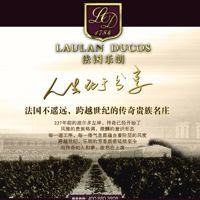
The new Chinese chatelains may have the last laugh, however. For most of them the long-term aim is to establish their brands/châteaux in the Chinese market, completely cutting out all the middle men on which the Bordeaux wine trade has been so dependent. With the right packaging, designed expressly for Chinese consumers, and their own efficient distribution chains within China, a modest Médoc such as Château Laulan Ducos stands a chance of becoming a hugely successful name in China (the image is above is taken from the home page of their website). Only seven years ago, the owner Frédéric Ducos, who recently sold his family property to Richard Shen, the ambitious and wine-loving owner of an extensive chain of jewellery stores in south-east China, was writing to me in desperation at being ignored by the Bordeaux place and unable to sell his very toothsome cru bourgeois for more than five euros a bottle.
In 2011 the spotlight fell on wine packaging as never before, with a significant move to recyclable, sturdy cardboard instead of Styrofoam for despatching bottles – and even the much more environmentally friendly small tubes for samples sold by WIT (Wine in Tube) at www.witfrance.com. Only dinosaurs still use really heavy wine bottles, and there has recently been serious talk of alternatives to glass. It was also the year that English sparkling wine was taken seriously at last. Below are some of the best I tasted in 2011.
Gusbourne, Blanc de Blancs 2007
Gusbourne Brut Reserve 2007
Gusbourne Brut Reserve 2006
Ridgeview, Bloomsbury Merret Brut 2009
Ridgeview, Knightsbridge 2008
Ridgeview, Laithwaites South Ridge, Cuvée Merret 2007
Ridgeview, Grosvenor Blanc de Blancs 2007
Chapel Down, Blanc de Blancs 2007
Davenport, Limney Estate Blanc de Blancs 2005