
Having coined the Rule of Five for remembering which are the good vintages (those, in most of Europe anyway, divisible by five), I admit I am predisposed to think the best of 2015.
I was pretty pleased with my first big collection of 2015s tasted in Bordeaux recently but the 2015s I tasted in Germany at the end of last month were even more impressive.
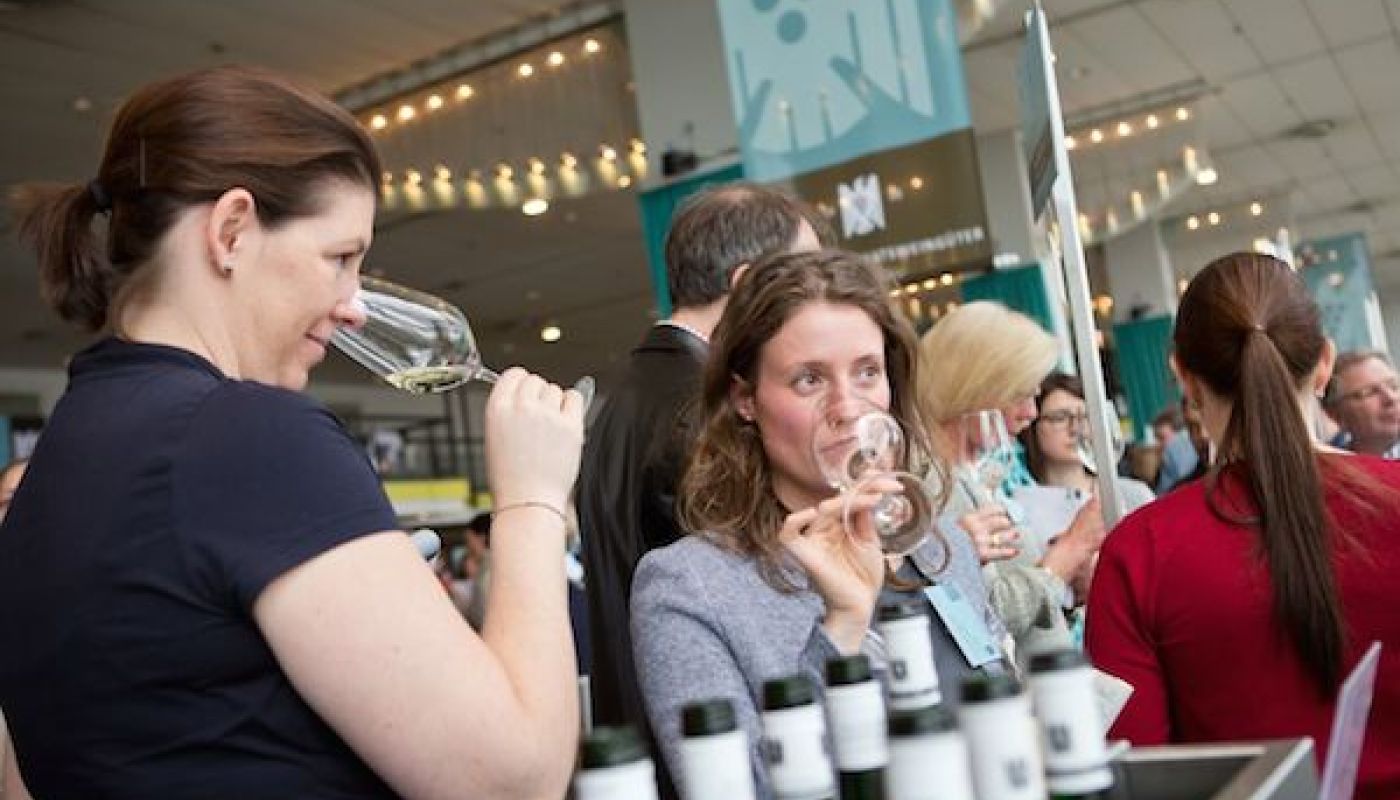
Every year members of the VDP, the association of top German wine estates, put on the massive Weinbörse presentation of their latest vintage beside the broad river Rhine in Mainz. I hadn’t been for a few years but I am thrilled that the first vintage I was able to sample after a ridiculous series of book deadlines was the 2015.
There were so many wines on show, more than 1,500 including 2014 reds and later-released whites, that careful selection was needed. Our German specialist on JancisRobinson.com Michael Schmidt and I carved up the regions and I concentrated on the northerly ones of Mosel, Nahe and Rheinhessen.
As Marcus Haag of Willi Haag in the Mosel observed, ‘after such a hot summer I was expecting a repeat of [the extraordinary heatwave vintage] 2003 but in the end we were rewarded with high acid, moderate alcohol and great complexity'.
In many cases on this visit I was able to meet the children of German wine growers I have known for many years, and was thoroughly encouraged by their ambition, their philosophies and their high level of education both theoretical and practical. They virtually all have experience of working both in and out of Europe, and have a useful array of contacts around the whole world of wine.
Young Georg Rumpf of the Kruger-Rumpf estate in the Nahe reported how he realised, after tasting his father Stefan’s wines from the 1990s, that those with lower residual sugar and higher total acidity aged best, so that from the 2015 vintage onwards, Kruger-Rumpf wines will be picked a little earlier than of old. Their Spätlesen for instance will not have more than 70 g/l residual sugar. (And Georg has for some time actively avoided botrytis, the so-called noble rot responsible for really, really sweet wines such as those that qualify as Beerenauslese and Trockenbeerenauslese. He is not alone in this.)
Similarly, Annegret Reh-Gartner, in charge of an enviable spread of prime vineyards in the Mosel, told me she is deliberately making drier Kabinett and Spätlese wines, with no more than 80 g/l residual sugar. Because grape sugar is fermented into alcohol, this means, she admits, that her wines are a little more alcoholic than in the past, but she is convinced that the end results are ‘lighter, more drinkable and less fat’.
The disastrous effects of the German Wine Law of 1971 that prioritised sugar levels in grapes above all else are very obviously in retreat. Indeed the whole issue of ripeness and sweetness are very much of the moment in fine German wine.
Partly as a reaction to the German Wine Law and partly because warmer summers can now result in fully ripe dry wines in Germany (there’s no longer any need to cover up an excess of acid with sugar), there has been a huge vogue for bone-dry trocken wines within Germany itself. Such wines have been slow to make progress in traditional export markets such as the UK and US – in part because long-standing German wine importers have tended to be those who first fell in love with Germany’s finest sweeter, fruity wines and saw trocken wines as tart cuckoos in the nest.
So around the turn of the century I felt there was a sort of two-speed mentality among many German wine producers. Too many seemed to be reserving their best grapes for making their finest dry wines, the so-called Grosse Gewächse for which German wine drinkers are prepared to pay high prices, while the sweeter wines, mainly for export markets, often seemed to be made from the slightly less good ones on the basis that, as in the old days, sweetness can hide a multitude of sins whereas dry wines are much more transparent.
But, as with so much in the wine world today, I sense a sea change. Producers who used to concentrate almost exclusively on bone-dry wines are starting to make some top-quality fruity (a euphemism for well-balanced wines with a bit of residual sugar) wines too.
Even Roman Niewodniczanski of Van Volxem in the Saar, for years a standard bearer for seriously dry wines even in as cool a location as the Saar, a tributary of the upper Mosel, is now making wines called Kabinett, Spätlese and Auslese that may (unlike a Grosses Gewächs) be sweetish.
Oliver Haag of the Fritz Haag winery was one of several growers to report increased interest in off-dry (rather than out and out sweet) wines in Germany. About half of his production today is what he describes as ‘fruity’.
Nor is this a phenomenon restricted to the cool Mosel where fruity wines were long the norm. Friedrich Groebe is based in Westhofen in the Rheinhessen, a village readily associated with some of Germany’s finest dry whites, but even he reports a growing acceptance of sweeter wines among his German customers. He started making an off-dry bottling called Alte Reben (old vines) in 2007 with just 600 litres. He is now making four times as much of this wine labelled feinherb, the term favoured in Germany for off-dry wines, halbtrocken (or half dry) being a deeply unfashionable term.
Also in the Rheinhessen, Kai Schätzel is shaking things up, introducing biodynamic viticulture in the family vineyards around Nierstein, and here the proportion of fruity wines has increased from a third to a half.
Nik Weis of St Urbans-Hof is one of Germany’s more cosmopolitan winemakers. He has lost patience with the whole concept of trocken. ‘In future I am not going to put trocken on my labels because I hate having to adjust the residual sugar [to comply with the regulations]. I use white labels for my dry wines and black labels for my fruity ones – because in the Mosel dry wines are so very different from sweeter ones. My black labels used to be 25% of production but now it’s more like 50% because I’m making my fruity wines drier. But I wish Grosses Gewächs wines didn’t have to be dry because I think they would often be better balanced if they were a little sweeter.’
See full tasting notes and get retailer information from Wine-searcher.com.
VDP OVER-ACHIEVERS IN 2015
Star turns include:
Mosel
Clemens Busch
Forstmeister Geltz-Zilliken
Grans-Fassian
Maximin Grünhaus
Fritz Haag
Willi Haag
Reinhold Haart
Reichsgraf von Kesselstatt
St Urbans-Hof
Schloss Lieser
Van Volxem
Nahe
Dönnhoff
Emrich-Schönleber
Kruger-Rumpf
Schäfer-Fröhlich
Schlossgut Diel
Rheinhessen
Groebe
Keller
Kühling-Gillot
Schätzel
Wagner-Stempel
Wittmann













