Two weeks ago I had occasion to return to Japan, a place where I left a small piece of my heart in 2001, when I ended my nearly two-year stay in Tokyo. My tenure in Japan was mostly characterised by perpetual exhaustion, as I put in the long hours required to set up and launch a branch office for the consulting company for which I worked at the time, but even 80-hour weeks couldn’t prevent me from falling in love with the people, the culture and, of course, the food.
For this reason I read with some interest, and more than a little dismay, Ned Goodwin’s farewell to and near-condemnation of the country’s wine culture (See Why Japan has lost its MW). The picture he paints of the way the country’s relationship to wine has evolved doesn’t match my own experience – neither during my residence there 14 years ago nor during my recent visit.
I moved to Tokyo in 2000 nearly on a whim. I had just broken up with my girlfriend and cemented my vow to never have roommates again by purchasing a house in San Francisco. Two weeks after I received the keys, the internet consulting company I worked for asked me if I would be willing to help start their Japanese operation. The closest thing I had to dependents, a group of about 20 orchids, were quickly fostered by a couple of willing friends, and I jumped into what would prove to be one of the most difficult and rewarding chapters of my life.
My initial experiences in Tokyo were captured quite accurately in both spirit if not material fact by Sophia Coppola’s Lost in Translation, which managed to pinpoint so beautifully the surreal alienation that can mark one’s entry into the city.
Following my initial disorientation, daily life quickly settled into the perpetual fire drill that comes with starting a new company on foreign shores, and my respites – few and far between – became rather predictable. They inevitably involved sleeping late, going to the grocery store to buy a steak, picking up a bottle of wine, and having an extended lunch whilst watching a portion of The Complete Monty Python’s Flying Circus, which provided not only the welcome release of humour, but the blessed sound of my own mother tongue.
As a burgeoning wine geek, I found Japan’s wine selection both eclectic and interesting. My limited command of Japanese made it hard for me to truly explore it in depth, but I spent many hours browsing among the aisles of markets and specialist wine stores, not to mention the wine lists at the restaurants where I would entertain my customers and visiting international colleagues.
Even three years prior to Mr Goodwin’s long tenure in the country, I hardly found Japan to be a sea of high-priced status wines and dismal bordeaux he describes. To be sure, every major department store had a corner filled with first growths, the grandes marques of Champagne, and a smattering of famous Burgundy and Tuscan estates. My wine shopping was done in more independent stores where I found, to my pleasure, a selection of wines that mostly I had never heard of, many of which were offered at reasonable prices. It was on one of my homebody weekends that I discovered the pleasant little Cuvée Mythique, a red Languedoc blend produced by the mega-co-operative, Val d’Orbieu, precisely the kind of inexpensive, good-quality wine that Goodwin bemoans the lack of in Tokyo.
I was always surprised to find decent California wine on wine lists in restaurants in Tokyo, but even in 2000 some of the fine-dining restaurants with French and Italian cuisine would feature a modest selection of Napa, and occasionally Sonoma, wines, albeit with fairly astronomical price mark-ups, and often missing key information such as vintage date.
On my recent trip to Tokyo, many restaurants still failed to list vintage dates on their wine lists, a sign that the inertia of local cultural norms (sake is not vintage dated, for instance) still presents challenges to elements of the internationalised wine world. But I was stunned to see how much more pervasively wine had invaded the dining scene in Tokyo. Wine was on offer in far more places than I had ever seen before, and sometimes at a calibre equal to what a sophisticated diner would expect in any American or European fine-dining establishment.
At some of the Michelin-starred restaurants in Tokyo, the wine lists were not only excellent, they were exceptional. The Champagne selection at one three-star traditional kaiseki restaurant put most San Francisco restaurants’ bubbly lists to shame, including the fact that a bottle of Selosse Initial was on offer at a mere two times its retail price in the US, or nearly 30% below the lowest price I have ever seen it on a wine list in America. In the same restaurant, Krug Grand Cuvée was selling at a mere 1.25 times its best retail price in San Francisco.
Were even the best wine lists still full of prestigious wines? Certainly at the city’s finest restaurants it was no surprise to see first growths, Roumier and Sassicaia decorating the pages, but some lists were stupendously diverse and well curated. I can think of perhaps two or three restaurants in San Francisco that might serve a Semillon made by the obscure (and beloved by those who know) Kalin Cellars in Sonoma County, yet there it was on the list at a kaiseki restaurant in Tokyo, flanked on either side by a California Chardonnay from the tiny Mendocino County producer Knez Winery, and a Zenato Lugana from the Veneto. At another restaurant I was able to order Clos Rougeard, Le Bourg by the glass, something I’ve never had the opportunity to do in the United States.
Perhaps the most striking thing about the wine lists in the top restaurants I visited was their often substantial inventory of Japanese wines, products that were all but non-existent when I lived in Tokyo. While these wines have yet to seriously impress critics, clearly they are getting great support from many chefs in Tokyo.
Ginza Koju was the only restaurant I visited that had a dedicated sommelier, but she came replete with a grape-cluster lapel pin and an excellent command of the very diverse wine list. While admittedly I was eating in some excellent restaurants, I saw no evidence of the kinds of shenanigans that Goodwin suggests are common in Japanese wine service.
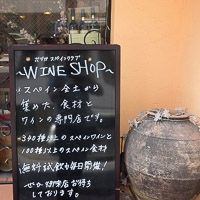
The number of wine stores in Japan seems to have exploded since I was living there. Wandering around some of the streets I used to frequent, I came across store after store selling wine and whisky, most of which looked as though they were geared much more towards serious enthusiasts than to the casual last-minute shopper. I even came across a huge wine store and bar dedicated entirely to Spanish wine. While I did not visit the store, I was astonished to learn that Tokyo now has more than one store dedicated entirely to natural and biodynamic wines, one of which has apparently been operating successfully for six years.
In contemplating the evolution of the Japanese wine scene I find myself nothing short of elated at its progress, at least in Tokyo, and wonder a bit whether Mr Goodwin may have allowed other factors to colour his perspective on the industry.
For another point of view, I checked in with fellow wine writer W Blake Gray, who also lived in Japan for some time, and returns regularly.
‘My time [living] in Japan came before Mr Goodwin’s’, related Gray in an email. ‘When I arrived, most restaurants stored red wine in the refrigerator. Few had wine by the glass at all, and when they did, it was usually the lowest supermarket wine marked up to unreasonable prices. The progress Japan made in wine appreciation during my stay was immense, and in fact I owe my early love of Italian wine to a very knowledgeable Japanese sommelier at a restaurant in my neighbourhood. When I went back to visit him and showed him that I was now writing professional articles about wine, he wept with joy, and we drank a great bottle of Barolo together. Japan still has a way to go to be as cosmopolitan about wine as New York or San Francisco. However, last December I drank a solid bottle of entry-level Tuscan Sangiovese in a karaoke box.’
For those unfamiliar with Japan’s private karaoke rooms, let’s just say they’ve historically been known to have food and drink only slightly better than the miserable standards set by your average topless bar.
Everywhere I went in Tokyo, I saw people consuming wine. Young ladies sat with a glass of white or rosé in a Ginza neighbourhood café. Older businessmen with younger women on their arm cavalierly ordered expensive bordeaux to accompany their delicate kaiseki meals at top restaurants. Tired-looking women in business suits darted into grocery stores and emerged with a bottle and a few groceries on their way to the train.
In other words, were it not for the obvious differences in language, food and landscape, Tokyo was just another city of wine drinkers. Deeper scrutiny, of course reveals the fact that the wine market and culture still has some distance to go, but per-capita wine consumption has skyrocketed at a rate of 62% annual growth in the past few years, a statistic that seems impossible to interpret as anything other than encouraging.
Japan can be an incredibly difficult, and sometimes maddening place to live as a foreigner, as my own experience shows, and I had neither Mr Goodwin’s long tenure in the country, nor his fluency with the language. Clearly he has faced, and likely overcome, challenges of many kinds in making a home and a career in Japan. But I cannot share his pessimism about the country’s wine scene.
Japan may have lost its only resident MW for now, but I predict that vacancy won’t last long at all. Unused space rarely survives a season in Tokyo.