Just back from my first trip in five years to Argentina, the world’s fifth-biggest wine producer, I am convinced that Argentine wine producers are very, very good at many things and very, very bad at one aspect of wine production.
Terroir consciousness
This is all the rage now. Argentine wine producers used to be obsessed by height, boasting prominently on labels about how many metres up the Andean foothills their vineyards were. Nowadays the primary focus seems to be on soil types and soil structure – especially in the high Uco Valley where all the newer plantings have been and which has been pierced by thousands of soil pits, deep graves dug to show how far down the vine roots have reached and what they have encountered on their journey.
The next and current stage is to carve the Uco Valley into official subregions, or IGs (Indicación Geográfica), according to their soil type and geology. As usual, it’s a fraught process, not least because the names of the two most obvious candidates, Altamira and Gualtallary, have been trademarked. They have managed to sort out the boundaries of the particular alluvial fan at 900 to 1,200 m (2,950–3,940 ft; 500 m/1,640 ft is traditionally considered the highest viable elevation for European vineyards) that constitutes what is now officially called IG Paraje Altamira.
But the process was so difficult that they have not managed to do the same for even higher and more extensive Gualtallary, whose reputation for particularly nervy, finely chiselled wines is already so well established that many producers put the name on the front label even though it has no official status. As many as five different IGs within Gualtallary are being discussed, with third-generation winemaker Sebastián Zuccardi being one of the more passionate proponents of this quest for appellations.
He admits that what they’re doing is arguably way ahead of what consumers are asking for, and that ‘it will take more than one generation. Eventually there will probably be just three or four IGs that become known outside Argentina. But in them some producers will make wines that will elevate Argentina’s image overall.’
It is true that Argentina, or at least the Uco Valley, seems to be way ahead of most other non-European wine regions in the intensity of effort put into delineating and labelling terroir with real precision. Even Chile, home of soil scientist Pedro Parra, who has dug so many of those Argentine soil pits, lags behind.
New-wave Malbec
This goes hand in hand with the move uphill in Argentine vine-growing. For many wine drinkers, Argentine Malbec is seen as a big, brash, sweetish, often oaky, bargain variant on stereotypical Napa Cabernet. And that may well be what many consumers want it to be. But the country’s new-wave wine producers have very different ideas.
Their perfect Malbec nowadays is fresh (picked earlier), textured rather than oaky (often made in concrete not oak), and a terroir expression (see above). I must say I was amazed by how Malbec-centric the Argentine wine industry is. Malbec may represent just 22% of the country’s 215,000 ha (531,275 acres) of vineyard, but it seems to constitute the vast majority of bottled wines on the market. Argentine consumers will pay more for Malbec than for anything else, even for Mendel’s 2017 Unus blend of 65% Malbec with Cabernet Sauvignon and Petit Verdot that was the finest wine I tasted on my trip. Despite this, blends, both red and white, seem increasingly popular with Argentine wine producers. Exporters have enjoyed balmy times, thanks to (particularly American) demand for Argentine Malbec, but there are signs that that fad may be over. South American specialist importer Brazos Wine in California is now asking some Argentine suppliers for ‘anything but Malbec’.
Other varieties
One strong candidate could be Cabernet Franc. Just as the Malbec grape seems so much more delicious, varied and sumptuous when ripened in the Andean foothills than in its Cahors homeland (the Argentines claim their plant material is much older and better quality), so does the signature red grape of the Loire.
There is some good Cabernet Sauvignon too but the best Cabernet Francs combine Argentine ripeness with the sort of beautifully haunting fragrance I’m always seeking, too often in vain, in Loire reds.
And Argentine Petit Verdot, even less common admittedly than Argentine Cabernet Franc, reaches heights with a consistency that would be the envy of any Médoc château owner.
Old vines
Another of Argentina’s unusual attributes is its stock of old vines; nearly 30% of the vines are over 40 years old. It is not the only country where ambitious, younger wine producers are seeking out old, sometimes unwanted vines, often of obscure varieties, with which to make their name. The same is true in California, Australia, Chile and South Africa. But Argentina is unusual in the scope of her official records. INTA (Instituto Nacional de Tecnología Agropecuaria) not only lists every single vineyard with varieties and dates of planting, it oversees a nursery of as many as 700 different grape varieties, most of them based on valuable nineteenth-century, pre-phylloxera plant material that could help maintain, even expand, the world’s viticultural biodiversity.
Labelling
When I first went to Argentina in the early 1990s, the wines were pretty bad – too often oxidised syrups – and the labels even worse. But today there are myriad clever, eye-catching designs and witty names.
Tourism
As Nick pointed out last Saturday in Winery restaurants considered, there has been the most extraordinary level of investment in wine tourism in Argentina, with a range of seriously stylish accommodation, often with breath-taking views of the Andes. And it can seem as though every winery has its own restaurant. The country’s largest contiguous vineyard, the nearly 1,000-ha (2,470-acre) Clos de los Siete split between actually five rather than seven different French owners, is home to two fine restaurants. This despite the fact that to reach any of them you have to drive for miles on the bumpiest unpaved roads, and get past the obstructive gatekeeper that seems to guard every Argentine winery.
Bottles
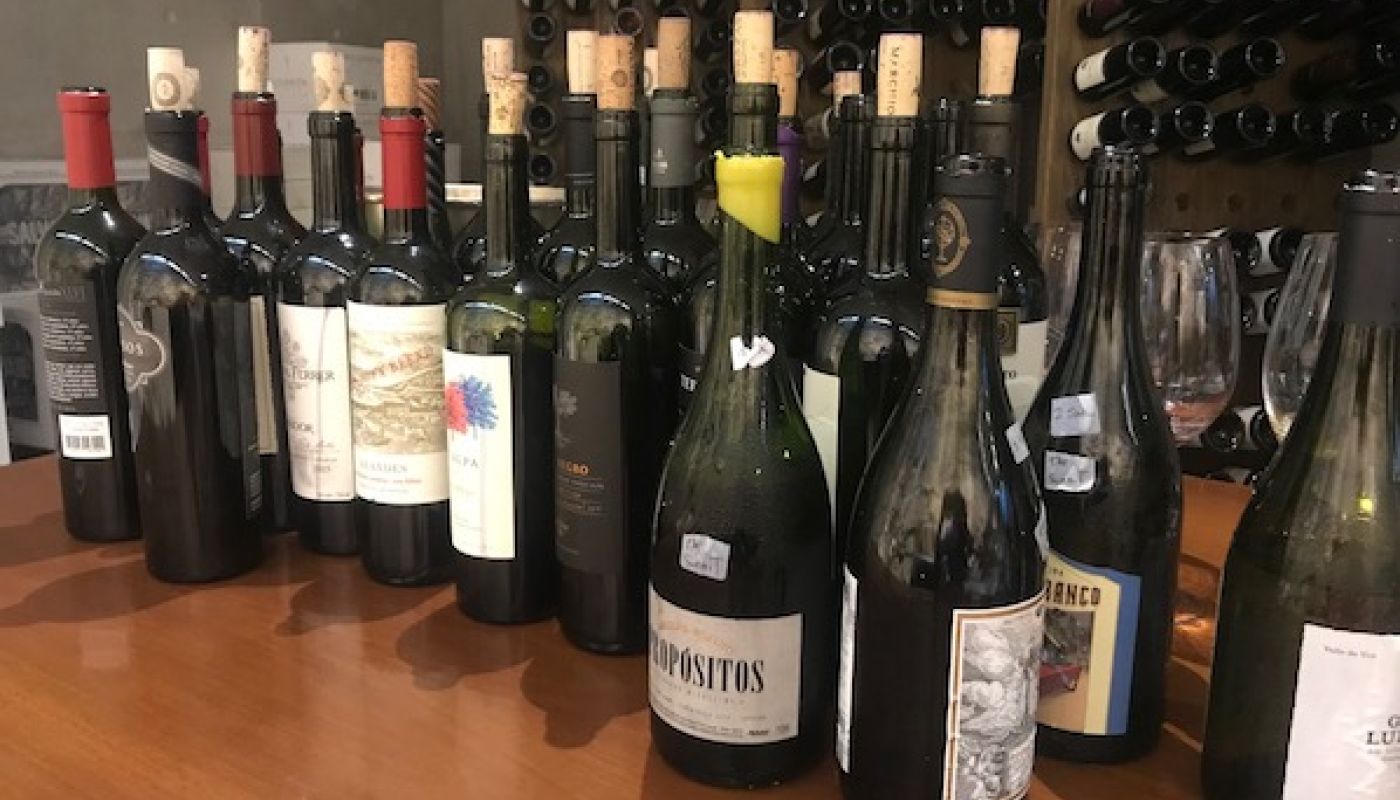
So those are the things that Argentine wine producers are particularly good at. But they don’t seem to have got the memo about how bad thick, heavy bottles are for the environment.
Perhaps it’s because their main export market is the US and perhaps a heavy bottle is seen as an essential part of the package by American importers. (I heard more than once that it is American importers and distributors rather than consumers who are demanding them.) This is all the more regrettable since so many Argentine wine producers actually import fancy bottles from Europe. Labels are so good now that they surely offer sufficient differentiation. It would be great if they could possibly agree to use the standard, lighter bottles that are produced in Argentina. But perhaps that’s a vain hope when expressed by someone who, perforce, took a long flight in order to make these observations.
Recommended new-wave Argentine Malbecs
With their subregions, whether official or not, and alcoholic strengths. See Julia on subregions in Mendoza – increasingly diverse and refined.
Cadus, Finca Viña Vida 2014 Los Chacayes 14.5%
Catena Zapata, Adrianna Vineyard, Fortuna Terrae 2016 Gualtallary 14.3%
Cheval des Andes 2016 Las Compuertas/Paraje Altamira 14%
Colomé, Estate 2018 Upper Calchaquí Valley 14.5%
Cuvelier Los Andes 2017 Vista Flores 14.5%
DiamAndes 2015 Vista Flores 14.5% (with 25% Cabernet Sauvignon)
Dominio del Plata, Nosotros Sofita 2015 Los Chacayes 14.5% (with 20% Petit Verdot)
Estancia Los Cardones 2018 Tolombon 14% (with 10% other varieties)
Fabre Montmayou Gran Reserva 2017 Vistalba 14.5%
LUI, Gran Reserva 2017 Gualtallary 14.2%
Manos Negras, Stone Soil 2018 Paraje Altamira 13.5%
Mendel, Finca Remota 2017 Paraje Altamira 14.5%
Michelini i Muffato, La Cautiva 2017 Gualtallary 13.8%
Nieto Senetiner, Don Nicanor Single Vineyard Villa Blanca 2015 Vistalba 15%
PerSe, Jubileus 2017 Gualtallary 14%
Piedra Negra, Gran Malbec 2014 Las Chacayes 14.5%
Trapiche, Terroir Series Finca Coletto 2015 El Peral 14.1%
Tres 14, Imperfecto 2016 Gualtallary 14% (with 3% Cabernet Franc)
Trivento, Eolo 2016 Lujan de Cuyo 14.5%
Zuccardi, Concreto 2018 Paraje Altamira 14%
You can find my tasting notes in New-wave Argentine Malbecs and international stockists on Wine-Searcher.com.