
28 January 2020 Eastern European specialist Caroline Gilby MW explores a little-known source of Balkan wine.
The more I explore the countries of the former Yugoslavia, the more my fascination deepens for this corner of Europe. The country normally known as Bosnia-Herzegovina, or BiH for short (it consists of multiple entities: The Federation of Bosnia and Herzegovina along with Republika Srpska and the jointly administered district of Brčko), seems to be a microcosm of the challenges of the Yugoslav period and beyond – at least from an outsider’s perspective. It’s also a fascinating, beautiful, dramatic, welcoming, and sometimes shocking, country to visit, with its wines helping to tell that story.
Bosnia-Herzegovina is very much a country at the crossroads. Ottoman, Austro-Hungarian and Yugoslav influences all meet here and it's really quite spine-chilling to stand on an ordinary street corner in Sarajevo and realise it's the place where Franz Ferdinand was assassinated, the defining act that triggered the First World War. Close by, you can wander the Ottoman zone and eat burek or sweet cinnamon-rich baklava, or take a cable-car up the mountainside for a view over the city (and an insight into how easy it was for opposition forces to besiege it).
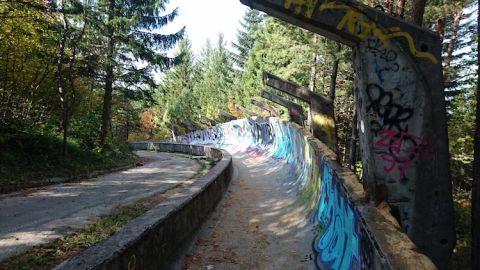
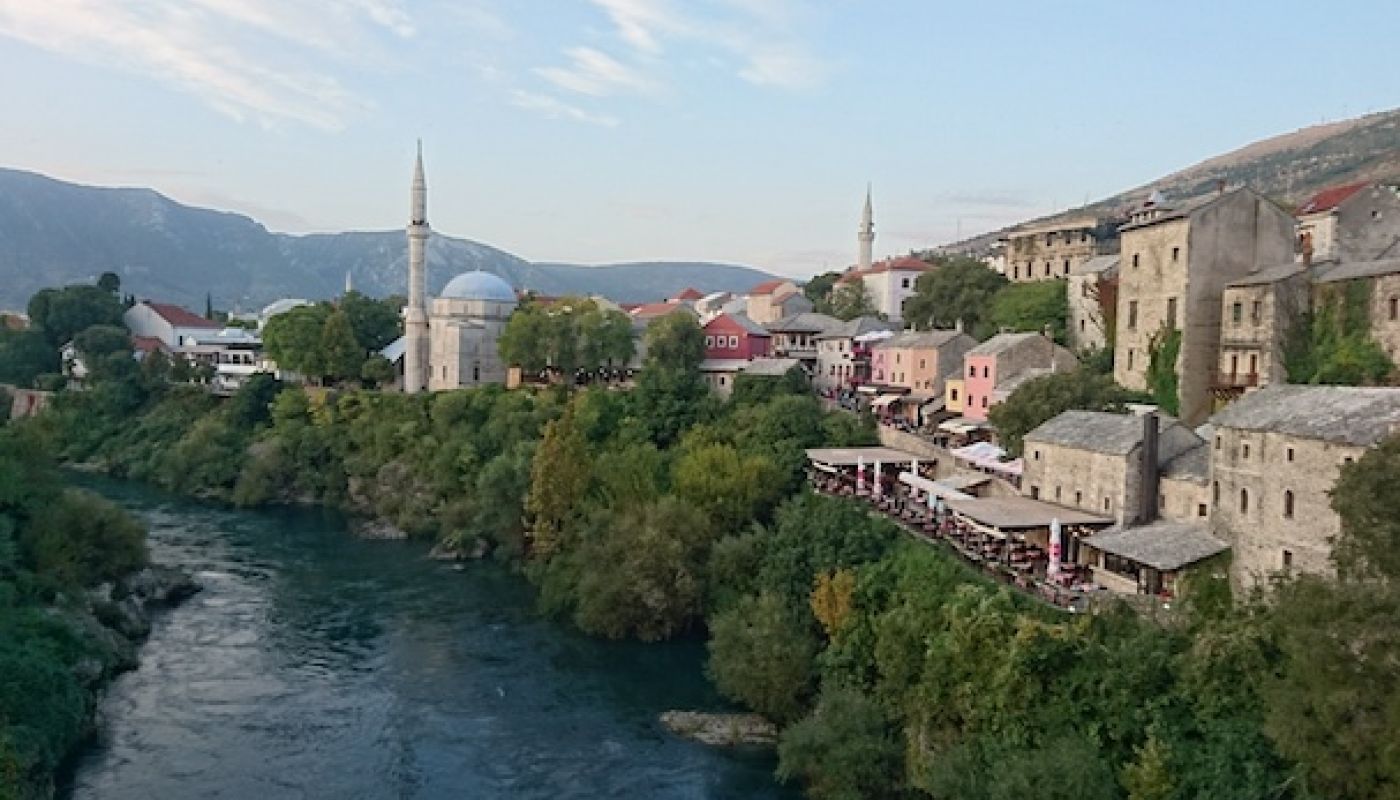
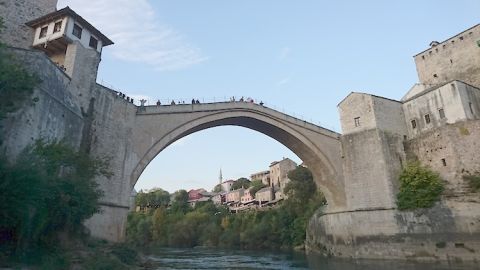
Nearby the crumbling graffitied remnants of the bobsleigh run (above) are a reminder of the 1984 Winter Olympics, still regarded as a glorious high point for the city. Bullet holes and shrapnel scars still mark the walls of many buildings – a shocking reminder of a brutal war in Europe which still looms over many lives here. A visit to the dramatic city of Mostar (above right) brought this into even sharper focus. My guide here was my taxi driver, who had grown up in Mostar and left suddenly aged seven thanks to a warning from a Muslim family friend. The family property remains in ruins, and the family had to start again having lost everything.
It’s a fascinating place to see – the rebuilt old bridge (below) is stunning, and the twisting streets are beautiful, but war-torn buildings still loom close by. Wine is deeply shaped by the culture of the people who make it, and trying to understand a little of the background helps to put the stories behind their wine into perspective.
Recovering from those wars of the early 1990s put the wine industry on the back foot, but as in so many of its Balkan neighbours, wine here is in a period of rapid evolution and rediscovery. There are few reliable statistics and no vineyard register, but the Ministry of Foreign Trade and Economic Relations (there isn’t even a Ministry of Agriculture) claimed an area of 2,657 ha (6,566 acres) of wine grapes in 2016 in BiH and a further 600 ha in Republika Srpska, producing 177,400 hl (4,686,400 gallons) of wine in total. It’s estimated that there are around 50 registered wine producers, though probably only 30 or so are in realistic commercial production. There may be as many as 11,000 households growing wine grapes, mostly for homemade wine, but fewer than 200 have more than 2 ha. Most of the wine industry is located in the Herzegovina region and at least 60 to 65% of the wine grapes grown in the country are the indigenous white Žilavka and red Blatina, with supporting roles for inky dark Trnjak, Vranac, Plavka, Smederevka and inevitably international varieties, too.
There’s a major climatic difference between Sarajevo perched among the mountains at over 500 m (1,540 ft) and the main wine region of Herzegovina a couple of hours to the south. The climate in Herzegovina is Mediterranean and summer temperatures can hit 40 °C (104 °F). The dry stony soils and karst landscape means drought is an ever-present threat.
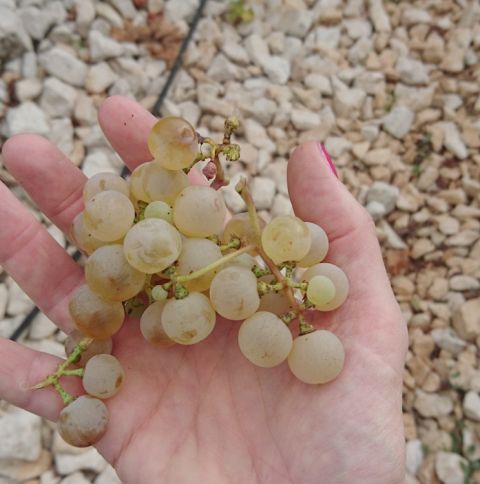
The region’s treasure is the white grape Žilavka. Its name means 'strong roots' and because it roots deeply it can cope with high temperatures and drought. [Though another view is that the name refers to the veins in the berry – JH] It is quite a remarkable sight at Vinarija Čitluk’s Kameno (stone) vineyard, where it seems to grow directly in the crushed white limestone rock. Not only does it cope with the sort of tough growing conditions in the region, it’s also showing signs of superb quality potential (though not yet always fully realised). This is not so surprising when you look at the genetics, which show that it’s a sibling of Furmint via their shared parent Alba Imputotato (its other parent remains unknown). [Our Wine Grapes co-author José Vouillamoz is sceptical about these parent/sibling relationships because they based on only 14 microsatellites; further testing is needed – JH] It’s also versatile, making fresh, light wines with gentle floral aromas, peach notes and good body and texture, but it can also take skin contact and make fantastically complex orange wines. There are exciting results when it is fermented in oak or acacia and, in its final claim to greatness, it can age remarkably well (demonstrated by recent tastings of 2004 from Podrumi Andrija and 2008 from Vino-Matić).
I asked the local winemakers over lunch near Mostar about their favourite grape and every time the answer was unhesitatingly Žilavka, several claiming it has the 'highest potential in the Balkans'. I suspect they are missing the potential in their red grape Blatina though. This makes lighter, red-berry-fruited reds with gentle tannins – and was described by one producer as 'a sensitive and polite type of grape with big berries and long bunches'. Everyone says it’s tricky to grow as it has only female flowers and has to have a cross-pollinator – which means planting another variety alongside it. Almost every Blatina, pictured below in the Neretva gorge, is blended as a result.
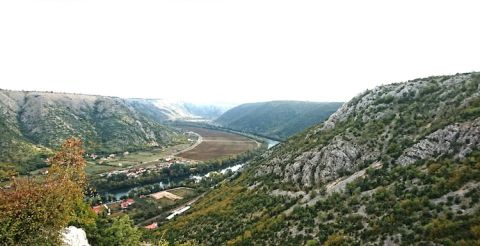
This seems to be for two reasons: to use fruit from the pollinator (typically Trnjak or Alicante Bouschet under its local name Kambuša, though sometimes Vranac), and also for more colour, acidity and tannin structure, as there’s still a tendency locally to link deep colour and powerful structure with quality in red wines. For western markets, Blatina potentially provides exactly the sort of lighter, more elegant reds that many western drinkers currently want, especially anywhere Pinot Noir rules, such as the UK, where there’s increasing interest in grapes in this style such as Blaufränkisch, Kadarka and so on. Personally, I’d love to see little bit more attention paid to pure Blatina rather than dismissing it as light and fruity. Some producers argue that Trnjak has much greater potential as it has more body, colour and structure than Blatina, and some good, if not yet great, examples are now appearing. Other local reds that do well, especially near the Croatian border, include Vranac and even Plavac Mali.
There’s always a dilemma in a young wine industry (and the industry in BiH is young in its current form, even if built on roots going back to Illyrian times over 2,200 years ago) between local and international grapes. New generation drinkers don't always want the ethnic grapes they associate with their grandparents’ homemade wine but prefer the glamour of international varieties and imported wines. BiH imports five times more wine than it exports and it’s clear looking at restaurants and wine lists in Sarajevo and Mostar that Slovenia’s top names are held in high regard. For local producers there’s an education job to do to persuade new drinkers to take wine seriously and to build a better reputation for local products. And that’s part of the idea behind the Blaž wine festival in the summer, which brings together nearly 30 wineries in a joint marketing group, and the buzzing Sarajevo Wine Weekend in October, a fantastic opportunity for everyone who is anyone in this market to explore wines from all over BiH as well as its neighbours.
BiH feels like a country that is both oppressed and full of energy for the future. It has a great strength in its people – who make visitors feel incredibly welcome and want to share the best of their country – and that includes their fascinating and often delicious wines.
I've selected some wines to try below, although all too few are exported. (For this reason we are simply publishing Caroline's tasting notes as is rather than adding them to our tasting notes database – JR)
Whites
Brkić, Mjesečar 2017 16.5+
Means ‘moonwalker’. 100% Žilavka. Whole berries, wild-yeast fermentation with skins and ageing in Bosnian oak for 9 to 10 months.
Bright amber orange in appearance with a wild ‘natural’ aroma. Palate is complex with notes of orange peel, meadow herbs, a hint of caramel but also has dried apricot fruit and freshness. (CG)
12.5%
Carska Vina (Podrum Grge Vasilja), Cuvée Sophia 2018 16.5
A 50:50 Chardonnay/Žilavka blend with rich golden colour and a clean creamy nose of ripe peach and spice. There’s good intensity with hints of lemon peel, mineral texture and good length. (CG)
12.8%
Vinarija Čitluk, Teuta Žilavka 2017 16.5+
Selected, later harvested fruit from 37-year-old vines from the stony Kameno vineyard. 10 to 15 hours’ cold maceration.
Fine aromas with hints of honey, apple blossom and poached pear. Good freshness and focus on the palate with lovely balance and length. (CG)
13.5%
Hercegovina Produkt, Žilavka Exclusive 2018 16.5+
Late-harvested selected fruit.
Honey and exotic fruit on the nose, almost Traminer-like. Full-bodied and textured in the mouth with good length supported by surprisingly fresh acidity. (CG)
13%
Nuić, Žilavka 2018 16
Whole-bunch pressed with natural-yeast fermentation in stainless steel.
A lovely example of the fresh style of Žilavka, lively, uncomplicated but appealing with subtle hints of lemon zest, yellow plum and pear notes and fine acids. (CG)
12.5%
Škegro, Krš Orange 2017 17.5
100% Žilavka. 25 days with skins in open 500-litre barrels, ambient yeast, no added sulphites.
Vivid orange-toned wine with spicy orange peel and peach on the nose. Palate is a very attractive, well-balanced ‘orange style’; not tannic but with saline and wet-stone texture, good freshness, definite apricot fruit and a lingering finish. (CG)
12.5%
Vilinka, Žilavka 2018 16.5
From 10-year-old vines on stony soil at 400 m above sea level. 12 to 15 hours’ skin contact, free-run juice only.
Pale, clean and bright with a super-clean precise palate, gentle fruit and freshness. A really drinkable style. (CG)
12.7%
Vukoje, Hercegovačka Žilavka 2018 17
Single-vineyard selection from this family winery. No oak.
Very clean and precise with gentle peach notes, hints of tangerine zest and almost saline texture. Good concentration and harmony. (CG)
13%
Vukoje, Carsko Vino (Imperial wine) 2015 17.5+
From the restored, historic Imperial Vineyard which owner Radovan Vukoje believes is the best spot for Žilavka. 93% Žilavka, 7% Bena. Fermented and aged in acacia for one year.
Gorgeous nose with spiced pear, white peach, tangerine peel, and a hint of acacia honey. It’s rich and complex to taste, rounded and silky with gentle acids and a lingering finish. (CG)
Vinarija Vera 260 Žilavka 2018 16
100% Žilavka. Named 260 for the days of sunshine here.
Made in a fresh fruity style with herbs, fresh mint, peach fruit notes and a mineral finish. (CG)
Rosé
Podrum Begić, Plavac Rosé 2018 16
Pretty pale pink with an inviting nose, fresh raspberry fruit and an elegant structure. (CG)
13.3%
Reds
Carska, Vina Impero Blatina Premium Edition 2015 17
Free-run juice only with 4% Kambuša.
Youthful pink-toned red. Aromas of strawberry, red cherry and spice. Plenty of intensity and serious structure, with good length and a fresh backbone of acidity. (CG)
13%
Vukoje, Vranac 2015 17+
100% Vranac. 20% barrique aged, rest in 30-hl oak for 12 months
Inky deep colour with aromas of cherry and violet, clean bright fruit, ripe but not jammy, very good expression of the variety with surprisingly elegant tannins. (CG)
14%
Vino-Matić, Trnjak Con Animo 2016 16
100% Trnjak from a sixth-generation family winery, organic.
Black-ruby wine with aroma of coffee and plums. To taste there’s fresh fruit, damson and plum with good acidity and slightly rustic character to the tannins. (CG)
14%
Škegro, Trnjak 2016 16+
Vinified in steel only from family vineyards at 350 m asl on stony red soil.
Damson and with hint of liquorice and clove spice on the nose. Juicy damson fruit notes and a bit of grip. (CG)
Škegro, Carsus Blatina 2016 17.5
100% Blatina from old vines 20 km from the sea. Hand-punched for 25 days in open barrels, then aged one year in 500-litre French oak.
Beautifully elegant wine with aromas of spiced bilberry, lovely berry fruit purity and supple fine tannins, still young but really promising. (CG)
13.5%
Vilinka, X line Red Cuvée 2016 17.5
70% Blatina, 30% Cabernet Sauvignon aged in French oak for 12 months.
Inviting blueberry and cassis aromas with classy oak on the nose. There’s lovely fruit intensity, freshness and firm tannins with some keeping potential, too. (CG)
13.5%
Nuić, Trnjak 2015 16.5
85% Trnjak, 15% Merlot, 18 months in 50% new Bosnian oak.
Lots of sweet oak lactones with spicy black fruit. Good intensity of bramble fruit with dark chocolate and sloe, supported by tannin backbone. Lots of character rather than refinement. (CG)
14.5%
Vino Milas, Blatina 2015 17
85% Blatina, 15% Trnjak and Kambuša, 20 days’ hand punchdowns at 25 °C, 14 months in new Seguin-Moreau oak.
Starting to show some complexity on the nose with well-handled oak. Quite burgundian in style with an elegant palate and good length. (CG)
14%
Podrumi Tolj, Blatina Ivanis 2017 16.5
100% Blatina, just 300 g per vine and no oak.
Rich dried-cherry character here, almost Amarone-like. Very concentrated and structured but youthful and fresh, too. (CG)
13.6%
Podrumi Tolj, Trnjak 2015 16-
Natural yeast, 8 to 10 months in oak from Herzegovina.
Damson spice and dark chocolate on the nose. Ripe and plummy with plenty of grip and slightly rustic structure. (CG)
13.8%
Hercegovina Produkt, Blatina Zlatna Dolina 2016 16.5
‘Golden Valley’ 100% Blatina from selected vineyards, vinified in steel.
Nice freshness and primary fruit with notes of blueberry and roast coffee beans. An attractively drinkable example of Blatina with no oak. (CG)
Keža, Merlot Premium 2017 17
8 to 15 months French oak.
Vivid colour, attractive crushed-berry nose, following through on the palate. Fresh and supple. Well-made Merlot. (CG)
14.8%
Vinarija Čitluk, Teuta Trnjak 2017 16.5
Trnjak, once a forgotten grape, was rescued by Vinarija Čitluk. This example called Teuta was aged in large Slavonian oak.
Deep ruby, with warm plums, dried fruit and spice on the nose. Gentle black fruit, coffee and bramble skins, easy structure with a rustic edge to tannins. (CG)
13.5%













