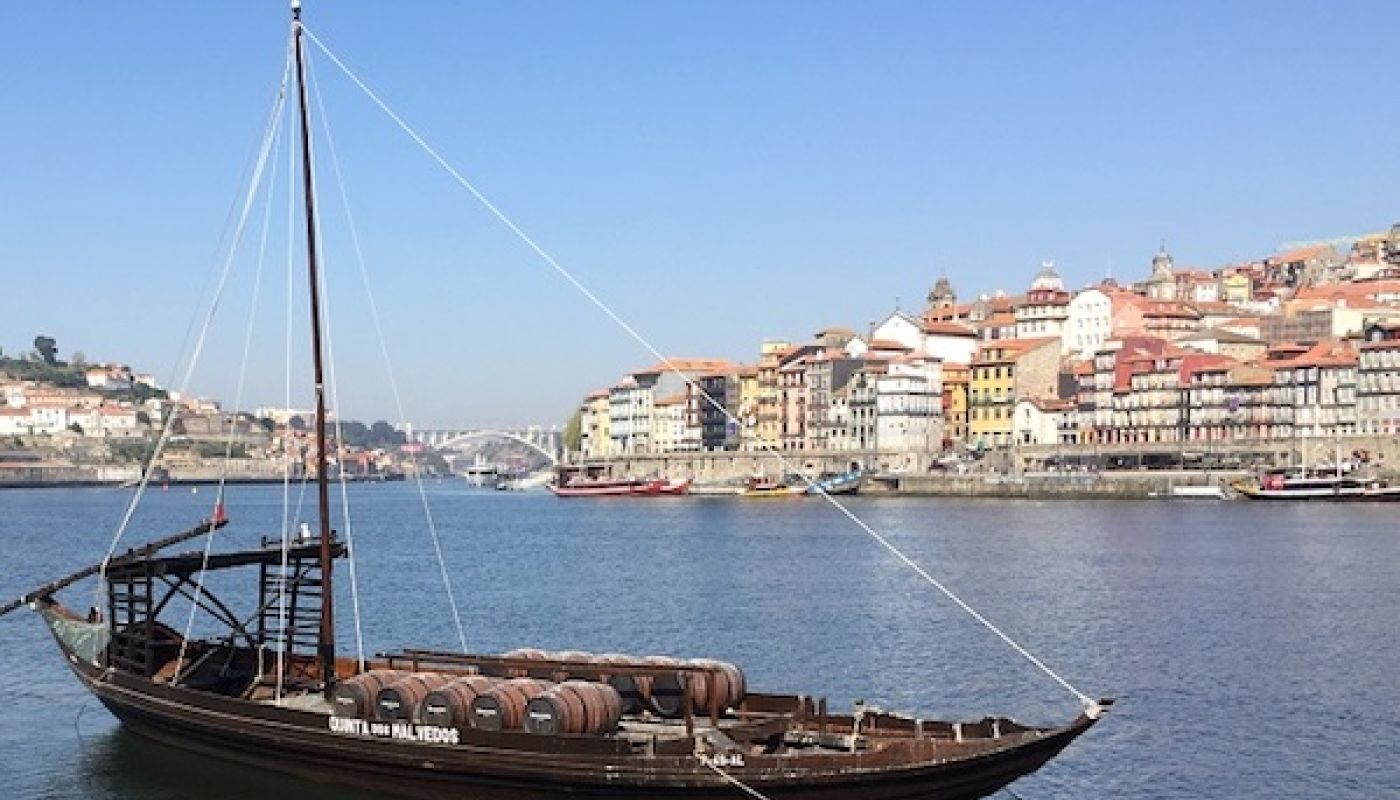
Porto, Oporto in English, is a busy, bustling city, with a major port and plenty of business being done there. In recent years, perhaps accelerated by being European City of Culture in 2001, it has increasingly become a tourist destination too, as Jancis argued in Port as tourist magnet in 2016.
Visitors throng to its attractive old town, whose riot of colours shine in the northern Portuguese sunshine, its iconic, Eiffel-designed Dom Luís bridge, its dramatic cliffs lining the Douro and its sandy, Atlantic beaches just outside the town.

It has developed its waterfronts, on both the Porto side and on the south bank of the Douro in Porto’s twin city of Vila Nova de Gaia. Thus, visitors can find a vibrant destination infused with history (it was invaded by Napoleon’s armies not once, but twice, for example), beauty and plenty of things to see and do.
Wine, and particularly port, is of course one of its major attractions. Not only is Porto the jumping-off point for those willing to travel the 120 km (75 miles) upriver to the stunning vineyards of the Douro, but Gaia is a wine tourist’s hotspot right in the heart of the city, with its array of port lodges cascading down the cooler, north-facing bank, and their various brand logos illuminating the waterfront at night.

The port houses increasingly recognise this. The Fladgate Partnership built the luxury, Relais et Châteaux-listed, Yeatman Hotel in 2010 to attract well-heeled visitors. The Symingtons renovated Graham’s 1890 lodge and opened the excellent Vinum restaurant in 2013, whose views back across Gaia take advantage of Graham’s location high on a bend in the Douro.
Moreover, visitor centres and tasting rooms abound along the Gaia river bank, including almost all the names you can think of, the likes of Ramos Pinto, Quinta do Noval, Sandeman, Ferreira and Fonseca.

One in particular caught my attention during a visit last year and I had the chance to revisit it early in 2019. Cálem’s lodge is the first one a tourist walking down onto the waterfront from the Dom Luís bridge would come across, so it is well located to take advantage of passing tourists.

Immediately next door is the lodge of its sister brand Kopke, who claim, as you can just about see from the legend above the ground floor, to be the oldest port house. One look at the compact size of Kopke’s property explains why their owner, Sogevinus, opted to have just a shop and tasting room at Kopke and to build their visitor centre at Cálem. Their other properties are the equally modestly-sized Burmester adjacent to Dom Luís, and Barros up the hill, which serves as a logistics centre and bottling plant, so is not open to visitors.
Sogevinus have used the space at Cálem to create what I think is a superb introduction to port wine for any curious tourist looking to make some sense of this complex and often confusing category. The tour they have created blends different elements to deliver an explanation of port wine in a simple, clear, visual and sensory manner that is one of the best examples I can remember.
The visit begins with a self-guided explanation of where port comes from and how it is made, laying out the different styles of port wines, including what to expect from each style.

Each dimension is cleverly brought to life with audio-visual aids, such as the 3D map of the region, onto which rainfall levels, wind directions, heat and other aspects are projected alongside a commentary.

The production process is laid out simply and clearly:

The concept of ‘fractured schist’ is hard to comprehend if you’re not familiar with that rock type. Here it’s directly and intelligently recreated:

But the area I was most impressed by was the section which explains the resulting wines. It starts by laying out the categories that exist in a straightforward and logical manner (MW students take note: Vintage port is a sub-category of ruby not a separate one):

This then goes on to show the colours consumers should expect ...

… and the aromas, with this aroma station giving drinkers a sense of which flavours and aromas might be found in the wines:

It is particularly ambitious to try to bridge the gap between teaching the theory of a wine and teaching the physical realities of taste and smell – of course backed up by a tasting to conclude the tour.
I was also impressed by the guided section, which not only made further clever use of visual aids such as this projection onto one of Cálem’s vats, but also had a guide whose explanations were concise, accurate and at the right level of depth (or simplicity, however one looks at it) to cater for most tourist audiences who will be relatively new to the port category.

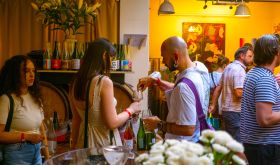
My MW colleague and I disagreed with only one thing she said, and that was not something factual, but rather a preference for serving tawny ports at room temperature, whereas we and others favour light chilling. We were both impressed by the clarity of presentation, which our fellow tourists seemed to appreciate and understand.
If I were to make one criticism it is that the visit carries an understandable bias to Cálem. The eagle-eyed among readers will have noticed that the above family tree doesn’t mention crusted port – because Cálem don’t make one.
Likewise, as our guide covered the different port styles, among aged white ports we were told only about the-10 year-old category that Cálem make, even though sister Kopke is famed for exceptional 20, 30 and 40 year olds, as well as single-vintage white colheitas.
But this is a small niggle with what is a very well executed attempt to bring the port category to life. It uses Cálem’s space superbly to blend tradition and modernity in a way that will reflect well on port as a whole. Moreover, it takes advantage of Cálem’s location to deliver this to 250,000 visitors a year, which is the kind of scale that can really make a difference to port around the world.
Putting my ex-marketing director’s hat on, the importance of straightforward and engaging explanations of complex products cannot be underestimated. Nor should it be underestimated how difficult that can be to do well.
Kudos to Cálem for achieving that.