This has been a very warm, dry year in the Douro. From December 2016 onwards, every month had substantially below average rainfall apart from a 30-mm (1.2-in) downpour and some localised hail on the afternoon of 6 July. This rain swelled the year’s rainfall figures, but was of minimal benefit as most of the water simply ran off the vineyards in torrents, causing some damage to terraces. Lots of our valuable soil ended up in the Douro river, which flowed golden-brown for a few days.
Quinta do Bomfim at Pinhão recorded just 302 mm (12 in) of rain in the 11 months from 1 November 2016, exactly 50% below average. Considering that grape yields in the Douro’s mountain vineyards are 4,300 kg/hectare (compared with 10,200 kg/ha in Italy and 13,300 kg/ha in Chile), the drought conditions we experienced this year were always going to be challenging. It is difficult to farm these steep hillsides in any weather. Even in years with good weather conditions, production in the Douro is low. A year of drought and heat like 2017 really reinforces quite how challenging our growing conditions are.
A dry and relatively warm winter was followed by the three crucial spring months – March, April and May – that were cumulatively 2.6 ˚C (4.7 ºF) warmer than average and equally dry. The only surprising interlude was a cold spell during the last 10 days of March that on 23 March brought a rare snowfall and localised frost. April was the driest since records began in 1931 and delivered an absurdly low 2.6 mm of rain.
Budbreak began between 8 and 10 March, a week earlier than average and the vine development advanced at an even faster pace, with flowering taking place between 4 and 5 May, two weeks earlier than normal. It was apparent from June that our vines were adapting to the dry conditions, with limited shoot and leaf growth. They seem to have an extraordinary ability to know when it is better not to be exuberant.
June was the hottest since 1980, with a heatwave 7–24 June and temperatures reaching 43 ˚C (109 ºF) in the Douro Superior. Pintor (veraison) occurred at Bomfim on 22 June, two weeks ahead of average. July was equally hot and dry, but thankfully August was more moderate with relatively cool nights, bringing a welcome respite in the final phase of ripening.
By early August it was clear that this was going to be an early vintage and that the prolonged drought would not be relieved by any late summer rain. The forecast for the weekend of 26/27 August predicted rain, but only a modest 4 mm fell at Quinta do Vesúvio and an even more modest 2 mm at Bomfim. Maturation was so advanced in most vineyards by this stage that the rain was of little benefit.
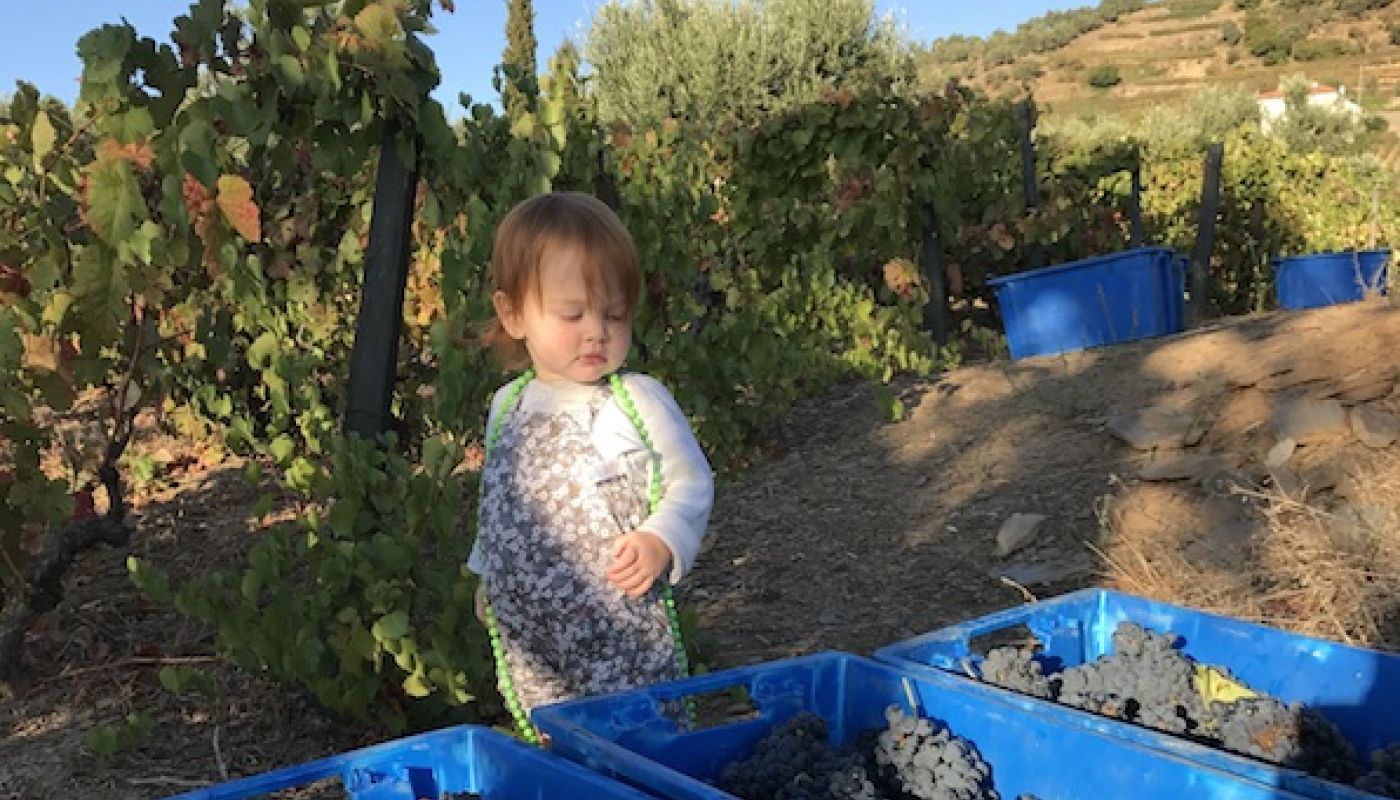
In order to prepare for the harvest, Charles Symington had to call his winemaking team back from their summer holidays – a measure of how advanced this year’s cycle has been. Picking for our white wines started on 23 August and for our reds five days later, a full 10 days earlier than any previous date recorded. The vines were showing signs of stress from dehydration and graduations inevitably were high.
A year like this brings the diversity of the Douro into sharp focus; the south- and west-facing vineyards suffered from the long hours of afternoon sun, while those above 300 metres (985 ft) had an altitude advantage with cooler temperatures. There was a contrast between the younger vines that struggled with less-developed root systems and the older vines that hardly seemed to notice the drought. The former were shedding their lower leaves by mid August, a sign of vines going into survival mode. Their older cousins soldiered on with fine dark green leaves but few berries on each vine. Tinta Barroca is a variety that does not like drought and yields were very low at under 500 grams (1.1 lbs) per vine on some plots, but Tinta Roriz performed remarkably well, as did the Douro’s great classic Touriga Nacional. Touriga Franca, always a late ripener, was exceptionally good and thrived this year.
Expectations were not high, but confidence grew by the day as both the Douro wines and ports showed surprisingly good colour and aromas. The weather stayed perfectly serene throughout with clear skies and, crucially, with cool nights during the last three weeks of September. Such harvesting weather is of huge value to the ripe and fragile fruit.
The Douro is one of the world’s lowest-yielding wine regions, and this year’s drought reduced production even further. Some of our vineyards produced 35% less than usual and the average yield is likely to be less than 940 grams per vine.
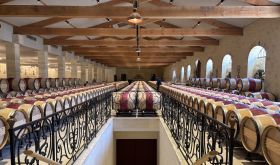
While visitors enjoy the traditional aspects of the Douro, in reality this was a year for using the best of modern technology in some areas. With raisining being the inevitable consequence of such a year, our Bucher Vaslin Oscillys destemmer machines, installed at five of our estate wineries, performed superbly. These destemmers operate without beater shafts or centrifugal force and use a swinging motion to separate grapes from the stems and gently reject damaged berries without damaging the grapes that pass through for fermentation.
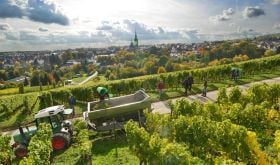
As elsewhere (see this report on Burgundy 2017) there was a serious labour shortage in the Douro this year. This was partly due to the very early harvest but also because of the tourism boom in Portugal that has drawn people away from agricultural work. It is proving to be increasingly difficult to find pickers and this has become a serious problem as the grapes need to be harvested when they are ready. The Douro is waking up to reality; no other major European wine region is entirely picked by hand.
We finished harvesting our vineyards on 26 September, the start date of many previous vintages. This has been a remarkable year but it is unlikely to be a one-off; there are clear indications that our future will increasingly be defined by climate change, with higher temperatures and less rain. The Douro will need to adapt if it is to continue to make great wines and ports from this, the largest area of mountain vineyards on earth.
Now that the dust has literally settled (the first rain for many months has just fallen) on our earliest-ever harvest, we are pleased to see that some very good Douro wines have been made, particularly the red wines with gorgeous colour and concentration, and the ports are also promising with purple-black colours and intense flavours.