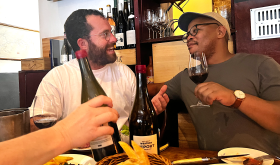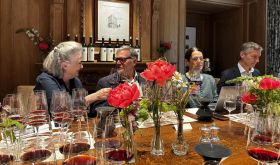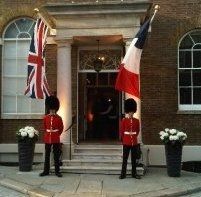
What an interesting week it has been. On Thursday evening I was lucky enough to be one of the few non-Burgundian, and even fewer female, guests at a dinner in London to celebrate Aubert de Villaine's being voted Decanter Man of the Year. Arguably to Decanter magazine's shame, de Villaine is the first Burgundian to have been awarded this honour, but he is not just any Burgundian. He runs the world-famous Domaine de la Romanée-Conti in a manner as modest, almost ascetic, as the prices of his wines are heart-stopping. As our host, he provided for us 40 or so guests at UK importers Corney & Barrow (the entrance to their offices that evening shown above) DRC Montrachet 2003, La Tâche 1991 and the (almost) priceless Romanée-Conti itself, from the superlative 1971 vintage. Were anyone by any chance vulgar enough to seek market prices for these wines, they would find that the last wine runs to a five-figure sum per bottle in pounds.
This is the sort of treat of an evening – great wine, delicious food and amusing, relaxed, well-informed company – that outsiders probably think is more commonplace for wine writers than it really is. I had spent the afternoon much more typically, working my way round the tasting tables at UK supermarket Sainsbury's presentation to the media of summer wines, dutifully tasting through their new range of 'House' wines under £4 a bottle to see whether any were worth drinking. (Only the Sainsbury's House Chianti at £3.86 in my view.)
The following evening I was atoning for my sin of conspicuous DRC consumption by tutoring a tasting of some medium-priced wines for our 27-year-old daughter and 18 of her friends. (With careful pouring, a single bottle can provide 20 decent tasting samples.) She wanted to raise funds for Breakthrough Breast Cancer in memory of the glamorous mother of one of her friends and a wine tasting seemed as good a way as any to winkle £750 out of young Londoners. Aware that some studies posit increased risks of various cancers with alcohol consumption, I did provide spittoons. No one but me actually spat, but the group were fastidious tasters who sniffily poured away the remains of the Marlborough Sauvignon Blanc that they found unappetisingly sweet and the young red bordeaux they (rightly) decided would be better with food.
Their favourite wines, incidentally, were the haughty but magnificently dry, dense Trimbach Riesling 2008 Alsace (£9.95 The Wine Society and, soon, £9.99 Majestic) and Le Serre Nuove dell'Ornellaia 2006 Bolgheri red Supertuscan that is currently available in Europe and the US (but not the UK) for around £20 a bottle. They objected to the carbon dioxide purposely left in the young dry Riesling from the Rheinhessen and were (to me) strangely comforted by the relative innocuousness of the cricketers' Botham Merrill Willis 2007 Australian Chardonnay sold (£14.99 Christopher Piper Wines) in aid of Ian Botham's fund for leukemia research.
Because of its alcohol content and elitist connotations, wine has in its time been cast by some as a social undesirable, but nowadays it is a thoroughly democratic drink, part of the fabric of life in so much of the world, including parts that were terra incognita for the fermented juice of the grape only a decade or two ago. Not only that, but I increasingly see this burgeoning international love of wine being used as a force for good.
Only a week before the DRC dinner I had been in Singapore at my eighth fundraising wine dinner for Room to Read, chosen as the FT's pet charity this year for its jaw-dropping efficiency in bringing education to the developing world. Founder John Wood had just been on a Himalayan trek with his parents and other long-term supporters to open Room to Read's 10,000th library in Nepal, the country where it all began just 10 years ago. This was the first such wine dinner in Singapore and Wood cunningly made much of the stupendous amounts that had previously been raised at three similar dinners in Hong Kong. The result was that the 400 guests donated well over two million Singapore dollars (nearly £1 million, or $1.5 million) at the dinner alone.
This feat was mainly due to Wood's Billy Graham-like evangelistic gift, but some credit was undoubtedly due to the wines, all supplied by their producers in South Africa and shipped (with nail-biting timing) across the Indian Ocean by the generic body Wines of South Africa. Because South Africa is the only serious wine producer among the nine Asian and southern African countries in which Room to Read builds schools and libraries and funds girls' scholarships, it was also the obvious choice as wine supplier for our Room to Read dinner at Café Anglais in London last November. I like to think that the quality of the wine, some of the finest South Africa produces, played some part in raising nearly £1 million that night too.
In Singapore my favourite wine was Glen Carlou's exemplary, and quite burgundian, Quartz Stone Chardonnay 2008 Paarl (£14.50 Noel Young). I sat next to the South African High Commissioner, who surely could never as a boy have imagined personally witnessing his country's wines' being feted by some of Asia's sharpest brains. Certainly in South Africa, wine exports have been a major vehicle for both much-needed social change on the Cape farms that produce them and for providing global consumers with a tangible link to the new South Africa. (Berry Bros have kindly agreed to donate the wines for the tenth anniversary Room to Read dinner in London planned for late November this year.)
We broke our journey home with our first, but I hope not last, experience of the beautiful Maldives, the coral reefs and warm turquoise waters providing surreal interludes between periods spent agape at the political shenanigans back home on Sky News – or perhaps it was the other way round. John Wood had recommended the Four Seasons Landaa Giraavaru, which we enjoyed so much we were happy to accept the
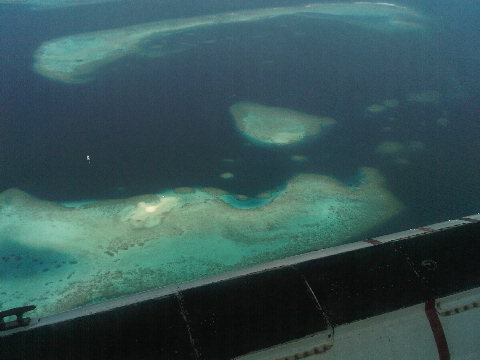
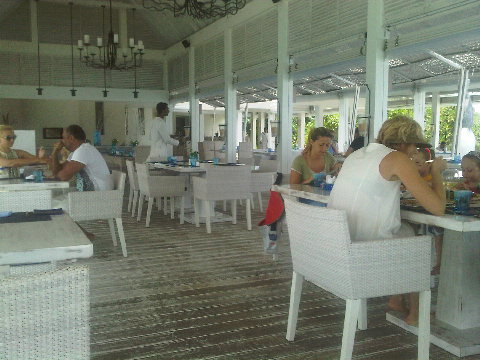 general manager's invitation to spend an hour talking to the resort's 20-odd waiting staff about wine service. On the left is their casual beach restaurant Blu. Below is a typical view of local atolls from one of the hundreds of seaplanes, the largest fleet in the world, that are essential to life in the Maldives.
 They were virtually all young Maldivian men, most of them Muslims devout enough never to have tried a drop of wine. Yet, thanks to regular influxes of well-heeled Russians, they probably serve more bottles of first growths than most London restaurants. They must have been trained particularly well for we were most impressed by the flawless wine service we experienced, but I was even more impressed by the standard of questions they asked at our training session.
The first concerned the particularly arcane changes currently underway in European wine law whereby wine regions could choose to substitute PDO (protected designation of origin) for their traditional designations such as Appellation Contrôlée or DOC. I think the questioner is ahead of most wine producers on this one. The second questioner wanted to delve in detail into the likely effects of climate change on some of the wine world's more obscure corners. These and the other four or five questions were about as demanding as I would expect from a group of Master of Wine students.
This is the time of year, incidentally, when the major wine competitions held in London start to announce their results and work out what to do with all the spare bottles submitted that were not, in the event, needed for the rounds that decide the trophy and medal winners. The International Wine Challenge organiser estimates they will raise about £60,000 for various charities this year, while Sarah Kemp of Decanter reckons that Decanter World Wine Awards have so far raised about £200,000 for Wateraid.
Truly wine is today an international force and, I would argue, a force for good.