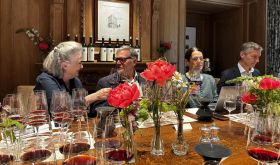
Many, many years ago, in the early 1990s, I was invited to give the after-dinner speech at the world-famous Factory House in Oporto, meeting place of what I would call the port trade, but what its members, mostly British port shippers, would call the Port Wine Trade.
I was much younger then, and blissfully unaware of how inappropriate my speech was. I reported on how little port I saw being drunk in Britain, which was true, even if it seemed to come as a surprise to my audience. This was the era when vintage port prices bumped along at the bottom of the market, and even Oxbridge colleges were offloading their substantial stocks at a great rate.
The total volume of basic port sold is still in decline but I can’t tell you how thrilled I am that the auguries are good for superior port, a uniquely long-lived wine, grown in one of the most extraordinary wine regions in the world. Paul Symington of the family in which no fewer than nine cousins of two generations are engaged in making and selling such names as Graham, Dow, Warre and Cockburn, reported recently that total port sales last year were worth €3.7 million more than the previous year, and that a healthy 43% of all port sales were of the good stuff, not the sort of cheap ruby that the French think of as port. He admitted, ‘we used to be seen as the oldest furniture in the room', but added, ‘things have really turned a corner.’
The last two vintage port campaigns, for the 2011s and 2016s released in late April 2013 and 2018 respectively, have been particularly successful – although admittedly the quantities made were relatively small. Perhaps a stronger symptom of port’s recovery is what has happened to vintage port prices on the secondary market. The 2007s are apparently trading at double their original prices, and Dow 2011, anointed by the leading American wine magazine Wine Spectator as wine of the year, has tripled in value. ‘This to me is a fantastic indicator of the continued interest in fine port', enthused Symington. ’We’ve managed to reinvent port and adapt it to the way people live today so that we can keep the lovely Douro Valley going.’
It must help that Oporto (Porto in Portuguese, the same name as the wine), from which all port is shipped and where most of it is matured, has been completely transformed into a thoroughly modern city throbbing with wine bars, hip hotels – and tourists. The port lodges, once dusty, silent warehouses, are now bright and beautiful visitor centres, buzzing with tastings and buying opportunities, decorated with quaint artifacts from the very different old days. And many of those tourists now stray up the Douro Valley, source of all this port, as well as more and more table wine, of all colours, sold with the Douro appellation. There are cruises and accommodation of many different shades, most of it wine-related. Port packaging has been spruced up too.
A major factor in the revitalisation of port sales has been the glamorisation of old tawny port. A total of €77 million worth of tawny port was sold last year, an increase of €21 million on the previous year. Sitting where I do, on the receiving end of boastful press releases from the world’s wine producers, I sometimes get the impression that port producers are busy scouring the farms of the Douro Valley and lodges of Vila Nova de Gaia, vying with each other in search of ancient tawnies with a venerable history that they can sell for a fortune – either ingredients for blends of great age, or vintage-dated tawnies that qualify as Colheitas.
The Fladgate Partnership, owners of Taylor, Fonseca and Croft, bought tawny specialists Wiese & Krohn in 2013 and now release a 50-year-old tawny each year, handy for senior birthday gifts. Rivals the Symingtons have been polishing their tawny portfolio too, releasing special blends to commemorate, typically, various milestones in the life of the British royal family. In early 2018 Cristiano van Zeller, of the family who used to own Quinta do Noval, sourced an 1870 and a 1970 Colheita port for Last Drop Distillers, specialists in tiny-production luxury drinks. Old Colheitas seem to be coming out of the Oporto woodwork, many of them from Portuguese-owned companies.
Last November Dirk Niepoort of port and Douro producers Niepoort was persuaded to put an 1863 port that had been ageing in his Dutch-Portuguese family cellars – firstly in the traditional ancient ‘pipes’, or casks, and then, unusually, in large glass bonbonnes making it a so-called Garrafeira – into a special Lalique decanter, to be shown off in a specially designed cabinet. The whole caboodle was then put into an Acker Merrall auction in Hong Kong in early November where it went for HK$992,000, about $127,000 or £97,000. This would have been unthinkable 20 years ago.
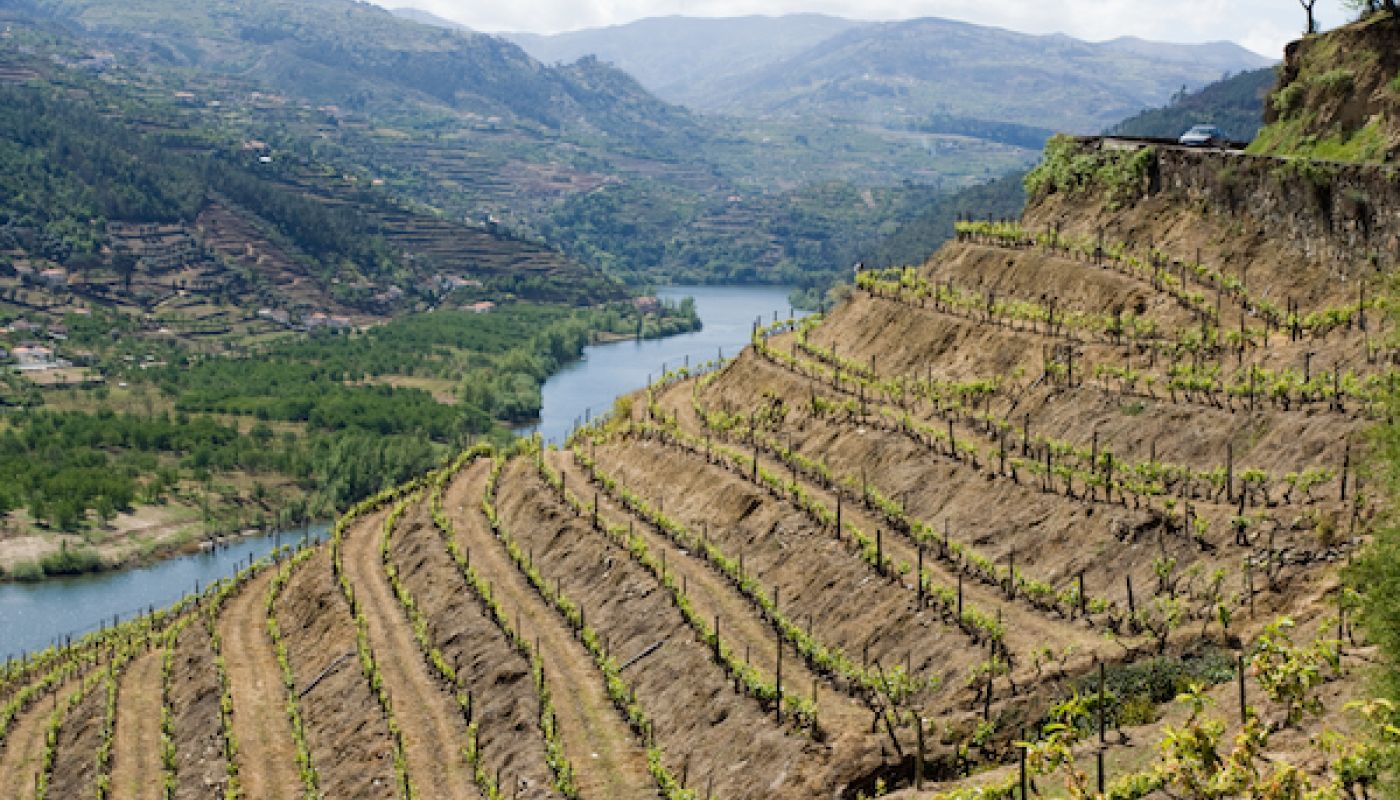
But things are not all rosy for the Port Wine Trade. Port grapes are grown in an inhospitable climate, in an almost uninhabited landscape, on incredibly steep slopes. Their average incline of 30% makes them extremely difficult to work, and many farmers are under-rewarded for their pains. The amount of local labour has been shrinking so rapidly that in 2018 foreign pickers had to be hired, many from Eastern Europe. This goes against historical precedent; for decades, if not centuries, French vignerons have depended on migrant Portuguese farmworkers.
Port producers are feeling distinctly nervous. Who will keep the vine-growing flame alive? There are 43,000 ha (106,255 acres) of vines in the stunning Douro Valley, the largest area of mountain vineyard in the world, but also the only wine region of any size where all the grapes are hand-picked. (More than 80% of Bordeaux’s more than 100,000 ha of vineyards are picked by mechanical harvesters.) A special machine developed in the Mosel designed to pick grapes on steep slopes and narrow terraces has been trialled in the Douro for the last three years. Of 21,400 vine growers in the Douro, a third of them are over 65, and almost half of them own less than half a hectare of vines – a tiny area. Grape prices are decided by an antiquated and outmoded system which leaves grapes sold for Douro table wines seriously underpriced. It urgently needs revision in order to reward farmers and shippers fairly if a long-term future is to be guaranteed. (Last year's severe shortage of grapes led to an exception to the rule when Douro growers were free to decide what to charge for their grapes.)
It would be a great shame for all of us who love wine if port’s revival could not be sustained.