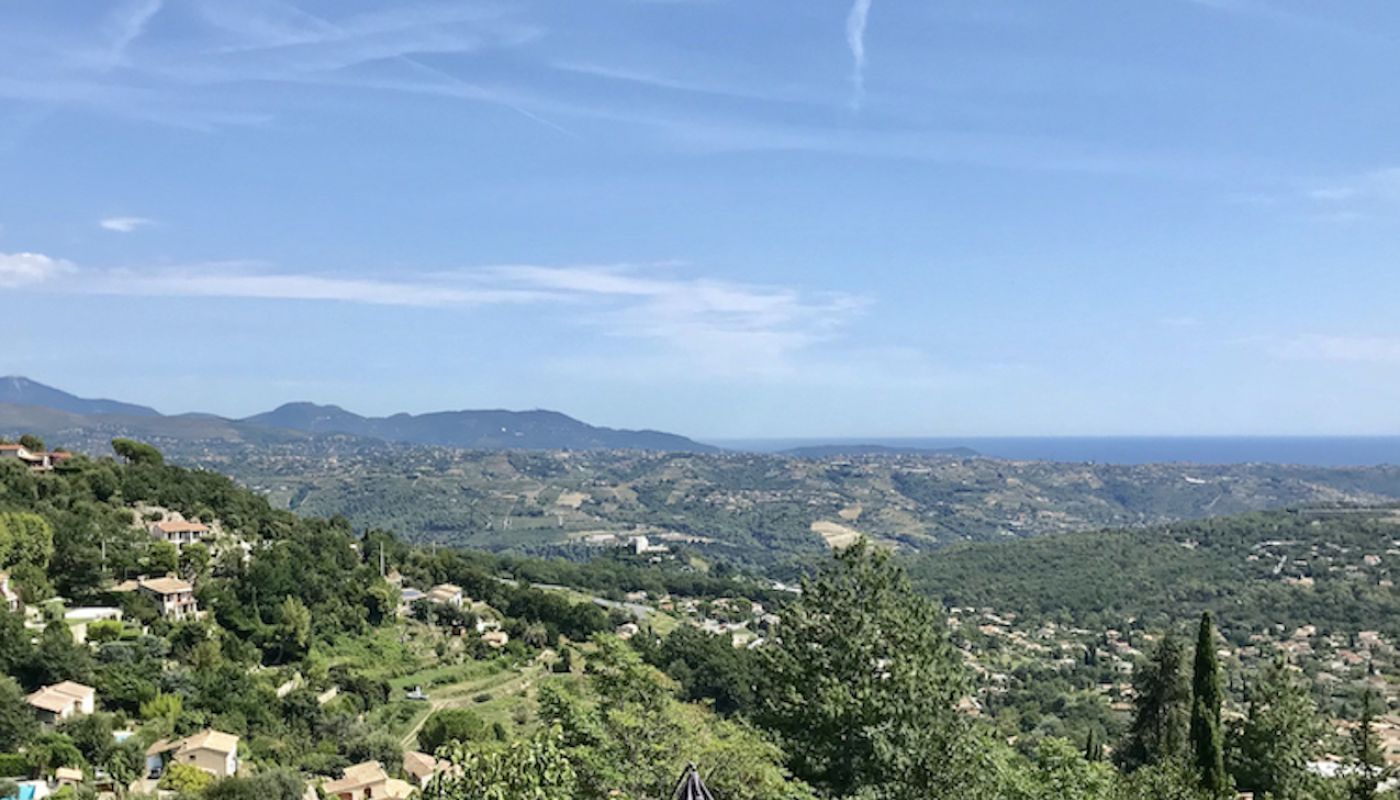
As long-haul travel seems likely to be curtailed for some time, I thought it might be of interest to Europeans to discover a little-known wine region in a particularly accessible part of Europe. It is not short of visitors but its wine is so limited that it rarely exports outside its department, let alone to other countries.
Bellet is the local Appellation d’Origine Contrôlée of the city of Nice. It is a fantastically historic wine region with evidence of Roman winemaking, and olive growing, going back more than 2,000 years. Indeed, the village at the centre of the appellation, and which gave it its name, is St-Roman de Bellet. St-Roman was a third-century Roman martyr. During the French Revolution, the village was called, appropriately enough, Bacchus. There’s not much Roman left – on the surface at least – because Bellet has been prime real estate for centuries and probably was even in Roman times. But there are still Roman caves underneath the Ch de Crémat wine estate. More recently, Thomas Jefferson wrote that he had enjoyed the ‘great wine’ of Nice, during a visit to the region.
This is France’s only truly urban appellation (according to the Mairie of Nice at least – those tending Paris’s vineyard in Montmartre might disagree), and while this is a selling point in terms of tourism, access and location, it presents its own problems. Land here is very expensive. For many years, it has been far more profitable to build villas and swimming pools than to grow grapes. The region had its own versions of the difficulties following the oidium and phylloxera epidemics, and after World War II, much of the agricultural land was given over to flower-growing because this was both a more immediate crop, and easier to work for the largely female population left to do so.
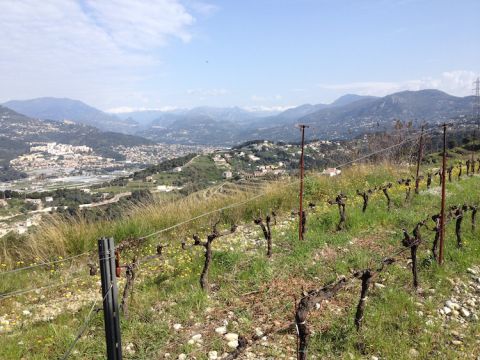
Of a total potential area within the Bellet appellation of 650 ha (1,600 acres), only 63 ha are planted to vines currently, and there is little prospect of an increase. Although as Nathalie and Jean Patrick Pacioselli of Dom St-Jean discovered, it is not terribly easy to get new planting rights even if you want to. Most of the remaining vineyard land would not be suitable for building on, even if permission to do so were granted, which is in itself unlikely. Nevertheless, any new buyer would be under no obligation to maintain vineyards, so the appellation is fragile in its tininess.
The 63 ha are now worked by just nine producers, and for only six of them is it a livelihood (the smallest vineyard holding, that of Dom Vinceline is just 0.8 ha). Even the largest, Ch de Crémat, has only 13 ha of vines.
Because the pressure on land prices is so high, the wines have to be expensive to justify their continuing existence. Because of that, the quality has to be high. Even a certain local celebrity is not enough for these relatively highly priced wines to survive if they do not outperform their competition from Provence and elsewhere in France and beyond. The appellation rules are strict and yields are limited to 40 hl/ha although many of the vineyards are so steep that even this low maximum is rarely achieved and yields are generally at grand cru burgundy levels. Suddenly, the prices seem rather more reasonable.
Bellet sits atop a ridge of the Alpes-Maritimes which extends to the sea as part of the city of Nice. The vineyards face west, protected from both the sea breezes (which can be hot, dry and sandy in summer) and the worst of the cold mistral, which can make the winter surprisingly harsh.
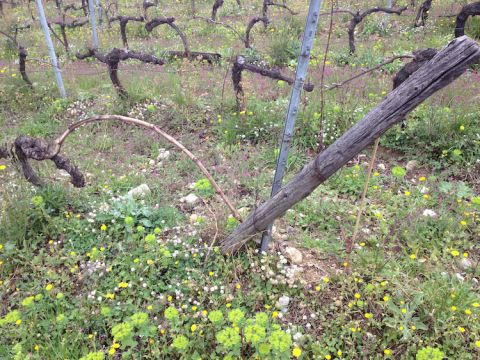
The morning winds come from the mountains down the valley of the river Var (which forms the border between Provence and the part of the Alpes-Maritimes that was ceded to Napoleon in 1860) and blow up the valley in the evening. This creates a great diurnal variation in the vineyards, which are at elevations of between 200 and 350 m (655–1,150 ft), and lengthens the growing season from what might be expected of this latitude on the Mediterranean coast. The soils are poor marine gravels and sand (so much sand in fact that one producer, Jean Spizzo of Collet de Bovis, is replanting vineyards by layering, thus exposing the vines to phylloxera, so far without incident).
While Provence planted endless hectares of Aramon and Ugni Blanc (and worse) after phylloxera in an effort to re-establish an industry quickly, Bellet returned to its classics, and this helped to establish its reputation for quality. All appellation wines have to contain at least 60% of the following principal grape varieties:
For the whites, this is Rolle (aka Vermentino) – remember that this part of the world is as Italian as many places in today’s Italy, having once been, like Piemonte, part of the kingdom of Savoy. As of 1961 producers may include some Chardonnay, but this is rarely more than 10%.
For the rosés comes the first of Bellet’s unique varieties, Braquet. This variety with its scents of wild strawberry, pink grapefruit and rose petal is delightful, and makes more serious, deeper-coloured and drier (residual sugar may be no more than 3 g/l), food-worthy rosés than Provence. Just as well given what needs to be charged for them. Braquet (named after a historic local family) may be augmented with some Grenache and Cinsault.
Bellet Rouge must be predominantly Folle Noire (Fuella Nera in Niçois). Unique to Bellet, ‘Crazy Black’ is so-called because of its capricious nature. It’s difficult to grow and ripens late for the south of France – well into October. The official maximum yield of 40 hl/ha is simply a loopy pipe-dream for its growers most years. Folle Noire is unrelated to the more widely planted and considerably less distinguished Folle Blanche of Armagnac, whose own craziness is most likely related to its over-zealous vigour. Producers may include some Cinsault, Grenache Noir and Braquet in the reds and almost all do.
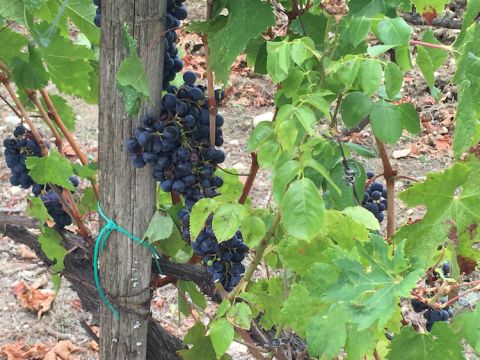
Gio Sergi at Clos St-Vincent occasionally makes a red wine from 100% Braquet grapes, and very delicious (and surprisingly deeply coloured) it is too. Such a wine could scarcely be any more expressive of the appellation, but nevertheless qualifies only as a Vin de France or IGP Alpes-Maritimes because Bellet Rouge has to be at least 60% Folle Noire. As he has already make a pure Grenache that sports Vin de France on its label, this is probably not an issue for him, and in any case he is just as likely to use the Braquet for blending.
The producers throughout the entire appellation farm organically, which is extremely rare apart from a few single-estate appellations such as Coulée de Serrant, and therefore adds to the distinction of Bellet.
The other Niçois appellation is (Huile d’)Olive de Nice, from a particular local olive variety – Cailletier – which produces a pungently grassy, fruity oil. Many of the Bellet wine producers also grow olives, and the two crops constitute a complementary duoculture, as they have for centuries.
Six of the best producers
Collet de Bovis (4 ha)
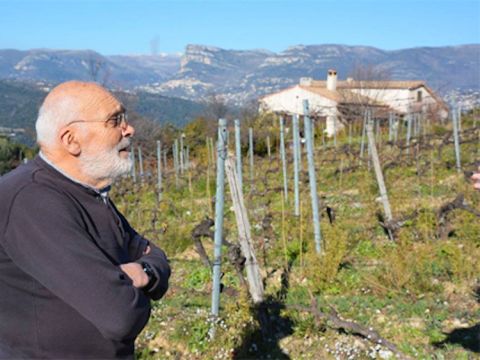
The amiable Jean Spizzo makes wines of class and structure. His red is especially spicy and noteworthy.
Château de Crémat (13 ha)
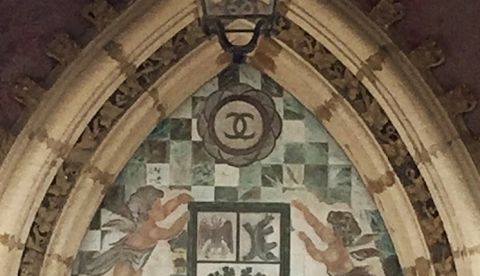
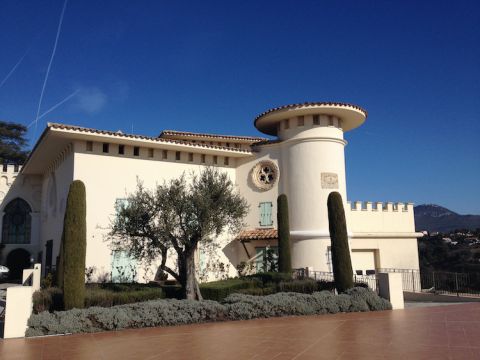
Famous for the lavish parties thrown by a previous owner, Irène Bretz, who helped establish the reputation of Nice’s famous Negresco hotel, which she also owned. One of her guests was Coco Chanel, who appropriated (with permission) the interlocking two Cs logo, as seen above on a doorway at the château, for her brand. Chanel, however, forbade Château de Crémat from using it again when they recommenced wine production after World War II. The most famous wine, possibly of the whole appellation, is Crémat’s honeysuckle- and peach-flavoured white, which is fermented and aged in oak, includes 5% Chardonnay and is released after several years in bottle.
Château de Bellet (7 ha)
Probably the most famous producer and much loved by the French wine media. Château de Bellet has been revitalised since 2012 when the estate, chapel and vineyards were sold to La Française, who also have investments in Bordeaux, in 2012. The whites are best, and although the top wine, La Chapelle, has a lofty price of €59, it shows its 10% Chardonnay, use of oak, malolactic conversion, lees influence and limited yields well.
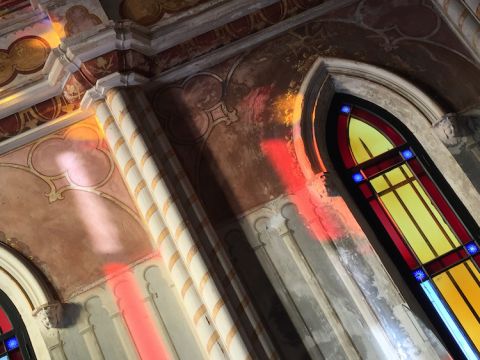
Clos St-Vincent (10 ha)
Run by the energetic local ambassador Joseph (Gio) Sergi, this estate is home to much experimentation as well as the only distillery in the region producing some exceptional marc, one of which is aged for 10 years. Gio’s oak-aged white shows perhaps why Bellet is most famous for the best expression of Rolle, and it offers a deep-textured, deep-flavoured wine that could easily be mistaken for a top burgundy.
Domaine de la Source (4 ha)
Eric Dalmasso has taken over from his parents here and is crafting some of the best less-known wines of the appellation. I am an especial fan of his red, which shows great balance of the spicy, violet – almost Syrah-like – quality of Folle Noire along with a deft use of oak. The wines of Domaine de la Source are occasionally available in the UK from Yapp Bros.
Domaine St Jean (2 ha)
The charming Nathalie and Jean-Patrick Pacioselli are the new kids on the block, having returned to Nice (Jean Patrick is Niçois, Nathalie from the Gorge du Verdon) in 2006 to begin establishing a new Bellet vineyard. They originally leased a small 0.5-ha parcel while they planted their own 1.5-ha vineyard with all the local varieties, encountering all of France’s multi-layered bureaucracy at its best on the way. Their stars are the delicious rosé with its aromas of redcurrant, strawberry and wild mint, and the barrel-matured, Meursault-esque white. They also produce a marc/grappa called Branda, named after a mis-hearing of the post-prandial requests of the English visitors to the Riviera in Victorian times. (Brandy is not a word familiar to the French. They may have meant Cognac, but they soon enough got something enterprisingly a little more local.)
Travel tips
Nice is (or was) well-served by air, including many flights from various cities in the UK. Easyjet, Ryanair and British Airways all fly to Nice.
The train, via Eurostar, is comfortable and usually affordable, even if the journey from London is long (10 hours). Change at Lille to avoid a cross-Paris trek. If made at the time of booking, the surcharge for first class on French trains is rarely very much, and well worth it.
Nice Wine Tours operate group and private day and half-day tours to the vineyards of Bellet from the city.
If pressed for time and unable to visit the vineyards, Le Goût de Nice (34 Boulevard Jean-Jaurès) is a co-operative shop in the centre of the city which sells the wines, olive oils, and assorted other local produce at cellar-door prices.
It is easier, definitely quicker, and sometimes cheaper, to hire a car in the city than at the airport. The newly opened tram line will take you from the airport to the centre in under 20 minutes, quicker than a taxi.
















