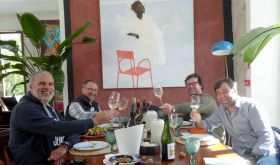
Has the magic gone out of wine? This could be said to have been the over-arching theme of a rare two days of discussion between some of the world’s most respected winemakers and wine writers in the Andalusian town of Ronda a fortnight ago.
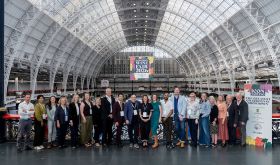
It takes some organisation and even more cash to convene the top wine critics of France, Spain, Italy, Germany, Russia, Mexico and the US with the likes of Paul Draper of Ridge Vineyards in California; Denis Dubourdieu, Dany Rolland and Stéphane Derenoncourt of Bordeaux; Peter Sisseck and Álvaro Palacios, who make Spain’s most expensive wines Pingus and L’Ermita; and Carlo Ferrini, one of Italy’s busiest oenologists. The organisation was supplied by Spain’s leading wine writer José Peñín, or rather the army of young women who comprise Grupo Peñín, while even I, appointed honorary president many months beforehand, found it more difficult to work out exactly where the cash was coming from, or rather why.
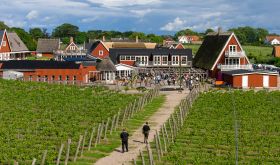
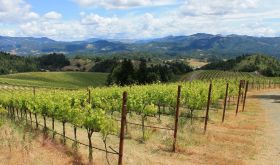
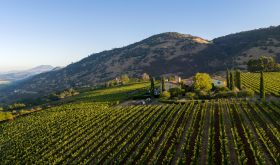
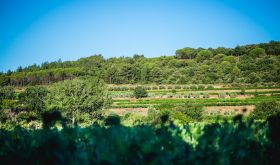
In retrospect I must assume that the grandly titled First International Wine Creator Meeting was devised as a particularly lateral way of publicising an ambitious development in the bucolic hills just outside Ronda. In La Melonera, a group of Anglo-Spanish investors are aiming to sell plots of Mediterranean forest, each with its own small vineyard and access to the estate’s winery overseen by José Luis Pérez Verdú of Mas Martinet in Priorat – the ultimate in vanity winemaking perhaps? There was much talk of how the lessons learnt at the meeting would be applied at La Melonera, currently only partly planted. But as anyone could have forecast, concrete conclusions were few and far between.
The winemakers, dubbed Wine Creators by the organisers in an effort to recognise the artistic aspect of making great wine (although the Spanish version Autores de Vino was more popular with the attendees), fell broadly into two camps. There were those whom one might even call the creationists, those who argued passionately that the most important key to making top quality wine was to follow historical precedent. Álvaro Palacios was almost maniacal in his claim that all the great vineyard sites in the world had already been identified by medieval monks and that all one had to do today was to follow in their footsteps. (Moderator Victor de la Serna, deputy editor of El Mundo and a winemaker himself, wondered quizzically whether Palacios meant that therefore only Christians could make great wine.)
Ales Kristancic, current custodian of the Movia winery in Slovenia that operates according to hyper-biodynamic principles, was perhaps the most fundamentalist wine creator, criticising modern interventionism in the vineyard. “The way we grow vines now is to make vines our slaves. They suffer. We need to do our best for the plant, not for the wine.”
Irrigation was one of the most emotive topics. During a spirited discussion of the extent to which additional watering was a permissible ingredient in great wines, Kristancic, a natural showman, saw a direct, if rather extreme, parallel between irrigated vines and battery chickens. The New York-based editor of Wine & Spirits Joshua Greene pointed out that already in the US some vine growers are actively promoting dry farming and discouraging vineyard designs that incorporate irrigation (as La Melonera does to a certain extent), especially now that the planet’s water supplies seem to be increasingly under threat. Dirk Niepoort of the Douro valley in northern Portugal also expressed doubts about irrigation and was another venerator of history, arguing that he could tell which were the most propitious vineyard sites by looking at past plantings and practices. “We have some biodynamic vineyards in the Douro. People said it would be impossible but that’s nonsense. It’s just a question of changing habits – there are so many bad habits, with vines being nurtured on herbicides.” Niepoort is typical of so many wine producers today who wish to hark back to their grandfather’s practices, eradicating the exigencies of the post-war period associated with their fathers.
Paul Draper, who had come all the way from California, was arguably the most clearly historically inspired wine creator of the lot, basing his 40-year career there on inspiration drawn from 19th-century texts on winemaking in Bordeaux and California. Both he and Peter Sisseck of Pingus claimed that they owed much to the great classic wines of the early 20th century that they had been lucky enough to be raised on. There was much collective shaking of heads over how the current generation of winemakers could possibly ever share the same sort of experience, particularly with Bordeaux first growths at thousands of pounds a case.
On the other hand the contingent from Bordeaux, where it is difficult to imagine irrigation ever being necessary, represented the pragmatists, perhaps not so surprising since all three work extensively as consultants. For them there was none of this airy fairy nonsense about lunar calendars and ancient monks (who, as leading French wine writer Michel Bettane pointed out, didn’t do much wine making themselves anyway, preferring to delegate to the locals). The one clear point of agreement between the two factions was that a superior vineyard site and relatively low yields were desirable, although as Denis Dubourdieu pointed out, very low yields are “no magic bullet”, and if things are not in perfect balance, it may accentuate the problem. Stephane Derenoncourt and Michel Rolland, very materially assisted by his wife Dany, who represented him in Ronda, are Bordeaux’s two most famous consultant winemakers, so it was interesting to hear Derenoncourt admit that, although he works more and more in the vineyard with the aim of working less and less in the cellar, “there are lots of details that determine whether a wine is ‘Rolland style’ or ‘Derenoncourt style’". He also confessed that there are several of his early wines, made in the 1980s “when people wanted concentrated wines” of which he is not especially proud today. “They were too much. Today, we’re all going for minerality, that’s the current fashion.”
Although this conference, opened by Prince Michael of Kent after a tour of Spain’s first and arguably most beautiful bullring, was implicitly dedicated to the discussion of the established greats of the wine world, both Michel Bettane and American David Schildknecht, who rates French wines other than Bordeaux and the Rhône for Robert Parker’s influential Wine Advocate, were rightly concerned about the thousands of ambitious, less well-established producers who have so much to give the wine world and yet are increasingly squeezed by the banks and today’s over-crowded marketplace. Both recognised the role of us wine writers in helping to publicise their best efforts, which typically represent so much better value than the 30 or 40 wines in which the world’s wine investors dabble.
The other hot topic was the extent to which wine producers in general are influenced by the critics. Sisseck and Kristancic vehemently denied doing anything other than their own thing but the most popular intervention from the audience came from the Andalucian sister of energetic US importer Jorge Ordoñez who said, “although they don’t want to admit it, there isn’t a wine producer I know who doesn’t anxiously scan what the critics write”. She also said tellingly that all producers tend to be politically correct when speaking to writers, and are keenly aware of what to say and what not to say. I see an opening here: media coaching for winemakers.
See also the articles listed below and the thread in the members' frum delightfully entitled Jancis was right.